An opaque U.S. deal has turned a private hotel in Equatorial Guinea into a de facto offshore detention site for deported migrants, raising hard questions about due process, waste, and basic American fairness.
Story Snapshot
- The Trump administration used a quiet $7.5 million arrangement with Equatorial Guinea to accept deportees in a hotel-style detention site.
- At least 32 people were flown there on three flights, many already granted protection from being sent back to their home countries by U.S. immigration judges.[1]
- United Nations experts and advocates now warn that some detainees were later pushed back to countries where they fear persecution.[1][4]
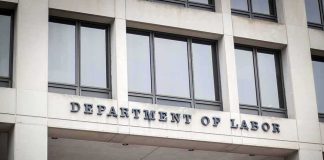
- The Department of Homeland Security defends third-country deportations as “applying the law as written,” even while litigation and public backlash mount.[2][6]
How a Remote African Hotel Became an Offshore Holding Site
According to Third Country Deportation Watch, the United States began sending deportation flights to Equatorial Guinea in late 2025 under an undisclosed agreement that routed migrants to a hotel repurposed as a detention facility.[1] On November 24, 2025, nine people were flown from a deportation hub in Louisiana to the capital, Malabo, without being told their true destination and were informed only that they were being moved within the United States.[1][6] These men came from countries including Georgia, Mauritania, Angola, Ghana, and Eritrea, and had already convinced U.S. judges that returning home would put them in danger.[1]
Third Country Deportation Watch reports that a second flight on January 22, 2026 carried 20 more people with similar protection orders from nations such as Ethiopia, the Democratic Republic of the Congo, Chad, Eritrea, Mauritania, and Angola.[1] A third flight on April 29, 2026 delivered two Cameroonians and an Egyptian, bringing the total to at least 32 people.[1] All were held in a single hotel operating as a closed facility where movement was tightly controlled and exit from the country depended on decisions by Equatorial Guinea’s authorities, not American courts or consular officials.[1]
What These Deportations Say About U.S. Law, Borders, and Non-Refoulement
The people on the first two flights had been granted either withholding of removal or protection under the Convention Against Torture, meaning U.S. immigration judges found it likely they would face persecution or torture in their home countries.[1] Under long-standing American law, those findings bar deportation to the country of persecution but allow removal to “third countries” if one will accept them.[2] A Department of Homeland Security spokesperson told reporters the administration is “applying the law as written” and that if a judge finds someone has no right to remain in the United States, they may be removed anywhere except the barred home country.[2]
Human Rights First and other advocates track these third-country transfers and argue that they risk violating the principle of non-refoulement by sending vulnerable people to places that lack real asylum systems or then push them onward to danger.[6] Third Country Deportation Watch reports that by early March 2026, seven of the nine men from the first flight and ten people from the second had been refouled back to their original countries despite their protection orders.[1] United Nations human rights experts have publicly urged Equatorial Guinea to halt such deportations and to respect its international obligations not to return people to persecution or torture.[4]
Transparency, Taxpayer Dollars, and the Conservative Question of Accountability
Third Country Deportation Watch states that the Trump administration provided Equatorial Guinea’s government with $7.5 million from State Department funds originally appropriated by Congress for humanitarian refugee assistance in exchange for accepting these third-country deportees.[1] That opaque funding decision raises accountability concerns for conservatives who want strong borders but also demand that taxpayer dollars follow the law and original congressional intent. Using humanitarian aid accounts to underwrite a quiet offshore detention arrangement invites scrutiny about whether Washington is again playing budget shell games instead of fixing the underlying asylum and border system.[1]
🚨 An opaque $7.5 million agreement between the Trump administration and Equatorial Guinea has converted a family-owned hotel into a detention center for U.S.-deported asylum seekers.
This deal redirects taxpayer funds to the regime, sparking significant ethical concerns and… pic.twitter.com/8Ci3dPHhcR
— Mazi okwuoma (@MaziEzike_Nedu) May 28, 2026
Reporting by public broadcasters and independent outlets shows that since returning to office, the Trump administration has removed more than 675,000 people, insisting it prioritizes “the worst of the worst,” while acknowledging that some with strong asylum claims are swept up.[3][5] Litigation over third-country deportations, including challenges to transfers to countries like Ghana, underscores how fragile the legal footing can be when the destination country has weak rule of law and limited refugee infrastructure.[6] For conservatives who believe in both border enforcement and the rule of law, this Equatorial Guinea episode highlights a deeper problem: outsourcing hard decisions to distant partners instead of demanding a clear, constitutional, transparent framework at home.
Sources:
[1] YouTube – Asylum seekers deported by the US detained in Equatorial Guinea hotel
[2] Web – Equatorial Guinea – Third Country Deportation Watch
[3] Web – Equatorial Guinea – Global Detention Project
[4] YouTube – East African asylum seeker deported by U.S. to Equatorial Guinea
[5] Web – Third Country Deportations Tracker
[6] Web – East African asylum seeker deported to Equatorial Guinea