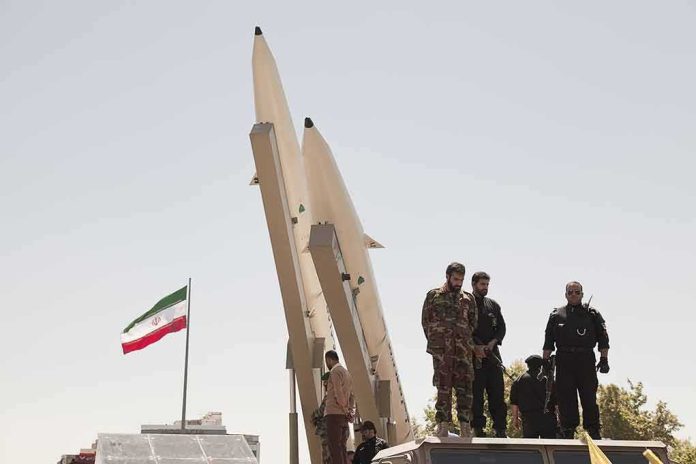
Iran’s top leader’s adviser warned that the next blow could push the war straight into the Indian Ocean.
Story Snapshot
- Yahya Rahim Safavi warned the fight could reach the Indian Ocean “and beyond” if the U.S. or Israel strikes again.
- The warning echoes across multiple outlets, pointing to a coordinated signal from Tehran, not a rumor.
- Reports tie the threat to a clear trigger: another attack on Iran or its interests.
- Analysts say this fits Iran’s pattern of public deterrence without clear signs of immediate action.
What Safavi said, and why it matters
Yahya Rahim Safavi, an adviser to Iran’s Supreme Leader, said the war front could expand “to the Indian Ocean and perhaps beyond” if the United States or Israel attacks again. He linked the statement to the spread of the conflict from the Persian Gulf and Strait of Hormuz to the Red Sea. The message sets a clear red line while keeping Iran’s options open. The language signals deterrence and reach, not a declared battle plan.
The quote ran across regional and international outlets on the same day. That repeat suggests the line was meant to travel. It avoids specifics like targets, timing, or tasking orders. It still raises the stakes for U.S. and allied planners, who must assume wider risk to ships and bases. The form matches prior Iranian messaging that seeks to raise costs for any new strike without locking Tehran into immediate escalation.
The trigger that turns rhetoric into risk
Safavi tied the threat to a direct trigger: a further attack by the United States or Israel against Iranian “centers and interests.” That condition matters. It frames the move as response, not initiation. It aims at deterrence by warning of pain in a broader sea. The warning also plays to global markets and shippers. Insurance rates move on words like these. The more credible the trigger, the more expensive the next volley becomes for everyone.
Other reporting suggests the Indian Ocean theater is not abstract. Analysts and officials have already discussed strikes and counterstrikes tied to those waters this year. One study described a United States submarine torpedoing an Iranian warship off Sri Lanka, which put the Indian Ocean in the live-zone of this conflict for both sides. That context gives Safavi’s line more bite than a simple bluff.
Diego Garcia and the map of “beyond”
Diego Garcia, a key United States and United Kingdom base in the Indian Ocean, sits on every planner’s notepad. Media reports earlier this year described claims and denials about attempted strikes linked to that base. No single account settles the facts. But the back-and-forth shows why “beyond” is not just theater. It points to targets with real range, value, and political weight. That is how deterrence messaging tries to shape choices before shots fire.
Iran warns U.S. strikes could expand war to Indian Ocean
An adviser to Iran's supreme leader warned Thursday that a renewed attack on Iran could lead to a significant expansion of the conflict, potentially reaching the Indian Ocean. The threat comes amid ongoing tensions in the…
— PiQ (@PiQMarkets) September 24, 2026
American conservatives see a plain lesson here: peace through strength still works. Clear red lines, credible force, and secure sea lanes protect trade and keep wars small. Tehran’s warning tests that formula. The United States should keep naval and air power visible, protect tankers, and back allies. At the same time, avoid mission creep that gives Tehran the trigger it names. Strength deters; restraint denies Iran the excuse it wants.
Capability, intent, and the gap between them
The reports offer a threat, not a deployment order. They do not show new missile loads on launchers, fleet staging to the Arabian Sea, or maritime militia surges. Absent those steps, the warning looks like calibrated pressure. That does not make it harmless. Markets and insurers react to risk, not only to facts. The United States should assume Iran can harass shipping, push drones and mines, and leverage proxies across a very wide map if the next shot lands.
Sources:
insiderpaper.com, biz.heraldcorp.com, moneycontrol.com, egyptindependent.com, theprint.in, isas.nus.edu.sg