Unnamed U.S. officials say Washington fed intelligence and drones to a Venezuelan strike on an ELN site, while neither government will publicly explain what happened.
Story Snapshot
- Reports say the United States provided intelligence and drones to a Venezuelan attack near the Colombia border.
- The target was described as an ELN site tied to cocaine distribution, with heavy reported casualties.
- Death counts vary from 19 to 23, and no government has released an official record.
- The strike highlights opaque cross-border warfare and weak public accountability in the region.
What Reportedly Happened in Apure
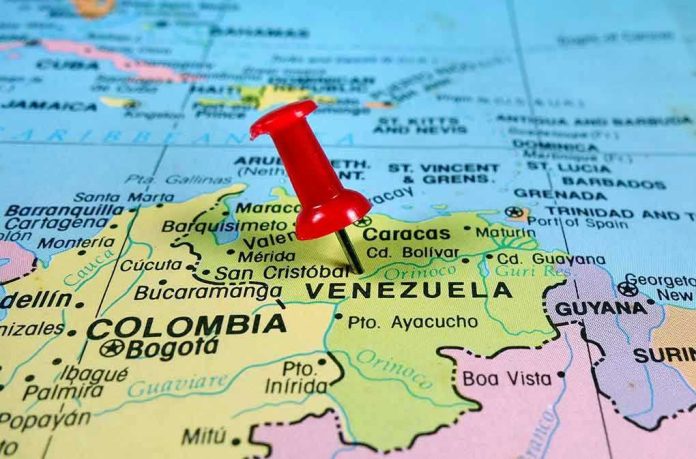
Spanish-language reporting from The New York Times, echoed by several outlets, says four U.S. officials confirmed that Washington supplied intelligence and drones for a Venezuelan military strike in rural Apure, near the Colombia border. Reports describe the target as a National Liberation Army, or ELN, location used to support cocaine distribution. The watchdog group Fundaredes said people at the site were killed and wounded, based on accounts from survivors and residents, and that bodies were taken toward San Fernando de Apure.
Coverage diverges on casualty figures and timing. Some reports cite at least 19 deaths, while others cite 23, with injuries also reported. Accounts also differ on the exact strike date, but they agree it occurred in late October or early November. No Venezuelan or U.S. agency has released an official statement detailing the operation, its legal basis, or the full roster of those killed and wounded. That silence leaves key facts unconfirmed by public records.
Why the Location and Target Matter
Apure sits on a corridor used by armed groups for trafficking and logistics. Past research and field work describe the ELN as active along the Colombia–Venezuela line, using the area to move drugs, collect extortion, and shield leaders. Reports tie the specific site to ELN activity and cocaine distribution, though available public details rely on testimonies rather than seized evidence or verified imagery. That gap keeps important questions open about how the site functioned day to day.
The clash fits a wider pattern in which governments frame strikes as counter-narcotics wins, while observers focus on attribution, civilian status, and proof. Analysts have long noted that the ELN leverages the border’s terrain and weak controls to sustain operations. This mix of armed groups, smuggling routes, and light oversight turns any strike into a regional issue, with risks of cross-border tension and reprisals if targeting misses or sweeps in noncombatants.
What We Know and What We Do Not
Several outlets say U.S. support involved intelligence and unmanned aircraft. None states who flew the drones, what sensors or weapons they carried, or which U.S. office approved the help. Those are core facts that define legal chains of command and responsibility for harm. Without them, the public cannot judge whether the support was surveillance only or also delivered firepower, or how civilian risk was weighed in planning.
Fundaredes reported bodies and injuries and described the site as an ELN hub. That picture rests on survivor and resident accounts, not on a public record of seized drugs or lab tests. Reports also vary on the number of dead. These gaps do not erase the strike; they show why independent checks matter. Clear casualty lists, identities, and roles would confirm who died and whether the strike met basic rules to protect civilians.
Why Americans Should Care
Americans across the spectrum worry that powerful agencies act in the dark while leaders avoid hard questions. This case has the same red flags: unnamed sources, missing records, and no official after-action review. People want cartels stopped. They also want proof that missions are legal, targeted, and accountable. Releasing the authorization, rules for the strike, and a civilian-harm review would help rebuild trust without tipping tactics to the enemy.
Accountability Steps to Watch
Lawmakers can ask for briefings that document intelligence-sharing, drone use, and any warnings to reduce civilian harm. Independent groups can seek satellite imagery, hospital logs, and names of the dead to verify who was at the site. Venezuelan authorities can publish coordinates, orders, and battle-damage reports. These steps would not settle every debate, but they would move the story from rumor to record and show respect for the people who live along that border.
Sources:
pjmedia.com, english.elpais.com, faz.net, hamerintel.com