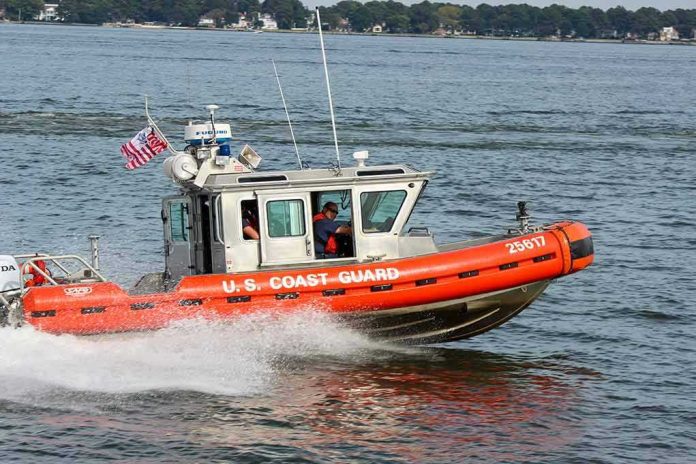
The U.S. Coast Guard seized 4,510 pounds of cocaine worth $33.9 million off Ecuador’s coast, striking a blow against drug cartels operating one of the hemisphere’s busiest smuggling corridors.
Story Snapshot
- Coast Guard Cutter Escanaba intercepted over two tons of cocaine valued at $33.9 million near Manta, Ecuador
- The bust targeted high-traffic smuggling routes handling 80% of U.S.-bound cocaine
- Operation reflects intensified multi-agency patrols combating go-fast boats and semi-submersibles in the Eastern Pacific
- Escanaba has contributed to over 500 tons of cocaine seized since 2010 in the region
Easter Sunday Interdiction Off Ecuador’s Coast
Coast Guard Cutter Escanaba crews stopped traffickers in international waters off Manta, Ecuador, recovering precisely 4,510 pounds of cocaine during the Easter holiday operation. The Joint Interagency Task Force South coordinated intelligence that positioned the cutter to intercept smugglers exploiting one of South America’s most active trafficking corridors. Manta’s strategic Pacific port location makes it a prime departure point for cartels moving product northward. The timing on a major religious holiday underscores the relentless nature of both enforcement operations and criminal trafficking networks that operate without regard for calendar dates.
Coast Guard Confiscates Over $33 Million of Cocaine in Major Bust | The Gateway Pundit | by Jack Davis, The Western Journal https://t.co/77tjfdZiyK
— Tammie Adams (@tammieadams31) April 12, 2026
The Eastern Pacific Drug Highway
The waters off Ecuador have become ground zero for cocaine smuggling, with routes originating from Colombia, Peru, and Ecuador itself accounting for the vast majority of U.S.-bound cocaine. Production in these three nations continues to fuel global supply chains despite decades of eradication efforts. Weak port controls and endemic corruption in Ecuador create ideal conditions for traffickers to operate with relative impunity. The Escanaba’s patrol area represents a chokepoint where interdiction yields maximum disruption, though analysts acknowledge such seizures intercept merely one to two percent of total product flowing north.
Multi-Agency Coordination Drives Success
Joint Interagency Task Force South provides the intelligence backbone enabling cutters like Escanaba to position effectively against smuggling vessels. U.S. Coast Guard Pacific Area Command authorizes these extended deployments, maintaining persistent presence in high-value target zones. Ecuadorian authorities participate in regional maritime security, though their capacity remains limited compared to American technological advantages in surveillance aircraft and long-range cutters. This partnership model attempts to counterbalance local corruption while respecting sovereign waters, a delicate diplomatic dance that sometimes frustrates operational commanders seeking more aggressive pursuit authorities.
Impact Beyond Street Value Calculations
The $33.9 million valuation represents street-level pricing that fluctuates with market conditions, making precise damage assessments challenging. Cartels absorb such losses as cost of doing business when South American production exceeds 2,000 tons annually. Short-term supply disruptions may temporarily elevate U.S. street prices, benefiting public health by reducing availability linked to addiction crises. Ecuador faces darker consequences, as traffickers retaliate against perceived cooperation with violence that destabilizes coastal communities. Coastal fishermen find themselves endangered by both smugglers using their waters and enforcement actions that turn fishing grounds into combat zones.
The Interdiction Reality Check
Coast Guard officials tout annual interdictions exceeding 200 tons in recent years, framing operations like this Easter seizure as momentum against cartels. The optimistic interpretation credits multi-agency intelligence sharing and improved detection technology for measurable progress. Skeptics counter with sobering mathematics: seizing 4,510 pounds barely registers against the flood of product reaching American streets. Narcotrafficking analysts note that even record enforcement years intercept a small fraction of total production. The real deterrent value may lie not in volume confiscated but in forcing traffickers toward riskier, costlier routes that strain their logistics networks and profit margins over time.
Coast Guard Confiscates Over $33 Million of Cocaine in Major Busthttps://t.co/cHa7mMWhWt
— BREAKING NEWZ Alert (@MustReadNewz) April 12, 2026
The Coast Guard characterized the Easter bust as a significant win, with the cocaine secured for destruction and Escanaba returning to Eastern Pacific patrols. This operation fits the pattern of intensified enforcement amid America’s ongoing addiction crisis, demonstrating federal commitment to disrupting supply chains at their source. Whether such interdictions ultimately reduce cocaine availability remains debatable, but they undeniably complicate cartel operations and demonstrate American resolve to protect borders beyond the shoreline. The 500-plus tons Escanaba has helped seize since 2010 represents countless potential overdoses prevented, even if the larger war against trafficking continues with no clear endpoint in sight.
Sources:
Coast Guard Cutter Seizes More Than $33 Million Worth of Cocaine in Easter Sunday Bust