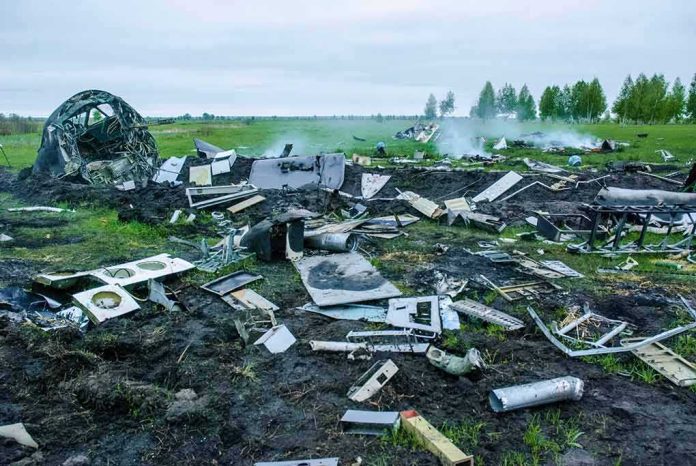
A small aircraft vanished over one of the most unforgiving landscapes in North America, and when search crews finally reached the wreckage sixteen hours later, the facts were as plain as they were grim: three people aboard, no survivors, a debris field scattered across a remote basin near the Grand Canyon’s North Rim.
Key Points
- A Piper Comanche carrying three people was reported overdue the night of November 15, 2026, and found crashed the following morning near the Basin area of Grand Canyon National Park’s North Rim.
- The National Park Service confirmed there were no survivors after locating the aircraft and debris field at approximately 10:15 a.m. on November 16.
- The National Transportation Safety Board will lead the formal investigation into the cause, with support from the FAA and NPS.
- A preliminary NTSB report is expected roughly a month out, but a determination of probable cause typically takes 12 to 24 months for general-aviation accidents.
- Minor discrepancies in the publicly reported accident time reflect the normal imprecision of early reporting, not a contested account of what happened.
What Happened Near the North Rim
The Grand Canyon Regional Communications Center received word that a Piper Comanche with three people aboard had gone missing at approximately 11:30 p.m. on November 15, 2026, according to the National Park Service’s own account of the incident. The aircraft’s last known position placed it near the Basin area of the park’s North Rim, a stretch of terrain defined by steep drainages, dense forest, and almost no road access. Search teams worked through the night and into the morning, and at approximately 10:15 a.m. on November 16 they located both the aircraft and an accompanying debris field. The Park Service’s statement was unambiguous: “There were no survivors”. Independent reporting from Reuters the following day corroborated the aircraft type, the discovery time, and the fatality count.
The Federal Aviation Administration separately placed the accident itself — as opposed to the moment it was reported missing — at approximately 7:15 p.m. on November 15, according to CBS News. That four-hour gap between the estimated crash time and the missing-aircraft report is not unusual for flights over the Grand Canyon’s back country, where radio coverage is patchy and radar contact with small aircraft can be lost long before anyone on the ground realizes a flight is overdue. A handful of outlets rounded that FAA estimate to roughly 7:30 p.m., a variance almost certainly attributable to how preliminary time stamps get reproduced across newsrooms rather than to any real dispute about when the crash occurred.
Who Is Investigating, and Why the Timeline Matters
Authority over the investigation now rests with the National Transportation Safety Board, which will work with assistance from the FAA and the Park Service to determine what brought the aircraft down. That division of labor is standard practice and worth understanding, because it explains why so little has been said publicly about cause in the days immediately following a crash. The NTSB does not attempt to determine cause at the accident scene; its on-site work in the first days focuses narrowly on documenting the wreckage, securing instruments and recoverable data, and establishing facts that could otherwise be lost to weather, scavengers, or the passage of time.
That is a deliberate institutional discipline, not a gap in the record. Investigators typically issue a preliminary report within about a month of an accident, and that document contains only the factual information collected on scene — no analysis, no probable-cause finding. The fuller determination, built from engine teardown, maintenance and pilot records, weather data, and often months of laboratory work, routinely takes 12 to 24 months to complete for general-aviation accidents of this kind. Past NTSB findings on comparable light-aircraft crashes illustrate just how varied the eventual causes can be — pilot control errors during landing, mechanical failures traced to a displaced fuel-injection component, even an in-flight propeller-blade separation — underscoring why investigators resist early speculation.
What Remains Unknown, and Why That Is Normal
Several details have not yet been made public: the aircraft’s registration number, its intended route and destination, the pilot’s qualifications, and the identities of the three people who died. None of that reflects an unusual information gap for an accident of this age. Victim identification, when it involves a general-aviation crash in a remote national park, is typically handled by the responsible medical examiner’s office and released separately from the NTSB’s technical findings, often on a different timeline altogether. The Park Service’s confirmation that there were no survivors, paired with the FAA and NTSB’s institutional roles, gives the public the essential facts of the event itself even while the causal story is still being assembled piece by piece.
This is the pattern general-aviation accidents follow almost without exception, and it is worth recognizing rather than reading as evasiveness. Early coverage can state with full confidence that a crash occurred, where, when, and how many died — the National Park Service and corroborating outlets have done exactly that here. What takes longer, and should, is the forensic accounting of why: a reconstruction built from wreckage analysis, flight tracking data, weather records, and maintenance history that the NTSB is equipped to produce, and that no amount of early speculation can substitute for.
Don’t believe everything you see online. Grand Canyon officials say AI-generated plane crash images are spreading misinformation on social media. https://t.co/JZurbqClD4
— azcentral (@azcentral) November 18, 2026
The Broader Pattern in General-Aviation Accidents
Crashes involving small, piston-engine aircraft like the Piper Comanche account for the overwhelming share of NTSB aviation investigations each year, far outnumbering commercial airline incidents. The agency’s own guidance to journalists cautions against inferring probable cause from preliminary facts, precisely because those early reports capture only a fraction of the eventual evidentiary record. That caution exists because the public, understandably eager for an explanation, often fills a reporting gap with assumption. The responsible course — for investigators and for readers alike — is to accept the established facts of the North Rim crash as they stand, and to wait for the record that will eventually explain how a routine flight over the canyon ended in tragedy.
Sources:
nypost.com, fox10phoenix.com, yahoo.com, avweb.com, ntsb.gov, asip.faa.gov, data.ntsb.gov