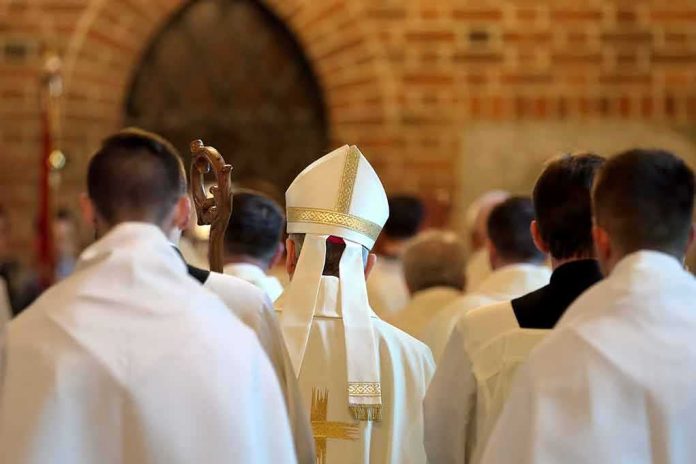
A 38-year-old Ukrainian Catholic priest was detained at a checkpoint and routed toward combat because a registry delay left his priesthood off the books—turning paperwork into a battlefield risk.
Story Snapshot
- Father Andrii Stebivka was detained and sent to military training after showing clergy papers.
- Ukrainian law does not grant blanket clergy exemptions from mobilization.
- Officials have reserved thousands of priests, but only with proper filings and approvals.
- Clerics may serve as chaplains, but that is distinct from combat assignments.
What Happened And Why It Matters
Recruitment officers stopped Father Andrii Stebivka on October 12 in Rivne region, reviewed his documents, and still transferred him to a military training center, according to reports. His family said he was then assigned to a special assault unit and could be sent to the front soon. The account strikes a nerve because it blends a clear fact pattern with a gray legal zone. It also raises a basic test of fairness: does a cleric lose protection because a government file lags by weeks?
Coverage points to a familiar Ukrainian wartime bind. Clergy can be eligible for deferment or reservation, but eligibility alone does not stop mobilization. People must have completed filings and received an official reservation before call-up. Courts have said as much in similar cases where a priest believed he qualified but had not finalized the paperwork, and the mobilization stood. The process rewards preparation and punishes delay, even if the person is a known pastor serving a flock.
The Law: No Blanket Exemption, Narrow Doors
The United States Department of State’s 2023 report states that Ukrainian law does not generally exempt clergy from mobilization. A legal analysis explains that under martial law, a male priest is liable for service but may have a special status that can support deferment, not automatic immunity. Separate guidance says a recent rule can exempt up to half the clergy of each religious organization, but that is a cap, not a guarantee. The path is narrow, and it runs through official reservation decisions, not parish identity cards.
Reports inside Ukraine back this up with numbers. Authorities have reserved more than 6,500 priests from mobilization. That shows the system can work when churches and state registries align and move fast. It also spotlights the friction: if thousands are reserved, then those not reserved sit exposed. The state wants to prevent fraud and keep the front staffed. People of faith want clear lanes to serve without holding a rifle if their calling is the cross.
Chaplains Are Real, Combat Is Different
Ukraine’s armed forces formally integrated chaplains in mid-2022. Chaplains hold officer ranks and provide spiritual care within specific units, which the military treats as a serious, defined role. That matters for common sense and conservative values. A nation at war should put people in the jobs where they add the most value. A working parish priest can comfort troops, advise commanders on morale, and care for the wounded and grieving. That is not the same as kicking in doors with an assault unit.
They forcibly recruited a Ukrainian Greek-Catholic priest and send him to the front lines. Fr. Andrii Stebivka, from the Mukachevo eparchy, was detained on October 12 at a checkpoint in the Rivne region, according to his family. – https://t.co/YGBgvHWMFA Ukraine, Russia pic.twitter.com/su0mSUmdcv
— Tommy Richards #OvertPsyops (ReMastered) (@tlthe5th) October 23, 2026
Skeptics worry about sham clergy documents to dodge mobilization. That is fair. Ukrainian authorities have prosecuted schemes where fake deacons were minted to claim exemptions, which makes recruiters more suspicious at checkpoints. But fraud crackdowns should not turn into blanket disbelief. A country that has already reserved thousands of real priests can verify a man’s ministry without sending him to storm trenches while the database catches up. The standard should be trust, then verify, not seize first and sort it out later.
What To Watch Next
Two outcomes would show the system learning. First, rapid verification lanes for known clergy, with digital links from church registries to military databases that update in hours, not weeks. Second, a default track that places disputed clergy into chaplaincy or noncombat roles while status is confirmed. Both steps match wartime need with basic fairness. They also honor religious liberty without creating a loophole big enough to drive a bus through. The facts in Father Stebivka’s case deserve that balance.
Sources:
lifesitenews.com, cathnews.com, thecatholicherald.com, medias-presse.info, hechoencalifornia1010.com, deon.pl, acidigital.com, tbinternet.ohchr.org