A president joking about pardoning anyone within “200 feet of the Oval” isn’t really a joke once you remember one signature can erase years of investigations.
Quick Take
- President Trump has reportedly floated sweeping pardons for top aides and staff before January 2029, framed publicly as humor but discussed repeatedly.
- The White House response leaned on two points: “take a joke” and the constitutional reality that the pardon power is broad.
- Trump has already granted roughly 1,600 clemency actions in his current term, establishing a pace that makes future mass pardons plausible.
- Preemptive, staff-wide pardons for unspecified conduct would be highly unusual and would shift how future administrations manage legal risk.
The “200 feet” line and why Washington didn’t laugh it off
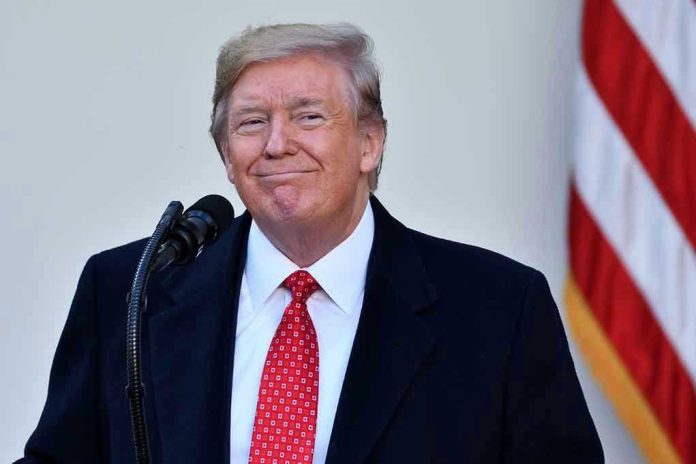
President Donald Trump reportedly told aides he would pardon “everyone who has come within 200 feet of the Oval,” a quip that landed as a headline because it fits a recognizable pattern: humor that doubles as a trial balloon. The Wall Street Journal report described repeated promises of sweeping pardons for administration officials before Trump’s second term ends in January 2029. The White House called it a joke, but also underscored that the pardon power is “absolute” in practice for federal offenses.
https://twitter.com/Razor777666/status/2042772680202400109
The public-facing “just kidding” matters less than the private repetition. Presidents don’t need to pre-announce pardons, and aides don’t need to know details unless they expect exposure. The open question isn’t whether Trump can pardon; it’s how far a president should go to immunize an entire circle of government actors in advance, without naming crimes, dates, or even a category of conduct. That’s where a joke starts functioning like a policy.
How the pardon power became an all-purpose shield
The Constitution gives presidents wide latitude to pardon federal crimes, and modern politics has pushed that lever from mercy to strategy. Trump’s current-term clemency total, reported at about 1,600, shows a comfort level with scale. Many of those grants reportedly involved January 6 participants, a politically charged use that treats clemency as a statement about national conflict, not just individual rehabilitation. Once a president normalizes volume, the barrier to a “blanket” approach drops.
Preemptive pardons occupy a strange space: they can resolve legal uncertainty for the recipient while creating moral hazard for government. If staff believe a future pardon waits at the end of the road, the incentive to stay inside the lines weakens. Conservatives tend to value both strong executive authority and a stable rule-of-law culture. The tension here is real: defending constitutional power while resisting the bureaucratic habit of turning government service into a get-out-of-jail card.
What makes “staff-wide” clemency different from ordinary controversy
Presidents often issue controversial pardons for allies, donors, or sympathetic defendants, especially near the end of a term. This story’s distinguishing feature is the target list: current staff, potentially broad, and potentially preemptive for unspecified offenses. That doesn’t describe mercy; it describes legal insurance. Reports also pulled in a first-term anecdote from former press secretary Stephanie Grisham, who recalled Trump casually offering a pardon tied to potential Hatch Act scrutiny. Casual talk can reveal how a leader views constraints: as rules or as nuisances.
Supporters will argue, with some logic, that Washington weaponizes investigations, and that aides become targets simply for serving a disliked president. That concern isn’t imaginary; politicized enforcement corrodes trust. Still, the most durable answer in a constitutional republic isn’t mass pre-pardons. It’s clear conduct standards, disciplined staffing, and transparency that starves bad-faith investigations of oxygen. When a president reaches for blanket clemency, he signals he expects legal fights ahead—and that he prefers shortcuts to courtroom clarity.
Karoline Leavitt’s two-track defense: humor plus “absolute” power
Press Secretary Karoline Leavitt reportedly dismissed the comment by saying the Wall Street Journal should “learn to take a joke,” while affirming the president’s pardon authority. That pairing is deliberate: it softens the optics without surrendering the underlying leverage. Messaging like that also tells staff two things at once. It reassures loyalists that the boss has their back, and it warns potential investigators that a pardon could erase their work with a stroke of a pen.
Common sense says the White House can’t have it both ways forever. If it’s purely comedic, it shouldn’t keep coming up. If it’s real planning, voters deserve clarity about what conduct is being anticipated. A conservative view of leadership prizes accountability alongside loyalty; the best leaders protect good people by insisting they stay clean, not by promising retroactive amnesty. If Washington is already too comfortable with “rules for thee,” then preemptive pardons risk cementing that cynicism as bipartisan normal.
The 2029 endgame and what to watch next
Reports suggest Trump has discussed the idea multiple times and even floated the possibility of a news conference for announcements, though no such pardons have been issued yet and no recipient list has been made public. The next tell won’t be a punchline; it will be process. Watch for staff quietly consulting personal counsel, for internal legal vetting of categories of exposure, and for any attempt to craft pardons broadly enough to matter but narrow enough to defend politically.
https://twitter.com/Bupattaya171832/status/2042786990597509486
If mass pardons arrive, they will reshape the incentive structure of executive staffing for years. Future administrations of either party would study the playbook: hire aggressively, fight aggressively, and wipe the slate at the end. That’s a grim way to run a republic. The healthier path—harder, slower, less headline-friendly—keeps investigations honest, prosecutions narrow, and pardons rare enough to mean something. Jokes are cheap. Precedent is forever.
Sources:
Trump promises mass pardons for staff before leaving office – WSJ
Trump allegedly promises pardons to staff members
Trump promises sweeping pardons for staff before leaving office: WSJ
Trump jokes about pardoning staff members before leaving office