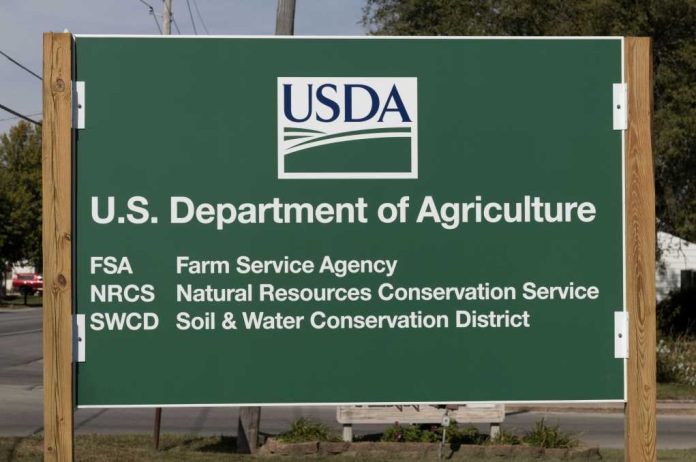
A deadly livestock parasite is creeping toward the Texas border again, and this time the Trump administration and Governor Greg Abbott are moving fast to stop it before ranchers pay the price.
Story Snapshot
- New World screwworm has been confirmed in Texas calves for the first time in decades, threatening cattle, wildlife, and ranchers’ livelihoods.[1][2]
- The Trump administration and Texas leaders are deploying quarantines, movement controls, and mass sterile-fly drops to keep the pest from establishing itself.[1][2][4]
- The Centers for Disease Control and Prevention (CDC) says human risk in the United States is low for now, but Central America and Mexico have logged over 170,000 animal cases.[4]
- Texas agriculture officials are urging border vigilance as additional cases mount just across the line in Mexico.[5]
Dangerous Parasite Returns to Texas After Decades of Control
The United States Department of Agriculture (USDA) confirmed that a New World screwworm infestation was found in a three‑week‑old calf in Zavala County, South Texas, marking the first detected case inside the United States after years of successful suppression along the border.[1] Officials reported larvae in the calf’s umbilical area and immediately labeled the case an animal‑health emergency because screwworm maggots eat living tissue and can be fatal if not treated quickly.[1] This pest was once eradicated from the United States; its reappearance signals a real threat to ranchers.
Within days of the first confirmation, federal animal‑health officials announced a second New World screwworm detection in another young calf roughly 5.6 miles from the original case, confirming that this was not a one‑off incident.[2] USDA’s Animal and Plant Health Inspection Service emphasized that other suspect samples from the surrounding area tested negative, suggesting the problem is still localized but serious.[2] For producers who remember pre‑eradication days, even a small cluster is a red flag: once established, screwworm spreads quickly through wounds on cattle, horses, wildlife, and pets.[6]
Trump Administration, Abbott, and Texas Officials Launch Aggressive Containment
Federal and Texas authorities moved quickly to protect U.S. livestock, forming a unified incident command team with the Texas Animal Health Commission to coordinate the response.[1][2] USDA established a 20‑kilometer infested zone around the original detection, with quarantines, livestock movement controls, and stepped‑up surveillance inside that zone to keep potentially infested animals from spreading the parasite.[1][2] Officials also ramped up fly trapping along the border and outside the normal sterile‑fly dispersal area to detect any additional incursions early.[1][5]
To kill off wild screwworm populations before they can gain a foothold, USDA accelerated release of sterile New World screwworm flies over the affected region.[1][2] The department was already releasing about four million sterile flies per week aerially near the border; in response to the Texas detections, it rushed in ground release chambers for targeted, high‑density drops in the local area.[1] This long‑proven method relies on swamping wild females with sterile mates so their eggs do not hatch, a strategy that historically helped eradicate screwworm from the United States and pushed it south into Central America.[3][4]
Outbreak to the South Shows What Happens If Border Controls Fail
While the Trump administration and Texas leadership are trying to keep the pest pinned down near the border, the situation just to the south shows how bad it can get when control breaks down.[4] The Centers for Disease Control and Prevention reports that since New World screwworm re‑emerged in Panama and Costa Rica in 2023, all countries in Central America and Mexico have reported animal and human cases.[4] By late May 2026, those nations had logged more than 171,700 animal infestations and over 1,960 human cases, underscoring the stakes for U.S. agriculture.[4]
Texas agriculture officials have been warning about rising screwworm detections in Mexico, including multiple cases within roughly 120 to 200 miles of the Texas line.[5] In January 2026, Texas Agriculture Commissioner Sid Miller urged “heightened vigilance” along the border as Mexico confirmed eight additional cases, pointing out that the parasite has been moving steadily north since it was first detected there again in November 2024.[5] Those warnings look prescient now that live cases have been confirmed in Texas calves, even as federal officials stress the U.S. food supply remains safe because screwworm does not infest meat headed to market.[1][2]
Low Human Risk Now, but Ranchers Cannot Afford Complacency
The Centers for Disease Control and Prevention notes that there have been more than 1,960 human screwworm cases in the Central American and Mexican outbreak region, yet the agency stresses that there is currently “no immediate risk of infestation to people” in the United States and that no locally acquired human cases have been detected here.[4] One travel‑associated case occurred in a person who returned from El Salvador, but investigators found no evidence of local transmission after that event.[3][4] For now, the fight is primarily about livestock, wildlife, and pets.
Where's the Biden administration's New World Screwworm Response Playbook? It would come in handy dandy about now. https://t.co/v1Yuo8Tzoi
— Rebecca Clester (@ClesterRebecca) June 8, 2026
Veterinary and extension groups are telling producers exactly what to look for and how to respond without panic.[6] Texas A&M AgriLife Extension and the American Veterinary Medical Association explain that ranchers should watch for draining or enlarging wounds, maggots or egg masses in wounds or body openings, unexplained discomfort, and foul‑smelling lesions on cattle and other animals, and report any suspicious case immediately to a veterinarian or state animal‑health official.[1][2][6] Quick reporting, isolation of suspect animals, and respect for temporary movement controls give the Trump administration and Texas authorities the best chance to stamp out this border‑driven threat before it becomes yet another permanent burden on American agriculture.
Sources:
[1] Web – New World Screwworm Cases Grow As Trump Admin, Abbott Vow to Fight …
[2] Web – Latest New World screwworm detection in Mexico prompts USDA to …
[3] Web – USDA Confirms New World Screwworm in Texas
[4] Web – The New World Screwworm in the United States: A Narrative Review …
[5] Web – New World Screwworm Information | Oklahoma State University
[6] Web – Current Status of New World Screwworm – usda aphis