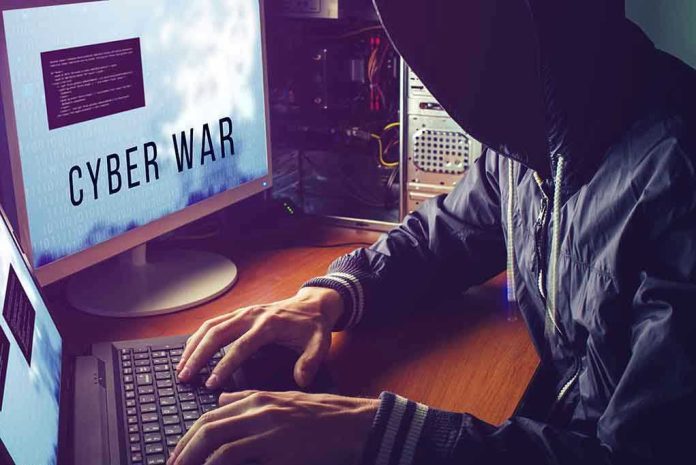
The French Interior Ministry’s cyberattack exposes a glaring vulnerability in national security infrastructure, raising questions about data protection and government response.
Story Overview
- Cyberattack targets French Interior Ministry’s email servers and police data.
- Approximately 16.4 million records potentially compromised.
- A suspect has been arrested, though the breach’s full scope remains unclear.
- No evidence supports a simultaneous cyberattack on France’s postal service and banking.
Cyberattack on French Interior Ministry
The French Interior Ministry suffered a significant cyberattack in early December 2025, compromising email servers and the “Chops” portal, which contains sensitive police data on wanted persons and criminal records. The breach persisted for several weeks before detection, affecting approximately 16.4 million records. The attack was described as unprecedented for France, targeting critical law enforcement data rather than public services like mail or banking.
The breach exposed deep vulnerabilities within the ministry’s cybersecurity infrastructure. The Interior Minister, Laurent Nunez, confirmed the attack on December 12, emphasizing the severity of accessing classified police files. Protective measures were swiftly enacted, and a 22-year-old suspect from Lumogus was subsequently arrested. However, the full extent of the breach and the exact origins of the cyberattack remain uncertain.
Government Response and Investigation
The French government responded quickly to contain the breach, enhancing security measures and restricting access to compromised systems. The arrest of the suspect suggests a domestic angle to the breach, although no foreign actors have been conclusively identified. The investigation continues as authorities seek to determine the attack’s origin and prevent future incidents. Despite the measures taken, the breach has raised significant concerns about the security of France’s critical infrastructure and data.
While no evidence supports the premise of a simultaneous cyberattack on France’s postal service and banking institutions, the incident underscores the heightened risk of cyber threats during the holiday season. The timing of the attack, just weeks before Christmas, highlights the need for robust cybersecurity defenses to protect sensitive data and national security interests.
Impact and Implications
The cyberattack has disrupted the ministry’s operations, creating a potential risk of data resale on the dark web. The exposure of wanted lists and criminal records could allow fugitives to evade capture, posing a significant threat to public safety. In the long term, the breach may erode public trust in the government’s ability to secure sensitive information, prompting calls for stricter cybersecurity regulations and increased funding for the National Cybersecurity Agency (ANSSI).
Cyberattack Takes Down French National Post Office and Bank Days Before Christmashttps://t.co/HTJPal6CEm
— Karl Stülpner 🇭🇺✝️💙🇩🇪 (@StuelpnerKarle) December 22, 2025
Approximately 16.4 million individuals, including criminals and wanted persons, are directly affected by the breach. The broader public also faces security risks as the incident highlights vulnerabilities within government systems. Politically, the breach places additional scrutiny on the Macron administration, particularly Interior Minister Nunez, as they navigate the complex landscape of cybersecurity threats amid upcoming elections.
Expert Perspectives and Analysis
Cybersecurity experts have emphasized the scale of the breach and the prolonged access attackers had to sensitive systems. Scott Schober from Cybercrime Magazine pointed to detection failures as a key issue, given the weeks-long access to critical data. The incident is a stark reminder of the ever-present threat of cyberattacks and the need for continuous vigilance and investment in cybersecurity infrastructure.
The breach underscores the challenges of defending against sophisticated cyber threats. As investigations continue, it is crucial for the government to address the weaknesses exposed by the attack and implement stronger security measures to protect against future incidents. The incident serves as a cautionary tale for other nations, highlighting the importance of proactive cybersecurity strategies in safeguarding national security.
Sources:
Global Banking and Finance Review