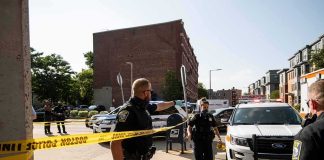
A homemade bomb built from camping gas canisters just turned Greece’s long-running political tensions into a deadly reminder of how fragile public safety really is.
Story Snapshot
- A pre-dawn firebomb attack on July 1 in Thessaloniki killed 72-year-old Vaya Nestora and injured four people at homes linked to Greece’s ruling New Democracy party.
- Greek counterterrorism police say three suspected anarchist extremists were arrested on July 10 in Thessaloniki and Crete in connection with the coordinated bombings.
- Authorities describe the devices as crude gas-canister explosives, a method long used by far-left and anarchist groups in Greece for political attacks.
- The case revives hard questions about how governments protect ordinary families while battling extremist violence and rising public distrust.
Deadly Firebomb Attacks Target Ruling Party Homes
Just before dawn on July 1, attackers hit three buildings in Thessaloniki linked to members of Greece’s governing conservative New Democracy party. Police say the bombs were made from camping gas canisters and flammable liquid, placed outside homes and cars used by party figures. One blast at the home of former candidate Afroditi Nestora killed her 72-year-old mother, Vaya Nestora, and injured Nestora and her father. The other attacks damaged property and left several more people hurt.
Prime Minister Kyriakos Mitsotakis called the assaults “cowardly, terrorist and murderous,” underscoring how they struck private homes rather than official offices. Local reports say the targets included other party officials such as executive committee president Zisis Ioakimovic and former lawmaker Savvas Anastasiades. The bombs exploded within minutes of each other around 4 a.m., suggesting planning and coordination rather than random vandalism. For many Greeks, the images of burned-out cars and shattered homes looked less like politics and more like war brought to the doorstep.
Police Arrest Three Suspected Anarchist Extremists
Nine days after the attacks, Greece’s counterterrorism police announced arrests they say are tied directly to the Thessaloniki bombings. Authorities report they detained a 29-year-old man in Thessaloniki and a 26-year-old woman on the island of Crete for suspected roles in the blast at Nestora’s home. Police also arrested another man accused of hiding the pair in his apartment before and after the attack, suggesting a small support network around the operation.
Officials describe the suspects as anarchist extremists and say the investigation is being handled by specialized anti-terror units, not local police. They are still searching for others who might have helped plan or carry out the three coordinated bombings. For a government under pressure to show it can keep citizens safe, these arrests are meant to prove the state can crack down on violent fringe groups while political anger runs high. Trials and evidence will be watched closely by both supporters and critics of the government.
A Long History of Political Violence and Public Distrust
Greek officials and experts note that the use of camping gas canisters in these attacks fits a pattern seen for decades. Leftist and anarchist groups in Greece have often used small, improvised gas bombs against political offices, banks, and companies, usually to send a message or cause damage rather than mass casualties. This time was different: a politician’s elderly mother was killed in her car outside the family home, making it the first deadly political bombing of this kind in years.
That deadly shift is feeding wider worries many people already have about how the “elites” and the state handle security and justice. Supporters of the New Democracy party see the attack as proof that extremist groups feel bold enough to strike at families while they sleep, and that the state must respond firmly. Many on the left, who distrust police and recall past crackdowns on protest movements, fear the case could be used to justify broader pressure on anarchists and other dissidents. Both sides share one uneasy belief: normal citizens are the ones who get hurt first when the system fails.
Why This Case Matters Beyond Greece
For Americans watching from afar, the story in Greece may feel uncomfortably familiar. A political class locked in bitter fights, fringe extremists turning anger into violence, and ordinary families caught in the crossfire while wondering if their government is focused more on its own survival than on their safety. The Thessaloniki bombing shows how quickly a “low-level” tactic like gas-canister attacks can move from symbolic damage to a deadly outcome when tensions keep rising unchecked.
In Greece, the coming court cases will test whether the state can deliver clear facts, real accountability, and protection without turning a terror probe into a tool for silencing dissent. In the United States, where many citizens already feel that deep state forces and party insiders play by their own rules, stories like this are a warning sign. When governments fail to keep violence away from politics—and politics away from family homes—trust drains out of the system. Once that trust is gone, it is hard to get back.
Sources:
humanevents.com, nbcnews.com, scmp.com, washingtonpost.com, instagram.com, facebook.com, wral.com, halifax.citynews.ca, nampa.org