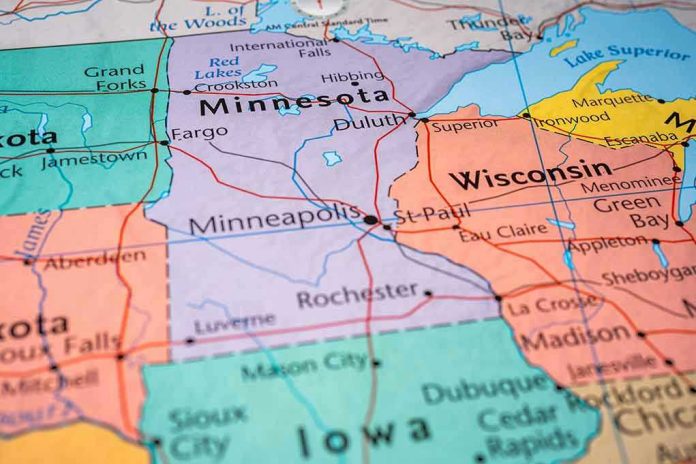
Minneapolis’s separation ordinance is a public policy, not a secret, yet it has sparked controversy over its stance against federal immigration enforcement.
Story Overview
- Minneapolis’s separation ordinance has been public since 2003, not a hidden directive.
- The ordinance prevents city employees from enforcing federal immigration laws.
- The policy reflects a deliberate choice to prioritize local resources for community wellbeing.
- Public reporting and transparency are integral to the ordinance’s implementation.
Minneapolis’s Separation Ordinance: A Public Policy
Minneapolis’s separation ordinance, established in 2003 and strengthened in December 2025, is a formal city policy designed to limit local involvement in federal immigration enforcement. It is a matter of public record, developed and approved by the City Council. The ordinance aims to prevent city employees from engaging in federal immigration enforcement activities, reflecting a deliberate policy choice to separate local responsibilities from federal immigration matters.
This ordinance is not a hidden directive but part of a transparent legal framework that prioritizes the health and safety of Minneapolis residents. Council Member Aurin Chowdhury emphasized the city’s priority to use its limited resources to benefit local communities, ensuring that city efforts are concentrated on advancing residents’ wellbeing rather than participating in federal immigration enforcement.
Insurrection: Bombshell Email Shows How Minneapolis City Employees Are Instructed to Work Against ICE https://t.co/FJltrhFWMA
— Deenie (@deenie7940) January 18, 2026
Transparency and Implementation
The updated ordinance includes several measures to ensure transparency and proper implementation. Public reporting requirements and employee training are key components, alongside official guidance documents available on the city’s website. These measures are intended to align the city’s actions with the ordinance’s goals, ensuring that city employees understand their roles and responsibilities under the new guidelines.
The public nature of the ordinance and its transparency provisions are crucial in dispelling rumors of secret communications or hidden agendas. The city has taken steps to ensure that its policies are publicly accessible and that any updates or changes are communicated clearly to the community. This open approach helps maintain trust between the city government and its residents, especially on contentious issues like immigration enforcement.
Legal Basis and Impact
Legally, the separation ordinance prohibits Minneapolis from entering into cooperation agreements with Immigration and Customs Enforcement (ICE). This legal framework is designed to protect the city’s autonomy and ensure that local resources are used in ways that directly benefit the community. The ordinance’s legal basis underscores the city’s commitment to maintaining a clear boundary between local and federal responsibilities.
By focusing on local priorities, Minneapolis aims to create a safer and more supportive environment for all residents, including immigrants. The ordinance’s impact is felt in the way city resources are allocated and in the broader message it sends about the city’s values and commitments. This legal approach is not about working against federal authorities but about ensuring that Minneapolis can effectively govern itself and address the unique needs of its population.
Public Perception and Controversy
Despite the public nature of the separation ordinance, it has sparked significant debate and controversy. Critics argue that the policy effectively works against federal immigration authorities, while supporters see it as a necessary measure to protect community interests. The debate highlights the broader tension between federal and local authorities on immigration issues, with Minneapolis’s ordinance serving as a focal point in the ongoing discussion.
The ordinance’s controversial nature underscores the complexity of immigration policy in the United States, where local, state, and federal interests often intersect and collide. Minneapolis’s approach reflects a broader trend among cities seeking to assert their independence in the face of federal policies perceived as detrimental to local communities. As such, the separation ordinance is not just a local issue but part of a nationwide conversation about the role of cities in immigration enforcement.
Sources:
City of Minneapolis Government Programs