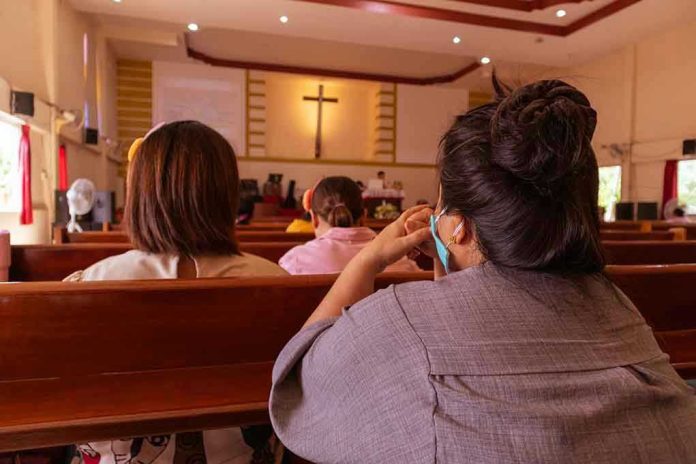
Amid the tranquil setting of a Sunday service, chaos erupted as former CNN anchor Don Lemon and anti-ICE protesters stormed a Minnesota church, raising questions on the sanctity of worship spaces and the boundaries of activism.
Story Snapshot
- Protesters, including Don Lemon, disrupted a church service in St. Paul, Minnesota.
- Children and congregants were reportedly traumatized by the invasion.
- Conservative commentators criticized Lemon’s role in the protest.
- The incident sparked federal investigation threats and calls for church protection.
Protest Erupts in Minnesota Church
On a seemingly ordinary Sunday morning, Cities Church in St. Paul, Minnesota, became the unexpected battleground for anti-ICE protesters. The disruption occurred on January 18, 2026, when activists, including Don Lemon, stormed the sanctuary during a live worship service. Chanting “Justice for Renee Good” and confronting the church’s lead pastor, Jonathan Parnell, the protesters halted the services and reportedly left children traumatized. Lemon’s participation and misidentification of Parnell added fuel to the chaotic scene.
The protest targeted Pastor Jonathan Parnell due to his dual role as a church leader and the acting ICE field office director in St. Paul. This dual identity made him a focal point for activists opposing ICE deportations, particularly in light of cases like “Renee Good,” which have sparked broader anti-ICE sentiments. The incident at Cities Church was not just another protest; it marked a direct confrontation within a sacred space, challenging the norms of religious sanctity and civil disobedience.
Conservative Backlash and Criticism
The protest did not go unnoticed by conservative commentators, including figures known as “Andrew & Blake,” who criticized Don Lemon’s involvement. They argued that the intrusion into the church not only disrupted the worship service but also traumatized children present, highlighting the negative impact of such protests on community and family settings. Their criticism underscored a broader debate on the appropriate boundaries of activism, especially when it intersects with religious practices.
The protest’s direct confrontation within the church raised questions about the legality and moral implications of such actions. Minnesota’s Section 609.28 criminalizes obstructing religious access, categorizing it as a gross misdemeanor. The incident also drew attention from federal authorities, with U.S. DOJ Assistant AG Harmeet Dhillon announcing a potential investigation into criminal violations, emphasizing the need for law enforcement intervention in protecting religious institutions.
Federal Response and Church Protection
The incident prompted a swift response from the North American Mission Board President Kevin Ezell, who condemned the disruption and pledged to protect churches from similar acts of “lawlessness.” This commitment to safeguarding religious spaces highlights the growing concern over rising incidents of church disruptions across the United States. According to the Family Research Council, hostile acts against churches have been on the rise, with 415 incidents reported in 2024 alone, including vandalism, arson, and armed aggression.
The broader implications of the protest at Cities Church extend beyond the immediate disruption. It raises significant questions about the intersection of activism, law enforcement, and religious freedom. The federal investigation, spearheaded by AG Pamela Bondi, underscores the seriousness of the incident and the potential legal consequences for those involved. The church, advised to follow de-escalation protocols, must now navigate the complex landscape of maintaining worship sanctity while addressing the underlying social and political tensions.