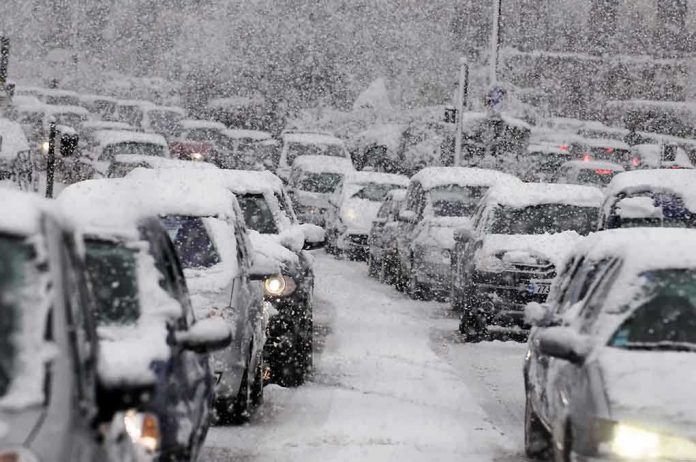
When a wall of white erased visibility on a Michigan highway in seconds, over 100 vehicles became twisted metal monuments to the lethal gamble of winter travel.
Story Snapshot
- More than 100 vehicles, including 30-40 semi-trucks, collided in chain-reaction crashes on I-196 in Ottawa County during whiteout lake-effect snow conditions
- The pileup occurred around 10:20 a.m. on January 19, 2026, forcing authorities to shut down the highway for hours while emergency crews extracted injured drivers
- Multiple injuries were reported but none proved fatal, with witnesses describing “absolute chaos” as vehicles careened off the road and down embankments
- The incident resulted from an arctic blast bringing 9 inches of snow and wind chills plunging to -40°F across the Great Lakes region
- School buses were deployed to evacuate stranded motorists as the roadway transformed into a frozen graveyard of mangled vehicles
When Nature Turns a Highway Into a Demolition Derby
The I-196 corridor near Zeeland Township and Hudsonville transformed from routine Monday morning commute to survival scenario in the span of minutes. Lake-effect snow, that uniquely Great Lakes phenomenon where frigid air masses collide with relatively warm lake waters, unleashed a blinding curtain of white that eliminated any semblance of road ahead. Drivers accustomed to Michigan winters found themselves helpless as their vehicles became projectiles in a slow-motion catastrophe orchestrated by Mother Nature’s cruelest winter trick.
Stephanie Biesboer, caught in the maelstrom, captured the scene succinctly: “absolute chaos.” Her words barely scratched the surface of what unfolded. Thirty to forty tractor-trailers, each weighing up to 80,000 pounds fully loaded, jackknifed and collided with passenger vehicles whose occupants had mere seconds to react. The physics of momentum on ice-slicked pavement proved unforgiving. Vehicles didn’t just stop; they were shoved off the roadway, tumbling down embankments in a horrifying cascade that continued as more drivers emerged from the whiteout unable to brake in time.
The Arctic Blast That Paralyzed a Region
This wasn’t an isolated weather tantrum. The Michigan pileup represented just one catastrophic moment within a broader arctic invasion affecting over 200 million Americans from the Great Lakes to Florida. Meteorologists tracked a polar plunge that dumped unprecedented winter chaos across regions unaccustomed to such severity. Nine-inch snowfalls blanketed areas within hours. Wind chills bottomed out at -40°F in northern reaches, while even Detroit shivered at -18°F. The storm system’s audacity extended southward, dusting Alabama, Georgia, and the Florida Panhandle with snow during the preceding weekend.
The National Weather Service had issued warnings, but forecasts cannot alter human behavior. Over 40 million people faced winter weather alerts, yet highways remained packed with commercial truckers on deadlines and commuters committed to reaching destinations. CBS News meteorologist Rob Marciano emphasized the storm’s seriousness, noting the combination of heavy snow and life-threatening cold created conditions where routine travel decisions became potentially fatal ones. The question lingers: at what point does personal responsibility to heed warnings collide with economic necessity and American independence?
Emergency Response Under Extreme Conditions
Michigan State Police coordinated the shutdown of I-196 while Ottawa County Sheriff’s Office personnel triaged injuries amid continuing snowfall. The response demonstrated both preparedness and improvisation. Emergency crews faced the dual challenge of treating injured motorists while preventing additional collisions as visibility remained dangerously compromised. School buses, those ubiquitous symbols of childhood safety, were repurposed as rescue vehicles to evacuate stranded drivers from the frozen disaster zone. The scene resembled wartime triage more than typical traffic accident response.
Parents like Pamela Flowers experienced terror learning their children were trapped in the pileup. The human element of this disaster transcends statistics. Behind each of those 100-plus vehicles sat real people, families traveling together, workers trying to earn paychecks, individuals who made the calculated risk that they could navigate winter roads safely. The relief that no fatalities occurred cannot erase the trauma of being trapped in crumpling metal as semi-trucks bore down through the white void, their drivers equally helpless to avoid impact.
The Lingering Questions About Winter Preparedness
By January 20, cleanup crews had cleared the wreckage and reopened I-196, but snow-packed roads remained treacherous. The broader storm system continued its assault, with forecasters warning that arctic temperatures would persist through late January. This incident forces uncomfortable questions about our collective preparation for weather events that, while dramatic, occur with predictable regularity in the Great Lakes region. Do we adequately salt and plow? Are trucking companies pressuring drivers to maintain schedules despite dangerous conditions? Should authorities implement mandatory highway closures when whiteout conditions are forecast?
The economic implications ripple outward. Thirty to forty semi-trucks involved means cargo delayed, contracts jeopardized, insurance claims filed. The cleanup costs alone strain county budgets. Yet the alternative—preemptive highway closures—carries its own economic penalty and infringes on the freedom of movement Americans hold dear. Finding balance between safety mandates and personal liberty remains perpetually contentious. Common sense suggests that when meteorologists predict life-threatening conditions, pride should yield to prudence. The I-196 pileup stands as brutal testament to what happens when humans bet against nature’s house odds.
Sources:
Fierce winter storm causes 100-car pileup, brings snow and deep freeze to Midwest, Northeast