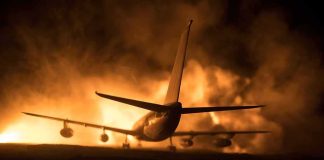
Europe’s airlines face a summer of chaos if diplomats cannot unlock the Strait of Hormuz within weeks, as the International Energy Agency warns the continent has roughly six weeks of jet fuel remaining before widespread flight cancellations begin.
Quick Take
- The IEA head warned Europe has approximately six weeks of jet fuel reserves due to the Iran war blocking the Strait of Hormuz, a critical oil shipping chokepoint
- Flight cancellations could begin as early as June, hitting Europe’s peak summer travel season when airlines earn their highest profits
- Forty-one percent of Europe’s jet fuel imports transit through the Strait of Hormuz, making the blockade a direct threat to aviation operations
- Airlines are already raising ticket prices and fuel surcharges to offset mounting costs as stocks dwindle
- Without a diplomatic breakthrough to reopen the Strait, Asia faces similar fuel shortages alongside Europe
The Six-Week Countdown Begins
When the International Energy Agency’s executive director sat down with the Associated Press on April 16, he delivered a stark message: Europe has “maybe six weeks or so” of jet fuel left. This is not hyperbole from an alarmist. This is a calculated warning from the world’s foremost energy monitoring authority, backed by real inventory data. The blockade of the Strait of Hormuz, triggered by escalating Iran war tensions, has choked off the primary artery supplying European refineries. Forty-one percent of Europe’s jet fuel imports normally flow through this narrow waterway. When that tap closes, the countdown clock starts ticking.
Summer Travel Season Meets Energy Crisis
Europe’s airlines are entering their most profitable season. Summer travel generates the bulk of annual revenue for carriers across the continent. Yet this year, that peak demand arrives precisely when fuel reserves are evaporating. The timing could not be worse. Airlines depend on summer bookings to offset winter losses and fund operations year-round. Flight cancellations during June, July, and August would devastate airline economics. Passengers already frustrated by rising ticket prices and fuel surcharges face the prospect of cancelled trips, rebooking chaos, and stranded vacations.
The Blockade’s Ripple Effects
This is not merely an aviation problem. Energy infrastructure damage from the Iran war means that even if diplomats negotiate a breakthrough tomorrow, production at damaged facilities could take months to recover to prewar levels. Airlines are already responding defensively. Rising fuel costs have prompted carriers worldwide to raise ticket prices, add fuel surcharges, and consolidate flights to reduce consumption. Some are exploring alternative fuel sources and operational efficiencies. But these measures buy time only. Without the Strait of Hormuz reopening, the math becomes impossible. Airlines cannot operate without fuel, and Europe cannot source fuel without that critical shipping lane.
A Geopolitical Hostage Crisis
The IEA head’s warning carries an implicit message: the energy crisis is now a diplomatic crisis. The Strait of Hormuz blockade is not a natural disaster or market failure. It is a deliberate act with geopolitical consequences. Reopening the waterway requires negotiation, compromise, or military intervention. None of these options are quick or certain. European governments face mounting pressure to find solutions, but their leverage in this conflict is limited. Airlines, meanwhile, prepare contingency plans for the worst-case scenario: widespread cancellations that would strand millions of summer travelers and crater airline revenues during the season they cannot afford to lose.
EUROPE: 6 WEEKS LEFT OF JET FUEL
FLIGHT CANCELLATIONS LOOM
LUFTHANSA TO CUT CAPACITY
SPIRIT CRUSHED; RISKS IMMINENT COLLAPSE— Citizen Watch Live (@Citizenwatchrep) April 17, 2026
The six-week timeline is not a prediction of doom. It is an urgent call for action. Without diplomatic movement, Europe’s summer travel season risks becoming a cautionary tale of how geopolitical conflict translates into economic pain for ordinary travelers and businesses dependent on aviation.
Sources:
Europe has ‘maybe 6 weeks of jet fuel left,’ energy agency head says