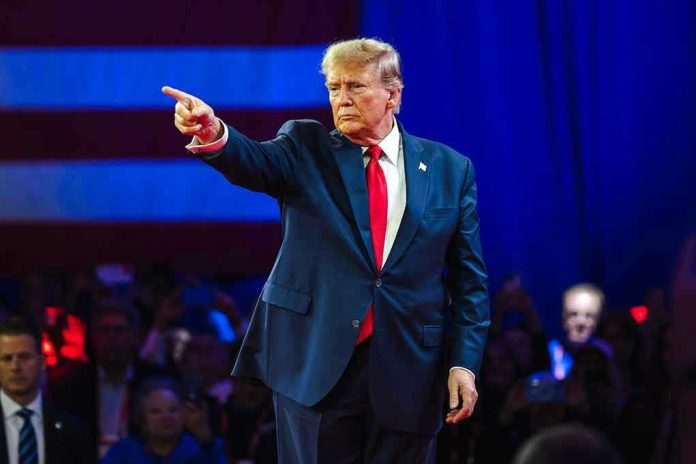
King Charles III’s state visit to President Trump’s America unfolds amid simmering UK-US tensions over the Iran war, raising questions about whether ceremonial pomp can mask deepening alliance fractures that threaten American interests.
Story Highlights
- King Charles and Queen Camilla arrived April 27 at Joint Base Andrews, greeted by Trump and Melania with tea and a White House beehive tour.
- Historic State Arrival Ceremony today features all six U.S. military branches in Pass in Review, followed by Charles’s rare congressional address.
- Visit navigates Iran war strains, with expected sympathy for Trump’s 2024 assassination attempt amid Trump’s low 36% approval ratings.
- First British monarch state visit since 2007, coinciding with U.S. 250th independence anniversary, blending symbolism and diplomacy.
Arrival and Warm White House Welcome
King Charles III and Queen Camilla landed at Joint Base Andrews on April 27, 2026, greeted by British Ambassador Sir Christian Turner and White House Protocol Chief Monica Crowley. President Donald Trump and First Lady Melania Trump hosted them at the South Portico, followed by afternoon tea in the Green Room. The Trumps then toured the South Lawn, showcasing a White House-shaped beehive near the Kitchen Garden. Official photos captured a painting of Trump’s raised-fist post-assassination attempt, signaling solidarity. This opening set a tone of alliance despite global strains.
Today’s Ceremonial Peak and Congressional Address
On April 28, the State Arrival Ceremony unfolds on the South Lawn with military honors, national anthems, a 21-gun salute, troop inspection, and the first Pass in Review involving all six U.S. military branches. King Charles will address a joint session of Congress, the second British monarch to do so after Queen Elizabeth II in 1991. A state dinner caps the day. Diplomats limit media access to emphasize protocol. These events highlight enduring UK-US ties in challenging times, including the ongoing Iran war.
Extended Itinerary and Symbolic Gestures
April 29 brings a New York visit to the 9/11 memorial with an official goodbye from the Trumps. On April 30, a Diplomatic Reception Room conclusion includes wreath-laying for fallen soldiers. Charles then heads to Virginia for a national park, horseracing farm, and Appalachian cultural performances, extending to Bermuda for environmental engagements. The itinerary blends remembrance, culture, and nature, reinforcing partnership amid tensions. Observers call this Charles’s biggest diplomatic challenge as monarch.
Diplomatic Tensions and Broader Implications
Strained UK-US relations stem from the Iran war, with Trump facing 36% approval amid unpopular policies. The visit promotes alliance for security and trade, contrasting warm public greetings with private frictions. Charles avoids politics, focusing on historical friendship and sympathy for Trump’s July 2024 assassination attempt. Short-term, it resets public perceptions; long-term, it bolsters ties as the first such visit since Elizabeth II’s 2007 trip under George W. Bush. Both sides share frustrations with elite-driven foreign entanglements.
Historical Context and Shared Frustrations
This marks Charles’s first U.S. state visit as king, reciprocating his hosting of Trump in 2019 and 2025. Timed for America’s 250th independence anniversary, it evokes breaking from British rule while affirming the “special relationship.” Conservatives see value in strong alliances protecting sovereignty against globalist overreach; many on both sides decry deep state influences prioritizing power over people. The pageantry underscores traditional values, yet highlights government failures to deliver prosperity through hard work.
Sources
State visit by Charles III to the United States