A 6-year-old girl is dead in North Carolina because a man deported three times was still driving on American roads.
Story Snapshot
- A 6-year-old girl was killed when a pickup ran a stop sign and smashed into her family’s SUV in Pitt County, North Carolina.
- The driver, Jaime Santiago Corona, is an illegal immigrant from Mexico who had been deported three times and reentered the country.
- Corona was driving with a revoked license and now faces charges, including misdemeanor death by vehicle and reckless driving.
- The case is fueling anger across the political spectrum over a system that failed to keep a known repeat offender off the road.
Deadly Crash On A Rural North Carolina Road
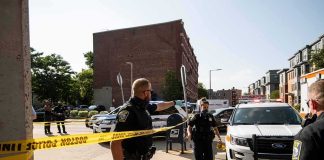
North Carolina State Highway Patrol says the crash happened on July 3 in Pitt County, on a rural road where families often drive home at night. Troopers report that 33-year-old Jaime Santiago Corona was driving a Dodge Ram pickup when he failed to stop at a posted stop sign. His truck then hit an SUV driven by 35-year-old Kelli Toler, who was traveling with her two young children. Six-year-old Calli Toler died at the scene from her injuries. Her mother and four-year-old brother were seriously hurt and taken to a hospital.
State Highway Patrol officers say Corona was driving with a revoked license at the time of the crash. They charged him with misdemeanor death by vehicle, failure to stop for a stop sign, careless and reckless driving, and driving while license revoked. These are serious charges, but they are still only state-level offenses. The investigation into the crash and the full set of possible charges is ongoing. For the Toler family, the legal details are little comfort after the loss of their child.
Repeat Deportations And Federal Detainer
The United States Department of Homeland Security (DHS) says Corona is a Mexican national who entered the country illegally multiple times and was removed three times, in 2019, 2023, and 2024. DHS states that he then illegally entered the United States for a fourth time before the July 3 crash. That pattern means federal agents and immigration courts had encountered him before, but he still managed to come back and drive on American roads. DHS now says immigration officials have lodged a detainer asking that Pitt County not release Corona from jail so that federal agents can take him into custody when state proceedings allow.
Federal officials also say Corona has a history of driving under the influence. That detail suggests this was not his first time posing a danger behind the wheel. Many Americans, on the right and the left, look at this record and ask how a person with repeated illegal entries, prior deportations, and a dangerous driving history could still be free to get behind the wheel. The case feeds a growing belief that the people in charge of public safety are slow to act until after tragedy strikes.
Immigration Enforcement And Public Safety Concerns
This crash is now part of a wider national debate over how immigration and traffic safety laws are enforced. In recent years, several deadly crashes involving undocumented drivers with prior deportations have been highlighted by media outlets and government agencies. These stories often shake public trust because they show the same pattern: a system knows about a person, removes them, and then somehow lets them come back and cause serious harm. Many conservatives point to these cases as proof that border and deportation policies are broken. Many liberals, even those who support fair treatment of migrants, also worry when enforcement failures lead to preventable deaths.
Research on traffic deaths and illegal immigration paints a more complex picture. A study from the Cato Institute found no clear nationwide link between higher illegal immigrant populations and drunk driving deaths. Other research suggests that allowing undocumented immigrants to get legal driver’s licenses can reduce hit-and-run crashes without increasing overall traffic deaths. These findings matter, but they do not erase the anger people feel when a child dies because a known repeat offender, who should not have been here at all, was able to drive unchecked.
North Carolina’s Broader Road Safety Picture
North Carolina crash data show that driver mistakes, like ignoring signs, are a major cause of serious wrecks across the state. Disregarding stop or yield signs, speeding, and driving without valid licenses often show up as common factors in fatal and severe crashes. In other words, what happened to the Toler family fits a wider pattern of dangerous driving. The difference in this case is that the driver’s illegal status and repeated deportations turn a tragic crash into a symbol of deeper government failure. For many citizens, it confirms a fear that the rules exist on paper but not in practice.
That shared frustration crosses party lines. Conservatives see a federal government that talks tough on border control but still lets repeat offenders slip back in. Liberals see a system that focuses on high-profile raids but fails to protect ordinary families on the road. Both sides see a bureaucracy that rarely faces consequences when deadly mistakes happen. As the Toler family mourns, this case raises hard questions: Who is truly accountable when warnings are ignored and a 6-year-old pays the price? And how many more times will Americans learn about dangerous drivers only after a child’s funeral?
Sources:
thegatewaypundit.com, dhs.gov, facebook.com, farrin.com, 8newsnow.com, thecgo.org, pubmed.ncbi.nlm.nih.gov