U.S. strikes on Iran stretched into a 13th night, with CENTCOM saying the campaign was meant to punish attacks on shipping and keep the Strait of Hormuz open.
Quick Take
- CENTCOM said the strikes hit Iranian military command centers, air defenses, drones, and maritime sites.
- Officials framed the campaign as a response to attacks on commercial shipping and U.S. forces.
- Reporting showed a running series of strikes over many nights, not a single raid.
- The public record strongly shows the Pentagon’s stated case, but it does not include the full legal file behind it.
What the strikes targeted
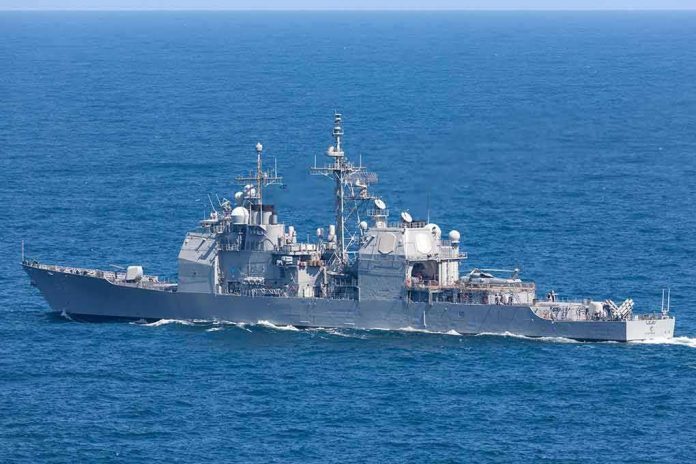
U.S. Central Command said its forces finished another round of strikes on Iran and hit military targets tied to the Strait of Hormuz. The list included command centers, maritime assets, missile and drone sites, coastal surveillance, and air defense systems. Reuters reported the same pattern, saying the strikes were aimed at degrading Iran’s ability to threaten commercial shipping and freedom of navigation.
That target set matters because it shows the U.S. military was not describing a broad attack on civilian infrastructure. Instead, CENTCOM kept pointing to military tools that could affect ships, sensors, and launch systems near the waterway. Reuters also reported that the strikes came after Iranian attacks on commercial vessels, which became the core public justification for the campaign.
How the White House and Pentagon framed the operation
CENTCOM described the strikes as a “powerful response” to Iranian attacks and said they were meant to impose heavy costs for targeting shipping. In later statements, the military said fresh strikes were designed to “further degrade” Iran’s ability to threaten the Strait of Hormuz. Reuters and the Associated Press both reported that U.S. officials tied the operation to maritime threats rather than to a wider drive to destroy Iranian civilian systems.
The strongest reading of the public record is simple: the Pentagon said it was defending U.S. forces, commercial ships, and the sea lane that carries a large share of global oil traffic. That message echoed across Reuters, NPR, CNN, and the Associated Press as the strikes continued for days. The government’s case was repeated so often that it became the main public narrative before any fuller legal explanation appeared.
The bigger question behind the air campaign
The strike series also revealed how fast a regional crisis can harden into open military action. Reuters reported a fresh set of strikes on July 8, and later updates showed the campaign reaching its 11th, 12th, and 13th consecutive nights. That pattern points to an ongoing operation, not a one-off retaliation. It also shows how quickly shipping attacks, air defenses, and missile sites can pull the United States deeper into a wider conflict.
#Iran says 3 people were killed & 2 injured in #US strikes on Qeshm Island in the Strait of Hormuz pic.twitter.com/yO8lZFd3od
— Ayman Mat News (@AymanMatNews) July 30, 2026
One major gap remains in the public record: the legal file. The sources describe targets and stated goals, but they do not provide the formal legal memo, proportionality review, or full incident report behind the first strike wave. That leaves room for later fights over whether the operation met the standard for self-defense. For now, the facts on the record are clear: U.S. forces kept striking Iranian military targets in response to what they said were attacks on shipping and American forces.
Sources:
townhall.com, centcom.mil, aljazeera.com, cnn.com, reuters.com