A once-rising Democratic star is back in an Alabama jail after reportedly missing a court-ordered drug test and then testing positive for methamphetamine, underscoring how the justice system handles addiction for the powerful and the ordinary alike.
Story Snapshot
- Former Florida gubernatorial nominee Andrew Gillum was jailed again after his bond was revoked in Alabama.
- Court records and prosecutors say he missed a required drug screening and later tested positive for methamphetamine in court.
- The case shows how strict drug-testing rules can quickly send defendants, even well-known politicians, back behind bars.
- The episode feeds broader public anger that political elites too often fall from grace yet the system still fails everyday Americans.
Judge Revokes Bond After Missed Test and Positive Meth Result
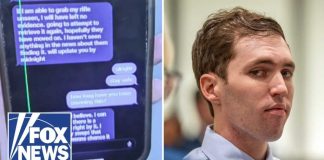
Reports from Baldwin County, Alabama say a judge revoked Andrew Gillum’s bond on August 6 after a serious violation of his release conditions. Court records quoted in local coverage state Gillum missed a scheduled drug screen and then tested positive for methamphetamine when he appeared in court that day. A Baldwin County assistant district attorney told reporters Gillum failed to show up for his drug test and later failed a test in the courtroom. Jail logs confirm he was booked back into county custody that same day.
Earlier coverage explains that Gillum was on a strict drug-testing plan as part of his pretrial release after a July arrest on drug charges in Alabama. One outlet described the system as a “color code” program, where defendants must call a hotline daily and report for testing whenever their color is announced. Under rules like these, missing a test alone can be treated as a major violation, even before any positive result is involved. That structure helps explain why the judge moved quickly to revoke his bond.
From Rising Democratic Figure to Repeated Drug-Related Arrests
Andrew Gillum is best known nationally as the former mayor of Tallahassee and the 2018 Democratic nominee for Florida governor, a race he narrowly lost to Ron DeSantis. In early July 2026, he was arrested in Daphne, Alabama, on accusations of possessing methamphetamine, marijuana, and drug paraphernalia. That arrest led to the bond and drug-testing conditions now at the center of his latest jailing. Weeks after the July arrest, Gillum publicly claimed he had tested negative in the same court-run drug program, pointing to at least one clean result.
Gillum’s long public struggle with addiction adds painful context to these legal setbacks. Years earlier, he admitted he had a problem and sought treatment after an incident in Miami Beach, saying he wanted to rebuild his life. Supporters saw that as a sign of honesty from a politician. Critics saw it as another example of a political figure getting second chances that everyday people rarely receive. Both sides now watch this new Alabama case and wonder whether the justice system is helping him get better or simply cycling him through jail again.
What Gillum’s Case Reveals About Drug Testing, Power, and Public Frustration
The Gillum story shows how court-supervised drug testing can become a tight leash for anyone facing drug charges, famous or not. When a judge orders daily calls and random tests, one missed appointment or failed screen can send a person straight back behind bars. For people fighting addiction, that pressure can feel less like support and more like a trap. For the public, it raises basic questions: does this system reduce drug use, or just lock people up faster when they stumble?
TMZ has reported that the former Tallahassee mayor and 2018 Florida gubernatorial candidate Andrew Gillum has been sent back to an Alabama jail after missing a scheduled drug test. https://t.co/Iv4GONzXd2
— WSVN 7 News (@wsvn) August 9, 2026
This latest fall from grace also taps into deeper anger many Americans feel toward political elites. Some conservatives see Gillum’s case as proof that leaders tied to “woke” politics and big government are morally corrupt, yet still benefit from a system they helped build. Some liberals see it as another example of a tough-on-crime approach that punishes addiction instead of treating it, even when the defendant is one of their own. Both sides share a growing belief that the federal government, and the broader political class, are failing ordinary citizens.
Shared Concerns About Fairness and Accountability
Gillum’s jailing does not directly involve President Trump’s administration or Congress, yet it lands in a climate where trust in institutions is low. Many Americans look at stories like this and feel the rules are both harsh and uneven. They see working people jailed for addiction while big donors and powerful lobbyists avoid serious punishment for white-collar crimes and policy failures that harm millions. That mix of strict control for the weak and soft treatment for the strong feeds talk of a “deep state” and corrupt elites.
At the same time, this case reminds us that addiction does not care about party, ideology, or past titles. A Democratic politician once celebrated on national television is now facing the same drug-testing regime and jail doors that thousands of unknown defendants face every year. Some will see that as proof the system can treat a famous figure like anyone else. Others will see gaps in the public record and worry that headlines keep winning out over careful review of court documents and lab reports. Those doubts only deepen the sense that America’s justice and political systems need serious repair.
Sources:
thegatewaypundit.com, aol.com, tmz.com, tallahassee.com, instagram.com