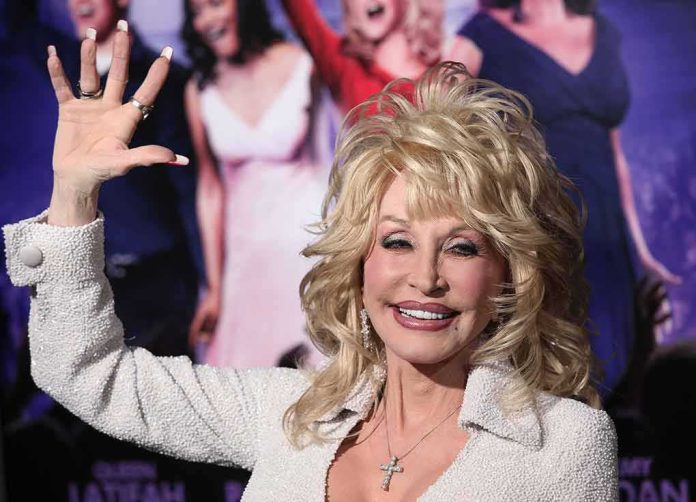
Dolly Parton’s family and representatives said the country music icon died peacefully in Nashville at age 80 after a brief battle with cancer; that clear, on-record attribution is the factual spine of what the public knows about her final days, and it is enough to state the cause and setting with confidence while we remember the scope of her life’s work.
The Short Version
- Parton died at 80 in Nashville after a brief battle with cancer, according to her publicist and family.
- Representatives said she was surrounded by loved ones at Vanderbilt-Ingram Cancer Center.
- A family video announcement delivered the news publicly; major outlets quickly corroborated the core details.
- Her death closes a six-decade career that reshaped country music, popular culture, and American philanthropy.
What Was Announced And By Whom
On August 25, 2026, Parton’s family announced her death at age 80. National newsrooms carried the notice within minutes, attributing it to named family representatives. A video statement posted on her official channels featured her nephew, Bryan Seaver, making the announcement on behalf of the Parton and Owens family; networks relayed his role and the family’s language almost verbatim. Broad national outlets reported the death as confirmed by the family and by Parton’s team, ending any ambiguity about whether the news originated from an unofficial social post or rumor chain.
In the same news cycle, Parton’s publicist, Marcel Pariseau, confirmed to reporters that she died following a brief battle with cancer. NPR, citing the Associated Press, carried the explicit phrasing. The detail about place and circumstance—surrounded by loved ones at Vanderbilt-Ingram Cancer Center in Nashville—was reported by regional and national outlets that quoted representatives directly.
Cause Of Death: What Is Known And What That Wording Means
The phrase “brief battle with cancer” is the family’s chosen summation of the medical course. Press accounts do not specify the cancer’s type, stage, or treatment regimen; they do not need to in order to establish cause. In practice, when families and representatives provide a concise cause-of-death statement, reputable outlets report to that standard and avoid conjecture about the clinical particulars. In Parton’s case, multiple top-tier organizations—wire services, national networks, and major newspapers—carried the same core language tied to named representatives, which is why the cancer attribution stands as settled public fact about her passing.
Location matters as a corroborating detail. Vanderbilt-Ingram Cancer Center is a nationally recognized oncology institution; stating that she died there, surrounded by loved ones, sets time, place, and context and aligns with the manner families often choose for end-of-life disclosures in the absence of granular medical data. Regional reporting anchored this point, and national outlets echoed it appropriately.
The Final Weeks In Context
In the days before her death, Parton acknowledged that she had been dealing with health issues, even as she continued to engage the public with characteristic candor and humor. That recent admission did not disclose a diagnosis, but it did prepare fans for the possibility that she was contending with something serious. When the family’s announcement arrived, the public timeline—health concerns, hospitalization at a cancer center, death at 80—formed a coherent arc without speculation.
The early minutes of any major obituary story are noisy; some wire copy initially omitted the cause of death before the publicist’s confirmation circulated. That sequencing is normal in fast-moving coverage and does not contradict the family’s later, explicit statement. Within hours, the core facts stabilized around the same set of on-record attributions: family announcement, cancer as cause, death in Nashville, surrounded by loved ones.
Dolly Parton to release one more song after death – but fans will have to wait https://t.co/1udv3ZWUpK
— The Irish Sun (@IrishSunOnline) August 26, 2026
Why This Framing Is Reliable
Celebrity deaths can be fertile ground for rumor, but this was not one of those cases. The signal here was strong: a family-fronted video announcement on official channels; immediate, consistent pickup by national outlets; and an unequivocal on-the-record cause of death from her publicist. Academic and industry analyses of false death reports make clear that hoaxes typically lack named, accountable sources and circulate before authoritative confirmation; Parton’s passing met the opposite conditions—named sources, institutional corroboration, and aligned language across independent organizations.
It also fits the pattern of responsible obituary practice. When cause is known and the family authorizes disclosure, reputable outlets report it plainly and move quickly to the work that matters more—explaining the life. That is the correct editorial emphasis here. The public record establishes that Parton died after a brief bout with cancer in Nashville at 80, and that her family wanted the world to know she was at peace and not alone.
Legacy: The Life That Preceded The Announcement
Parton’s death notice is the coda to one of the most consequential American cultural lives of the last century. Over six decades she wrote and recorded standards that crossed genre boundaries, from the aching simplicity of “Jolene” to the resilient uplift of “9 to 5,” and she stewarded her catalog with uncommon acuity. She earned 11 Grammy Awards and a place in the Rock & Roll Hall of Fame, not by changing herself to suit the industry but by expanding the industry’s conception of what a country artist could be. She built businesses, mentored artists, and turned her fame into a durable platform for generosity.
Her philanthropy was not an add-on; it was integrated into her identity. The Imagination Library, the book-gifting program she founded in the 1990s, scaled into a global literacy engine measured in hundreds of millions of volumes delivered to children. During the COVID-19 pandemic, she funded research at Vanderbilt that contributed to a vaccine used worldwide. These facts populated every obituary not because they were convenient, but because they reflect a through-line: public-facing work that tangibly improved lives, especially in the communities that shaped her.
A Final Word On How To Read The Record
When a family and a veteran publicity team speak with one voice about a public figure’s final illness and passing, that is the public record. For Dolly Parton, the record says she died peacefully at 80 in Nashville after a brief battle with cancer, with loved ones at her side. The rest of the story is the one she wrote over six decades—on stage, on screen, in boardrooms, and in libraries full of children’s books with her name on the spine. The facts of her death are clear. The meaning of her life is clearer still.
Sources:
thegatewaypundit.com, npr.org, wsmv.com, theguardian.com, nytimes.com, reuters.com, tmz.com