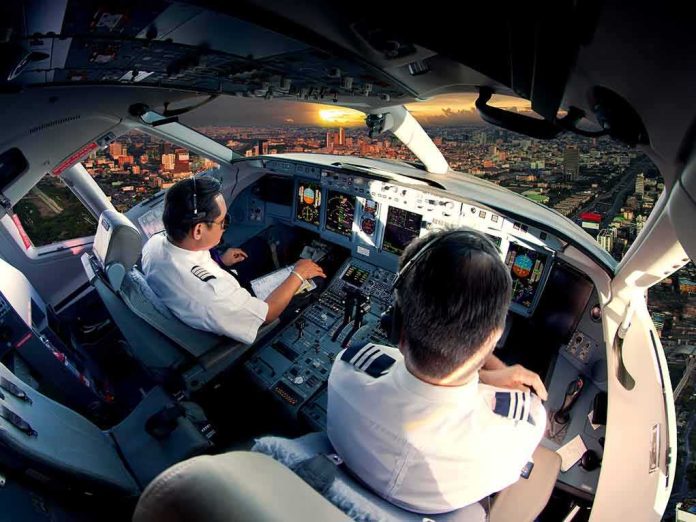
When a safety-critical system fails from within, the safeguards you trust can become the very instruments of harm; that is the enduring lesson of the Flydubai cockpit attack and why insider threats in aviation merit the same vigilance we reserve for external hijackers.
The Short Version
- Authorities say the Flydubai co-pilot assaulted the captain with the cockpit’s crash axe and tried to seize the aircraft, an act the UAE Attorney General described as an attempted terrorist attack.
- Passengers and off-duty pilots helped subdue the co-pilot after the wounded captain got the reinforced door open; the jet diverted safely to Tabuk, Saudi Arabia.
- Early airline statements avoided motive and urged patience while formal investigations proceeded.
- The case revives two durable questions: how to vet flight crew for rare but catastrophic insider risk, and how to manage cockpit access when the threat may come from the other seat.
What happened in the cockpit, and how it was stopped
On a Dubai–Tel Aviv sector, an altercation in the flight deck escalated into a violent assault. Investigators for the United Arab Emirates stated that the co-pilot attacked the captain with the cockpit’s crash axe and attempted to take control of the aircraft, characterizing the episode as an attempted terrorist attack. The captain, despite sustaining significant injuries during the struggle, managed to open the reinforced cockpit door, enabling passengers and additional crew to intervene and subdue the assailant. The flight diverted and landed in Tabuk, Saudi Arabia, with all passengers accounted for; early reporting and official updates converged on that basic sequence while investigators worked through motive and method.
The crash axe—mandated equipment designed for emergency egress and cutting through fuselage materials—illustrates a paradox familiar to any safety engineer: a tool meant to mitigate low-probability, high-consequence emergencies doubles as a weapon in the hands of a malicious insider. The barrier that kept attacker and passengers apart after 9/11—a reinforced, locked cockpit—likewise complicated rescue until the injured captain could open it. Layers of protection work best against outside-in threats; they are least forgiving when danger originates in the seat beside you.
Why authorities’ account now anchors the factual record
In the first hours after any cockpit incident, responsible operators hew to minimal language; Flydubai called it an “altercation” and stressed that facts would come from a formal probe. That caution is procedural, not exculpatory. What moves an event from speculation to established fact is the emergence of specific, accountable findings. Here, the UAE Attorney General’s statement—naming the crash axe, describing an attempt to seize the aircraft, and labeling the conduct a terrorist attempt—meets that bar. Saudi authorities’ preliminary account likewise described an assault on the captain that left both pilots injured, consistent with the sequence that ended in a safe diversion. In aviation, convergent, attributable official findings are the spine of the public record; they do not foreclose questions of motive or culpability in court, but they do establish what crews faced in the cockpit that day.
Caution still has a place. Assertions about broader ideological drivers, external coordination, or prior security flags require the same evidentiary weight before they harden into history. Investigators move deliberately because their conclusions shape training, hiring, and certification standards for years.
Mechanism: how insider threats bypass layered defenses
Post‑9/11 cockpit security was architected for intrusion from the cabin: hardened doors, access protocols, and behavioral detection aim to keep unvetted individuals out of the flight deck. An insider—someone who already cleared those barriers by training, licensure, and duty assignment—renders that architecture partially moot. As the Germanwings tragedy underscored, the most robust physical barrier can become a liability if the person behind it is the hazard. That is why modern operators rely on procedural and human-factor controls inside the cockpit: cross‑monitoring, sterile-cockpit discipline, and crew-resource management (CRM) that empowers assertive challenge across ranks. Those measures are highly effective against error and fatigue. Against determined violence, they are necessary but insufficient; intervention then depends on what happened here—a moment of access that allows help in, and enough healthy crew or passengers to restrain the attacker.
The crash axe’s role fits the same pattern. Regulations require accessible tools for egress and rescue; removing them to eliminate misuse could slow evacuation and cost lives in far more probable scenarios like post‑crash fire. The discipline, therefore, is not absolute denial of dual‑use tools but minimizing opportunities for misuse: stowage that delays impulsive grab, training that tightens CRM under stress, and pairing policies on sensitive routes that account for risk without breaching labor or safety norms.
Vetting and recurrence risk: rare events drive policy outsized by their frequency
Expert consensus places deliberate, violent cockpit acts in the “extraordinarily rare” category—far less common than medical incapacitation or operational error—but aviation security is shaped by outliers, not averages. Vetting is the first line of defense: background checks, recurrent license oversight, medical and psychological assessments calibrated to flag instability without stigmatizing candid self‑reporting. The balance is hard. Overly punitive regimes suppress disclosure and drive problems underground; lax regimes miss red flags. After the Flydubai case, expect renewed scrutiny of cross‑carrier information sharing, how operators adjudicate prior suspensions or security notations, and whether certain pairings or route assignments should carry enhanced review.
Two cautions should anchor that debate. First, privacy and due‑process frameworks exist for a reason; not every allegation or social‑media rumor will survive forensic examination, and careers should not be destroyed by insinuation. Second, screening is probabilistic. No vetting regime can reduce insider risk to zero without decimating the pilot pipeline or eroding trust to the point that CRM—the backbone of cockpit safety—fails. The strategic aim is not absolute prevention but early detection, rapid containment, and resilient recovery when the improbable occurs.
Cockpit access when the threat is inside
Since 2001, operators have treated the flight deck as a citadel, and for external threats that model works. But when an insider turns violent, that same door complicates rescue. Airlines have experimented with porthole viewing, multi‑step entry protocols, and two‑person rules that keep a second crewmember present whenever one pilot leaves the seat. Each measure carries tradeoffs—more people in the cockpit increase the chance of inadvertent interference; more complex locks can slow emergency ingress. The urgent task is to stress‑test current procedures against insider scenarios and refine the choreography of distress signals, door logic, and cabin‑crew response, so that what succeeded here—getting help in quickly without handing the cabin to a potential accomplice—becomes a trained reflex, not a fortunate improvisation.
⚠️ FLYDUBAI FZ1073 UPDATE
A deeper examination of Hamam al-Hammami’s online history has uncovered years of violent and extremist rhetoric predating the attack, as al-Qaeda supporters begin exploiting the attempted hijacking for propaganda, without claiming responsibility.
The… https://t.co/0zDlKjU5o0 pic.twitter.com/tCqn1T4MiY
— The Tectonic (@thetect0nic) October 3, 2026
What endures after the headlines fade
Three takeaways outlast the incident itself. First, the chain of survival in aviation is layered by design; when one layer—pilot integrity—fails, others can still work. A wounded captain’s decision to open the door and a cabin’s willingness to act exemplify that resilience. Second, policy built for the last disaster must be re‑interrogated for dual‑use risk; the right answer is rarely to remove a tool or unlock a door, but to design procedures around how they can be misused. Third, transparency matters: clear, attributable findings like the UAE prosecutor’s account are what allow the global system to learn, rather than litigate rumor by press release. The work now is slow and technical—vetting protocols, cockpit procedures, training updates—but in aviation, that is where safety actually lives.