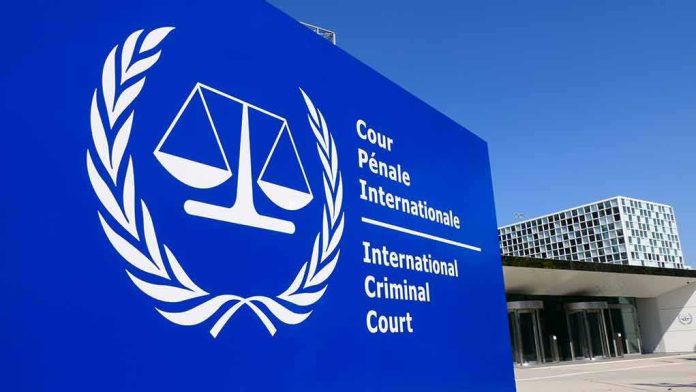
President Trump’s sanctions now put the International Criminal Court on notice: hands off American and allied sovereignty, or face real costs.
Story Highlights
- The White House order blocks assets and restricts visas for International Criminal Court officials and families.
- The administration says the Court claims power over Americans and Israelis even though neither joined the treaty.
- International Criminal Court records show a contested ruling that treats Palestine as within its reach.
- Israel’s formal bid to halt warrants was rejected, deepening the legal clash.
Sanctions Order Turns Policy Into Enforceable Action
The White House issued a formal order on February 6, 2025, imposing “tangible and significant consequences” on International Criminal Court officials tied to what the order calls the Court’s transgressions against United States interests. The order authorizes blocking property in the United States and suspending entry for Court officials, employees, agents, and their immediate family members. The administration framed the step as a defense of national sovereignty. The move signals that threats against U.S. service members and allies will face a concrete answer, not just words.
Secretary of State Marco Rubio argued that the United States and Israel never joined the Rome Statute and reject the Court’s reach over their nationals. The sanctions order reflects that view by tying penalties to actions targeting U.S. interests and partners. Supporters say this draws a firm line: no foreign tribunal should claim power over Americans without consent. The order also sets a process for designations, making the policy durable inside the federal sanctions framework.
Why Jurisdiction Is The Fight The United States Chose
International Criminal Court judges relied on a prior ruling that treats Palestine as a state party for the Court’s purposes and extends territorial jurisdiction to Gaza, the West Bank, and East Jerusalem. The chamber said that crimes on that territory fall within the Court’s reach regardless of who the suspect is. That means Americans or Israelis could face claims even though their countries never joined the treaty. The United States rejects that logic as a threat to sovereignty and due process expectations.
International Criminal Court materials also show this was not automatic. Judges issued the Palestine jurisdiction finding after contested submissions and debate. That record gives the United States a concrete legal target: the theory that “territory” alone can pull in non-member nationals. Washington argues that consent, not claims by third parties, must control who can judge U.S. personnel. Critics of the Court say this path invites politicized cases that punish allies while ignoring treaty limits the United States never accepted.
Israel Challenged The Court And Lost Key Motions
Israel filed to withdraw or vacate arrest warrants for its top officials and asked to suspend the investigation under Article 19(7) of the Rome Statute. The Pre-Trial Chamber rejected those requests, stating Israel had not made an admissibility challenge that would trigger suspension. That outcome hardened positions. It told Jerusalem and Washington that the Court plans to press forward. It also showed that the Court would not pause to weigh broader sovereignty objections raised by non-members.
The denial lets Court supporters claim the process is working as designed. They point to recorded rulings, filings, and procedures as proof of independence. The United Nations Secretary-General and other backers publicly defended the Court and warned that sanctions threaten judicial work and the rule of law. That message will resonate with global institutions. But it does not answer the core United States claim: non-members did not cede the right to judge their people in The Hague.
What Sanctions Mean For Americans, Allies, And The Court
Sanctions can freeze assets, bar travel, and chill financial services. Those steps raise the cost of targeting U.S. personnel. They also force banks, vendors, and partners to reassess ties with designated officials. Court leaders blasted the measures as a “flagrant attack” on independence and vowed to keep working under the Rome Statute. Backers warn that travel and finance limits can slow cases and harm victims’ access to justice, especially when staff face personal risk.
Trump Hits International Criminal Court with Sweeping Sanctions as Rubio Warns: ‘We Will End the ICC’https://t.co/ngD5UC1sVb
— Dr. Vinnie Boombatz (@Tango711th) October 11, 2026
The clash now runs on two tracks: law and leverage. On law, the Court cites its prior Palestine rulings and says territorial claims control. On leverage, the United States uses sanctions to deter any move against its citizens and key allies. That approach fits a long pattern: cooperate when interests align, resist when tribunals reach into U.S. ranks. For American readers, the bottom line is simple. Elected leaders are asserting that only the U.S. Constitution and U.S. courts judge Americans.
Sources:
cbsnews.com, whitehouse.gov, icc-cpi.int, news.un.org, aca-europe.eu