Accountability and humanitarian imperatives collide most violently when donors police misuse in the middle of a famine warning; the Somalia aid pause is a case study in how safeguarding taxpayer-funded relief can, if handled broadly and opaquely, shift the immediate cost of discipline onto civilians.
The Short Version
- The U.S. paused assistance that benefits Somalia’s federal government after alleging a government-directed demolition at Mogadishu Port damaged a WFP warehouse and led to the seizure of U.S.-funded food.
- Somalia denies destroying or confiscating aid, and the World Food Program’s leadership has been quoted saying the disputed food was ultimately recovered.
- Humanitarian actors warned that, amid severe food insecurity, a sweeping suspension would reduce lifesaving reach and could elevate famine risk in vulnerable districts.
- The unresolved facts about a single warehouse incident were leveraged into a broad conditionality policy; absent transparent evidence and proportional safeguards, that approach risks punishing beneficiaries rather than wrongdoers.
What triggered the U.S. suspension — and what is actually established
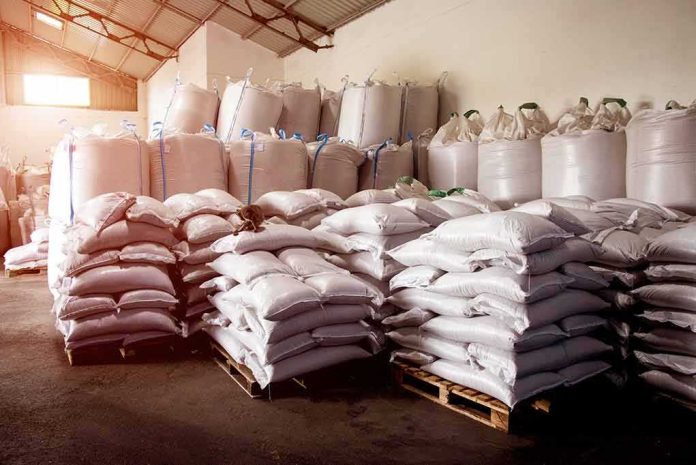
The State Department publicly tied the pause of assistance benefiting Somalia’s federal government to a specific episode at Mogadishu Port: alleged demolition of a World Food Program (WFP) warehouse and the seizure of 76 metric tons of U.S.-funded food. The department framed the step as zero tolerance for waste, theft, and diversion and conditioned any resumption on Somali government accountability and remedial steps. This is not a vague allegation; it names the location, the operational partner (WFP), and a quantity, and reporting attributed the demolition order to President Hassan Sheikh Mohamud via a U.S. official’s account.
Two material elements complicate that narrative. First, Somalia publicly denied destroying aid or seizing commodities, asserting the food remained under WFP control; second, The Atlantic reported that WFP’s deputy executive director, Carl Skau, said all of the disputed food was ultimately recovered. If accurate, recovery weakens claims of irreversible loss, though it does not resolve whether port authorities carried out an uncoordinated demolition that jeopardized donor-funded stocks. The quantity itself is inconsistent across accounts (75, 76, or 83 metric tons), and no public chain‑of‑custody or inspection record has yet reconciled those figures.
Stewardship versus access: how humanitarian systems manage risk
Donor insistence on safeguarding relief is not frivolous; it is a prerequisite for sustaining political support and preserving operational integrity in places where state control, corruption risk, and armed group taxation pressures are real. WFP’s own Somalia planning documents acknowledge both the indispensability of large-scale assistance and the risks of diversion and targeting errors in fragile contexts. The point is not that allegations are rare — they are not — but that allegations require a tight evidentiary loop and calibrated remedies so that missteps by authorities do not cascade into service collapses for civilians who have no leverage over port redevelopment decisions.
That calibration typically rests on three levers: specificity of proof (what, exactly, was lost or at risk), proportionality (which funding lines are implicated by the failure and which are not), and temporal containment (how quickly narrowly tailored safeguards can restore flows while accountability proceeds). The public record around the Somalia pause shows a clear policy rationale but does not disclose the underlying investigative file or a program-by-program risk analysis to justify halting all assistance benefiting the federal government, as opposed to targeted suspensions tied to the incident or implicated counterpart units.
What the humanitarian picture looked like during the pause
The timing of the suspension coincided with a deteriorating food-security outlook. Humanitarian briefings projected millions facing crisis or worse (IPC Phase 3+) through late 2026; WFP flagged a worst‑case famine risk for roughly 26,000 internally displaced people in Baidoa under specific conditions between October and December 2026. Advocacy groups argued that the abrupt U.S. cutoff would sharply reduce reach: NPR, citing Refugees International, reported WFP’s monthly caseload dropping from roughly 2 million to about 350,000 people receiving half rations after U.S. funding was frozen. Those numbers are contestable only if a government can show replacement financing or rapid restorations; absent that, the practical effect is diminished coverage precisely when needs are high.
None of this negates the legitimacy of enforcing anti‑diversion rules. It does underline a recurring operational truth: in Somalia’s mixed-access environment — droughts, flooding, insurgent control — blunt instruments that slow broad pipelines can amplify mortality risk even when they are meant to deter losses. Balancing those forces is the essence of humanitarian policy craft; it is not achieved by rhetorical absolutism on either side.
Where the competing claims stand
On the U.S. side, the evidence is most concrete on policy posture — zero tolerance for diversion; conditionality on remedial steps — and on the allegation’s basic contours. What is missing from public view is the documentary record that would settle core factual questions: demolition orders, warehouse inventory and loss reports, photographs, shipping and title records, and chain‑of‑custody logs. On Somalia’s side, the categorical denial addresses destruction and seizure but does not on its own disprove uncoordinated port actions. The WFP recovery claim, if as stated, would significantly reduce the case for treating the incident as an actual commodity loss while leaving open the question of risk exposure and coordination failure.
Given that posture, the strongest, evidence‑led synthesis is narrow and sober: an unresolved incident at Mogadishu Port triggered a sweeping conditionality response; humanitarian operators warn that the breadth and duration of that response suppressed lifesaving reach amid elevated need; and the factual record that would justify the scope of the sanction — or argue for its narrowing — has not been publicly produced.
How to align accountability with lifesaving impact
There is a well-tested playbook for these moments. First, publish a redacted incident dossier sufficient to establish the what, when, and how of any alleged loss or jeopardy — and the chain of authority behind the port action — without compromising sources. Second, segment risk: confine suspensions to directly implicated entities or counterpart functions (e.g., port authorities or specific ministries), while maintaining humanitarian pipelines managed through vetted, third‑party mechanisms. Third, impose remedial conditions that are operational, not theatrical: standard operating procedures for storage at redevelopment sites, 24/7 notification protocols, independent monitors embedded in port operations, and escrowed replacement costs when donor stocks are at risk.
Fourth, tie resumption to verifiable milestones on a published timeline; indefinite pauses in famine‑prone settings create perverse incentives and predictable harm. Finally, coordinate transparently with WFP and peer donors on caseload protection — identifying life‑saving programs (therapeutic feeding, general food distributions to displacement camps) that should be buffered even amid sanctions, so that accountability does not become collective punishment by another name. These are not soft compromises; they are how serious stewardship and serious humanitarianism coexist.
What the stakes are if the record stays opaque
If the United States maintains a broad suspension anchored in an incident it will not document, it invites a credibility contest it cannot conclusively win in public — and risks normalizing a tool that, however principled in intent, predictably depresses coverage for the most exposed communities. If, conversely, Somalia treats donor‑funded warehouses at a major port as redevelopment collateral, it corrodes trust essential to sustaining multi‑year pipelines — and can expect tighter, more intrusive controls as the price of access. Transparency will not end disagreement, but it will discipline it: a shared factual floor narrows policy choices to their core tradeoffs, which is where they belong.
Sources:
twitchy.com, alternet.org, fortune.com, cbc.house.gov, latimes.com, devex.com, oxfamamerica.org