A clear, sober truth sits at the center of this case: a 14-year-old boy was shot in the leg near Rufus King Park in Jamaica, Queens, and the gunman—clad head-to-toe in black—escaped on foot while the child survived and was stabilized at the hospital. That is what is known; it is also what matters most.
The Short Version
- A 14-year-old was shot in the leg near 153rd Street and Jamaica Avenue, by Rufus King Park in Queens.
- EMS took the teen to Jamaica Hospital; he was reported in stable condition.
- The shooter, described as dressed in all black, fled on foot; no arrest had been made.
- Police had not confirmed a motive or whether the victim was targeted.
What Happened: Place, Time, Injury, Flight
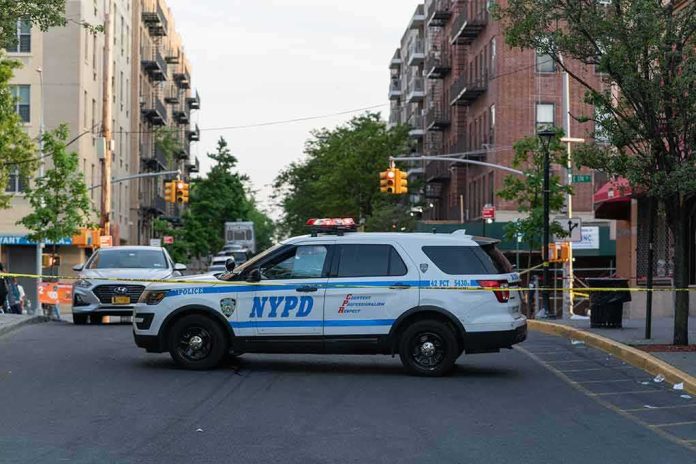
Police and contemporaneous local reporting align on the core sequence. Shortly before 5 p.m., near the corner of 153rd Street and Jamaica Avenue by Rufus King Park, a 14-year-old boy was struck by a bullet in the leg. First responders arrived, and EMS transported the teen to Jamaica Hospital, where he was reported in stable condition. Officers described the assailant as dressed entirely in black; the gunman fled on foot immediately after the shot and remained at large as of the initial reports. No arrests had been made, and the NYPD had not confirmed a motive or whether the teen was a specific target.
Two independent newsroom summaries—both sourcing the NYPD—are consistent on these essentials: location at the park’s edge, a single young victim with a leg wound, hospital stabilization, a suspect on foot, and an open investigation with no announced motive. These are the reliable anchor points for understanding the incident.
What Remains Undetermined—and Why That Is Normal Early On
Several details that readers often expect in the first news cycle were not yet public: the victim’s identity, the number of shots fired, shell casings recovered, and any immediate precipitating dispute. Even the geographic shorthand—“near” the park or “outside” the park—reflects a common imprecision at the outset of street shootings, where the practical boundary is the sidewalk, a park gate, or the curb. None of that ambiguity contradicts the core facts; it simply reflects the cadence of early incident reporting built on police-source briefings before formal documents or video are released.
That cadence is typical in American crime coverage. In the first hours, law-enforcement sources dominate the factual scaffolding—time, place, injury, suspect description—while motive, relationships, and forensic specifics trail by days or weeks. Media research has documented this structural reliance repeatedly: police are the primary incident narrators at the start, and their early account shapes public understanding until case files, court disclosures, or surveillance footage add texture.
Mechanics of an Open Investigation: From Scene to Suspect
When a shooting occurs on a city block bordering a public park, the immediate priorities for detectives are straightforward: stabilize the victim, secure the scene, canvass for witnesses, and preserve perishable evidence. Typical next steps include pulling surveillance video from nearby storefronts and traffic cameras, mapping a likely flight path based on witness directionality, and collecting ballistics for comparison against known firearms in the NYPD’s integrated ballistics systems. Those steps, while routine, take time; public releases tend to lag behind investigative milestones.
In a case like this—daylight, active foot traffic, commercial frontage at Jamaica Avenue—video is often the decisive accelerant to identification. Clothing descriptors such as “all black” help in early canvasses but narrow little on their own; gait, backpack logos, footwear, and sequence timing across multiple cameras become the higher-fidelity identifiers detectives prize. If investigators later determine the teen was targeted—as some early neighborhood chatter sometimes suggests in youth-involved shootings—that conclusion typically rests on pre-incident patterns (social media, prior disputes) and corroborating witness accounts, not on scene impressions alone.
Why Location Language Matters: “Near” Versus “Inside” the Park
Readers rightly care whether an act of violence occurred inside a park or at its perimeter; the policy implications for park safety, lighting, and patrols hinge on that detail. Here, the reporting places the shot at 153rd Street and Jamaica Avenue, adjacent to Rufus King Park—close enough for bystanders to treat it as park-proximate, but, in policing terms, a street-corner crime scene. That distinction affects which cameras are likely to be relevant (municipal street cams and shop systems versus interior park cameras) and which agency units may take lead or provide support. Precision here helps avoid distorting perceptions of park safety while still acknowledging the community impact when violence touches a civic space used by families.
It also matters for how subsequent incidents are compared. Queens has seen youth-involved violence both within and near parks in recent years; treating perimeter events as functionally identical to on-court or playground incidents makes it harder to target interventions effectively, whether that means reallocating Parks Enforcement Patrols, concentrating NYPD foot posts at gates, or investing in design changes to sightlines and lighting.
Context Without Hype: Patterns in Youth-Involved Street Shootings
On the facts at hand, this is a single-victim, leg-wound shooting with rapid flight and a living, stabilized victim—a profile that often, though not always, corresponds to dispute-driven street violence among acquaintances rather than indiscriminate fire. The public record here does not state a motive; responsible interpretation stops there. But experience with similar Queens cases suggests why investigators will examine the victim’s and suspect’s prior contacts, any recent disputes, and digital trails that can turn a vague clothing description into a specific identity within days. The neighborhood’s dense camera coverage and transit flows further raise the odds of a visual trail.
For the public, the prudent read is simple: sidewalk spaces near busy parks are not immune to targeted personal disputes that turn violent. The most effective near-term prevention remains visible presence—trusted adults, credible messengers, and patrols—at the precise blocks where teens cluster after school and on weekend afternoons. The longer-term levers are well known too: mediating youth conflicts before they migrate to public spaces and tightening the pipeline by which adolescents obtain handguns. None of those strategies lean on speculation about this case; they align with the pattern of incidents that do not end in immediate arrests and where early information is sparse.
A gunman in an all-black outfit remains at large after shooting a 14-year-old boy in the leg near Rufus King Park in Queens.https://t.co/Oha1Uf1xPf pic.twitter.com/75wnJhgZgL
— Next Stamina (@NextStamina) September 7, 2026
What to Watch For Next
Two developments will move this case forward. First, video: if investigators or the public surface usable footage from storefront cameras along Jamaica Avenue or the streets feeding into 153rd Street, expect the NYPD to release stills or a wanted flyer that refines the “all black” descriptor into specific, identifying features. Second, ballistics: if casings were recovered, laboratory comparison can connect this scene to other incidents, sometimes unspooling a short chain of related disputes.
Sources:
qns.com, fox5ny.com, nydailynews.com, nypost.com, queensda.org, facebook.com, centsondollar.com