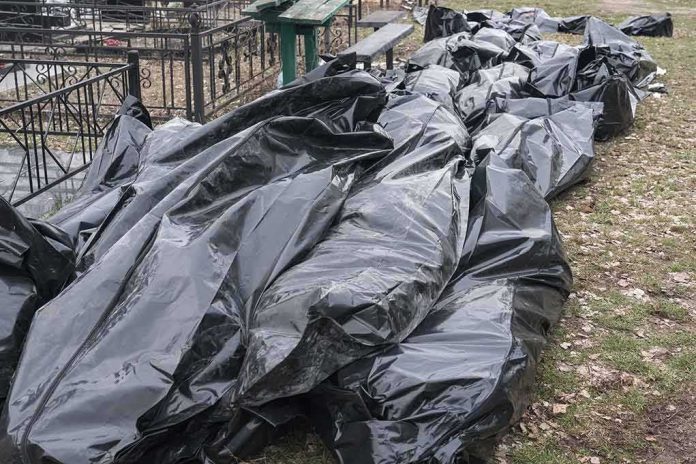
Nepal’s deadliest flooding in years forced officials to begin documented burials of unidentified victims as the death toll surged and thousands remained missing.
Story Snapshot
- Officials reported the death toll rising toward 800, with thousands still missing.
- Authorities began burying unidentified victims after collecting DNA and logging grave locations.
- Chitwan district selected a burial site at Devghat and recorded each grave for possible exhumation.
- Limited morgue capacity and fast decomposition drove the public health decision to proceed.
Rising Toll And Ongoing Search Operations
Nepal’s disaster count climbed quickly over several days as crews pulled bodies from rivers and debris. Reports on August 28 listed 469 dead, and by August 30 totals neared 800, with more than 2,500 still missing, according to officials cited by multiple outlets. The surge reflects the scale of the flash floods and the glacier collapse that hit mountain districts. Rescuers continued searching remote valleys and unstable slopes, often moving on foot where roads were washed out.
Police and local teams faced blocked bridges, damaged power lines, and scattered communities. Helicopters reached only parts of the disaster zone due to weather and terrain. Authorities warned that the official tally would likely rise as waters recede and access improves. Families lined up at makeshift posts to report missing relatives and to check lists, while officials gathered details that could later help match remains to names. The window for recovery before decomposition narrowed each day.
Why Nepal Turned To Documented Temporary Burials
Local morgues reached their limits as bodies arrived faster than storage allowed. In Chitwan, reports described capacity of about 50 and more than 200 bodies recovered in the area, pushing leaders to act to reduce health risks from rapid decay. Officials collected DNA samples before burial and assigned identification numbers. Teams geotagged grave locations and used markers above and below ground so families could request exhumation later when matches emerge through testing and records.
Ganesh Aryal, the chief district officer in Chitwan, oversaw a plan to maintain documentation while moving remains out of crowded facilities. The approach followed a basic mass-fatality playbook: tag, sample, record, and secure remains until identities can be confirmed. While not ideal for grieving families, the method aims to balance dignity, public health, and the need for later identification. India sent forensic support to help process DNA and speed potential reunions with families.
Where Burials Are Taking Place And Who Is In Charge
Chitwan’s District Security Committee chose an open public site in Devghat, in Bharatpur Metropolitan City-1, to handle unidentified victims. Officials said the site allows orderly rows, clear numbering, and safe access for future exhumation if a positive match occurs. The Kathmandu Post reported that the work followed Nepal’s directive for managing unidentified and unclaimed bodies, formalizing how remains are handled during a surge event.
Chitwan’s Devghat forest is being used for mass burials after the August 26 flash floods in Nepal. Authorities have buried 96 unidentified bodies and are collecting DNA samples to help families identify victims later.
VOICEOVER: Suha Nisviya S A
PRODUCER: Lavanya R
VIDEO… pic.twitter.com/mdctZGRgl3— The Federal (@TheFederal_News) August 31, 2026
Reports described dozens of burials completed and more planned as bodies continued to arrive. Totals in the first two days differed across outlets because teams were still digging, sampling, and recording. The process included mapping each grave and linking it to a unique case file, which ties to DNA profiles and any personal effects. That record set is crucial later when families bring dental records, fingerprints, or other details that can confirm identity and allow reburial according to custom.
The Global Playbook For Dignity And Identification
Disaster victim identification protocols used around the world call for careful logging of remains, collection of DNA, and a chain of custody to protect evidence. The International Criminal Police Organization’s disaster victim identification guidelines and public health manuals outline these steps to support accurate, dignified identification even when morgues are full and power is limited. Nepal’s move to document burials aligns with that guidance while rescue and lab work continue.
Sources:
youtube.com, khaleejtimes.com, thejournal.ie, english.news.cn, aljazeera.com, humanitarianlibrary.org