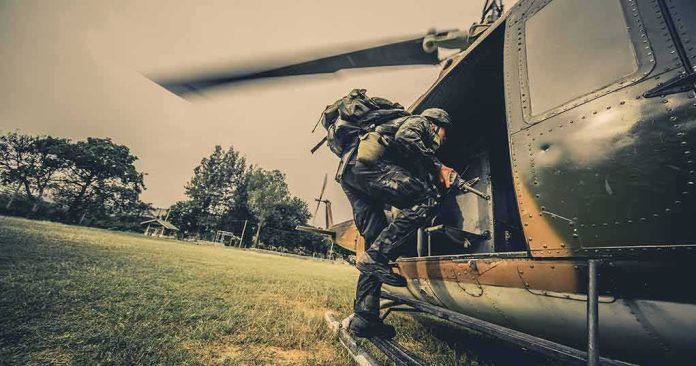
Georgia National Guard helicopters are helping police get rapid search warrants by spotting illegal marijuana from the air, sometimes over private homes.
Story Snapshot
- Guard aviation teams fly with police onboard to spot marijuana and support warrants.
- Officials say 343 illegal plants were removed in Georgia this summer.
- Courts have long weighed aerial searches against privacy near homes.
- The tactic boosts speed and reach for local law enforcement operations.
How the Helicopter Spotting Program Works
Georgia National Guard aviation teams fly light helicopters during the growing season. A local or state police officer rides along and scans the ground for marijuana. When the officer confirms a likely grow, that observation helps establish probable cause to seek a search warrant from a judge. Guard officials describe this as air-to-ground support that closes resource gaps for police and speeds evidence gathering for warrants.
Guard leaders say the Counter Drug Program pairs pilots, crews, and mission planners with multiple state agencies. The teams coordinate radio traffic, mark locations, and guide ground units to target sites. Officials reported that these partnerships led to the removal of 343 illegal marijuana plants in Georgia communities this summer. They present the effort as a focused way to hit illegal grows without deploying large ground teams for slow, door-to-door checks.
Why Aerial Spotting Matters for Warrants
Police need probable cause to get a judge to approve a search. From the helicopter, the onboard officer looks for plant patterns, irrigation lines, and other signs. When the officer believes it is marijuana, that observation can anchor a warrant request, which then allows a legal search on the ground. The Guard’s public statements describe this role plainly: aerial observation with a police officer onboard assists in obtaining the evidence needed for a rapid search warrant.
Georgia has used versions of this tactic for decades. State records in the early 1990s described weekly Guard helicopter flights during the marijuana season and Guard teams that helped cut seized plants. Federal testimony in later years described similar aviation support, including photography and infrared tools, as part of the broader drug mission. The Guard has framed these flights as standard support to civil authorities under long-standing counterdrug roles.
Privacy, Property Lines, and Court Boundaries
Courts have often allowed aerial observation of open fields, but they draw tighter lines near homes and outbuildings. Georgia appellate cases show police using visible plants and related items in “plain view” to build a link back to a home and then secure a warrant. Judges review that link, along with officer observations, to decide if the search may proceed. The legal boundary between open land and the private area around a home matters in these rulings.
Supporters say aerial spotting saves money and time. A helicopter can scan wide areas in one flight and guide officers to a likely target. That can reduce fruitless ground searches and speed plant removal when the season peaks. The Guard and partner agencies also stress interagency benefits: shared radios, shared maps, and faster action when a judge signs a warrant. Those gains, they argue, deliver a leaner response in a period of tight budgets and rising demands.
What This Signals About Government Power and Accountability
Many Americans worry that government power is growing while basic duties go unmet. This program shows both sides of that tension. On one hand, officials highlight a precise tool that helps police follow the law and limit broad sweeps. On the other, flights over private property raise old questions about where surveillance ends and intrusion begins. The policy choice is clear: keep tight rules, clear oversight, and clean paper trails so the public can see how each warrant was built.
Sources:
yahoo.com, dlg.usg.edu, ga.ng.mil, dvidshub.net, law.justia.com