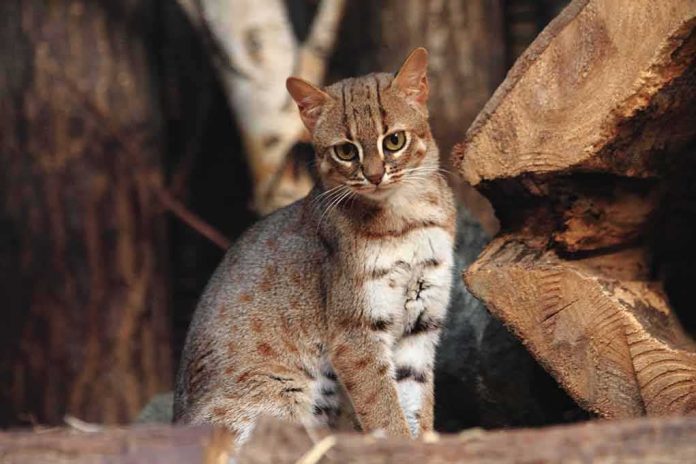
A three-pound spotted wildcat from Bolivia has been confirmed as a brand-new species, the first such feline named in more than a century.
Story Highlights
- Scientists identified Leopardus tilcayo, a new wildcat species from Bolivia’s Yungas.
- Researchers say it is the first newly named living cat species in over 100 years.
- Genetic analysis and museum samples helped confirm the species split about 1.4 million years ago.
- Reports cite two known live individuals that guided description and images.
What Scientists Found and Why It Matters
Researchers reported a new wildcat species from Bolivia’s Yungas cloud forest, named Leopardus tilcayo. News outlets describe a tiny, roughly three-pound cat with a light brown coat, rounded ears, and irregular rosettes. The species was presented as the first newly named living feline in more than a century, which is rare in modern zoology. The discovery highlights how careful field work, local knowledge, and lab tools can still reveal hidden wildlife in well-studied animal families.
Scientists used genetic testing to separate Leopardus tilcayo from closely related tiger cats. Reports state the team compared DNA with related species and examined museum material to confirm the lineage. Coverage describes a split from its nearest relatives about 1.4 million years ago, which supports the species claim. These methods match a wider trend where genomes and archived specimens help define new species in groups with look‑alike animals.
How The Cat Was Documented
Outlets say two living individuals informed the description. One was reportedly found as a kitten and brought to a wildlife refuge, where caretakers first thought it might be a pet. Another was caught on camera in the wild. Photos and measurements supported the small size, coat pattern, and body shape that fit a distinct profile. The small sample shows how rare and hard to find this cat may be in its steep, cloud forest home.
Scientists and journalists place the habitat in Bolivia’s Yungas, a moist mountain forest on the eastern Andes. These forests hold many plants and animals that live in narrow bands by elevation. The cat’s range likely follows that pattern. Reports link the find to areas near La Paz and the Nor Yungas, which sit along rugged slopes and deep valleys. That terrain helps explain why a cat this small could stay unseen for so long.
Why This Discovery Resonates Now
For many readers, this feels like a rare win: careful science, local voices, and patient work led to a clear result. In a time when big institutions often seem slow or self‑protective, this story shows focused teams can still deliver real value. A new species adds urgency to protect the forest that sustains it. If the habitat goes, the species could vanish before most people ever see it outside a screen.
Scientists in Bolivia have identified and named a previously unknown wild cat species — the first such discovery in a century. The 10-year-old wildcat, named Tigrino, is one of two known living members of the newly identified Leopardus tilcayo.
Here's more of its story. pic.twitter.com/2dZCNReWTh— CGTN America (@cgtnamerica) September 20, 2026
The methods also show a shift in how science works. Many “new” species are not found by chance walks in the woods. They are confirmed by DNA, old bones, and skins in collections, plus precise photos from the field. That mix can sort out look‑alike animals that share traits. It also shows why public support for museums, labs, and refuges matters. Those places hold the clues that help experts map life on Earth.
Sources:
discoverwildlife.com, cbc.ca, timesofindia.indiatimes.com, livenowfox.com