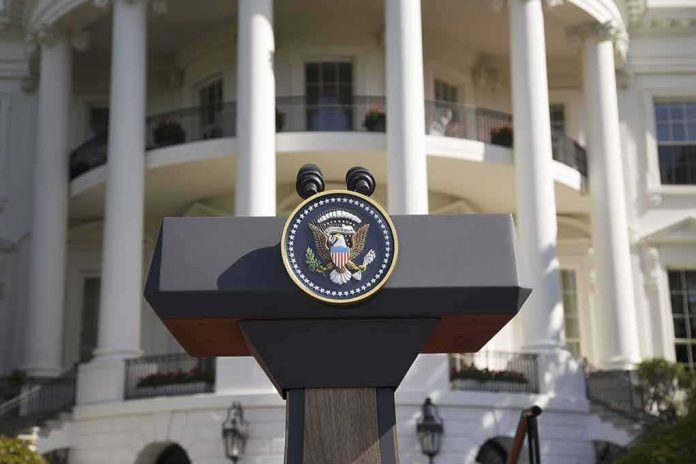
President Trump used a legal waiver to pause sweeping new Russia sanctions just as his administration advanced a plan to import large volumes of Russian diesel.
Story Snapshot
- Trump signed an executive order pausing key Graham Act sanctions and tariffs using a statutory waiver.
- Treasury authorized a pathway for Russian diesel as part of a plan to boost supply and lower fuel prices.
- Bipartisan critics said the move undercuts Congress and could aid Russian revenue during the war in Ukraine.
- Evidence of completed diesel deliveries and price impacts remains limited and unproven.
What The Executive Order Did And Why It Matters
The White House executive order invoked Section 115 of the Lindsey O. Graham Sanctioning Russia and Iran Act to waive sanctions, restrictions, and duties after a national-interest certification to Congress. The order paused new tariffs reportedly as high as 500 percent on Russian goods and up to 100 percent on major buyers of Russian crude and natural gas, as well as penalties for sanctions evasion. The order stated the waiver served the national interest, giving the president room to act under the law’s design.
ABC News reported the waiver followed a Treasury license that cleared a pathway for a proposed diesel arrangement. Reporting described the deal as a plan to bring Russian diesel into the United States to ease a supply crunch and tame prices. The administration linked the policy to energy affordability and market stability. Supporters framed the choice as relief for consumers during high fuel costs, while critics warned it softened pressure on Moscow at a critical time.
The Diesel Plan And Claimed Benefits
Trump said Russia would supply more than 300,000 tons of diesel immediately, 500,000 tons in November, and 1 million tons soon after. He presented the volumes as a way to add supply and reduce global energy prices. News coverage tied the announced quantities to the waiver and the Treasury action. The plan fit a common sanctions tension: strict rules can reduce revenue but also reduce supply, so governments sometimes use waivers to manage price spikes and diplomatic fallout.
Ukrainian President Volodymyr Zelenskyy said the diesel deal would send cash “flowing back into Russia.” That view echoed bipartisan pushback in Washington. Republican senators John Cornyn and Thom Tillis criticized the pause, with Cornyn saying the late Senator Lindsey Graham “would be appalled.” These objections framed the waiver as undermining Congress’s intent and weakening leverage over Russia, even if the law itself allows waivers when a president certifies a national interest.
Open Questions On Deliveries, Dollars, And Prices
The public record has not shown whether the announced diesel volumes moved, whether payments were made, or how much money reached the Russian state. Reports described proposed quantities and legal permissions, but not completed shipments, import entries, or revenue transfers. Without those details, the scale of any Russian financial gain is uncertain. Energy experts also noted that the effect on prices could be modest given global market size and other factors that drive fuel costs.
President Trump puts new Russia sanctions passed by Congress on hold, saying a waiver is in the U.S. national interest pic.twitter.com/QTDwZHZLHk
— Pearl. gem (@Alyssa8hh) October 18, 2026
The White House emphasized that existing Russia sanctions outside the Graham Act remained in force. That point matters for judging the net pressure on Moscow. Still, the timing drew concern because Congress had just passed the law, and the waiver arrived before key provisions took effect. The move highlighted a long-running clash: Congress tries to lock in pressure tools, while presidents seek flexibility to address near-term shocks, consumer pain, and foreign policy tradeoffs.
Why This Fight Resonates Across The Aisle
Americans across the spectrum worry that Washington bends rules for the well connected while missing kitchen-table needs. This case touches both fears. The administration says the waiver protects drivers and truckers from high prices. Lawmakers and Ukraine say it risks easing pressure on Russia. Both can be true in part. The real test is data: shipment records, price trends, and budget impacts. Until then, the outcome for wallets here and the war there remains unclear.