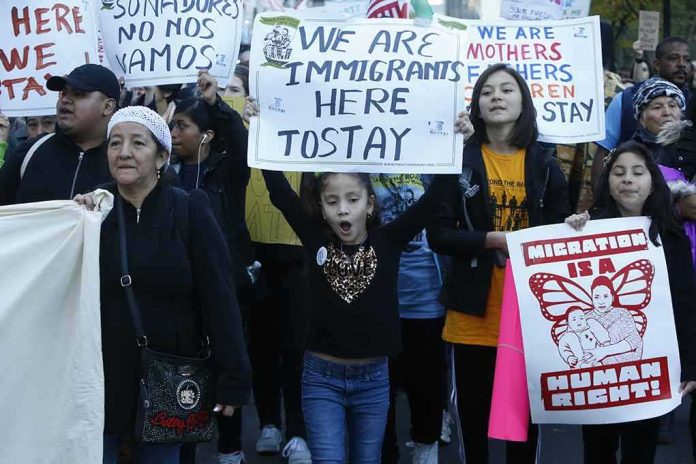
Millions raged in the streets over an ICE story that turned out to be built on fake and recycled videos rather than what really happened.
Story Snapshot
- Key riot footage and ICE clips that sparked outrage were old or miscaptioned, not from current events.
- Fact-checkers showed some “ICE riots” videos came from 2020 protests or 2025 clashes, not the latest unrest.
- Other viral workplace “ICE raid” clips were never real at all, but artificial intelligence creations.
- The chaos reveals how rage-bait media and government spin feed public mistrust across the political spectrum.
How a Fake ICE Story Lit the Fuse
Across social media, a dramatic story spread that Immigration and Customs Enforcement officers had carried out shocking raids and triggered brutal crackdowns, leading directly to massive riots in several cities. Many Americans, already angry at the federal government, saw these clips and believed they proved their worst fears about abuse of power. But investigators have now shown that the most viral footage linked to this story did not show what people were told it showed.
Independent fact-checkers traced one widely shared “riot” video, supposedly tied to a recent ICE-related shooting in Minnesota, back to the 2020 protests after George Floyd’s killing. The clip, showing flames and street clashes, was lifted from an ABC News broadcast and earlier posts by local reporters, then falsely recaptioned in 2026 as current unrest over ICE. Another dramatic clip of police cars burning in Los Angeles also turned out to be from 2020, not from new anti-ICE demonstrations.
Old Protests, New Captions, and AI Fakes
Fact-checkers found a pattern: highly emotional protest videos were stripped of dates and locations, then reused to inflame anger about current ICE actions. A video of intense clashes outside a federal building in Los Angeles was pushed as proof of “nationwide riots,” but deeper review showed it was recorded during protests on June 9, 2025, not during the latest unrest in Minnesota. These recycled clips made it look like the whole country was on fire, when the real situation was more limited and specific.
Other viral videos were not recycled—they were never real at all. Clips that appeared to show ICE agents storming Walmart, McDonald’s, Pizza Hut, and even a classroom were confirmed as artificial intelligence fabrications. Multiple independent teams, including wire-service verification desks, spotted telltale signs like watermarks from AI tools, odd visual glitches, and identical clip lengths. The content was mass-produced by engagement accounts built to farm clicks and rage, not to inform citizens about real policy or real events.
The Snowball Myth and Global Misfires
One of the most shared images showed supposed New Yorkers throwing snowballs at ICE officers in winter, presented as a symbol of everyday Americans fighting back. Reporting from Newsweek and other outlets traced this video to Moscow in January 2021, during protests over the jailing of Russian opposition leader Alexei Navalny. Uniforms, street signs, and other visual details all matched Russian riot police, not United States immigration agents, yet the clip traveled the world as “proof” of New York resisting ICE.
Snopes reviewed a wide set of ICE-related images and found several more cases where foreign scenes were mislabeled as United States immigration crackdowns. At least one video that claimed to show Los Angeles residents attacking ICE agents was actually filmed in Mexico and had nothing to do with United States policy. In other posts, protest footage from Minneapolis was wrongly repackaged as unrest tied to Indian student movements, showing how the same clips can be weaponized in different countries.
Real Anger, Distorted Reality
These findings do not mean everything about ICE or the recent protests is fake. Reporters have documented real confrontations, including a Los Angeles protest where a law enforcement officer fired a rubber bullet at a woman walking on a sidewalk, sparking serious questions about police tactics. There are verified cases of aggressive enforcement and of communities feeling targeted or afraid. But the flood of synthetic and miscaptioned videos makes it harder for people to know which incidents are real and which are manufactured.
The deeper problem is what this episode says about trust. Many conservatives already feel the media hides crimes by illegal immigrants and twists stories to attack President Trump. Many liberals feel the government hides abuses by ICE and uses selective clips to sell “law and order.” The Washington Post has reported that the Department of Homeland Security itself has used old footage, filmed during unrelated operations, in official videos meant to show recent chaos. That kind of editing only adds fuel to the belief that elites on all sides are playing games with the truth.
Why Both Left and Right Should Care
When fake or repurposed ICE videos drive people into the streets, both sides lose. Ordinary citizens, already struggling with high costs, crime worries, and fears about surveillance, make decisions based on false images instead of solid facts. Engagement farms earn money, politicians gain talking points, and trust in every institution falls even lower. Fact-checkers now warn that immigration enforcement will remain a prime target for artificial intelligence “rage-bait,” because it blends fear, identity, and low visibility.
For Americans who believe the federal government is failing them, this story is another warning sign. Powerful actors—whether they are click-chasing accounts, agencies using dramatic stock footage, or partisan media—are shaping what people think is happening on the streets without giving them the full, honest picture. The only way to push back is slow and frustrating: check sources, look for dates and places, and remember that the most outrageous video in your feed might be from a different year, a different country, or a machine that has never set foot in the United States.
Sources:
townhall.com, newsweek.com, washingtonpost.com, globalnation.inquirer.net, theconspiratory.com, france24.com, factcheck.afp.com, dw.com, fullfact.org, snopes.com