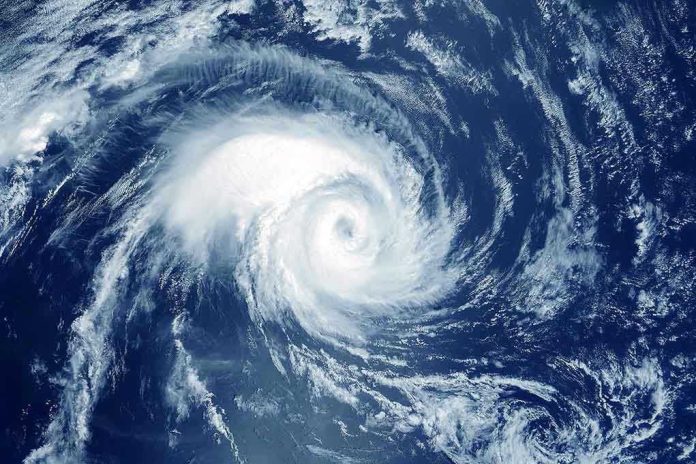
The unprecedented tropical storm in Southeast Asia has left a tragic trail of destruction, raising questions about regional preparedness for such rare events.
Story Overview
- Tropical storm in Malacca Strait triggers catastrophic flooding and landslides.
- Over 500 deaths confirmed, affecting millions across Indonesia, Thailand, and Malaysia.
- Record-breaking rainfall in Hat Yai, Thailand, with 335 mm in a single day.
- Ongoing rescue operations face significant logistical challenges.
Unprecedented Storm Formation
A rare tropical storm formed in the Malacca Strait, an unusual meteorological event that triggered a cascade of natural disasters across Southeast Asia. The Malacca Strait, located between Malaysia and Indonesia, typically doesn’t breed tropical cyclones, making this storm’s development particularly noteworthy. Heavy rains and wind gusts plagued the region for a week, leading to catastrophic flooding and landslides that devastated communities.
The storm’s intensity and trajectory compounded the region’s vulnerability, with low-lying areas experiencing severe flooding and mountainous regions succumbing to landslides. Western Indonesia and southern Thailand, with their varied topographies, bore the brunt of this disaster. These areas, already accustomed to monsoon patterns, were not prepared for the storm’s unprecedented ferocity.
Humanitarian Crisis Unfolds
The disaster’s human toll is staggering, with over 500 confirmed deaths and millions displaced. Indonesia reported 336 deaths and 213,000 displaced, while Thailand faced 170 deaths and numerous injuries. Malaysia saw two deaths but had thousands in evacuation centers. The storm’s impact extended beyond these nations, with Sri Lanka reporting 153 deaths from a related cyclone. The scale of this tragedy presents immense challenges for rescue teams and humanitarian agencies.
Rescue operations are severely hindered by blocked roads and damaged infrastructure. In Indonesia’s West Sumatra, helicopters deliver aid where traditional routes are impassable. Reports of looting in some areas highlight the desperation of affected populations as relief supplies dwindle. The urgency for shelter, food, clean water, and medical care is dire, with millions needing immediate assistance.
Regional Cooperation and Challenges
This disaster necessitates unprecedented regional cooperation. Malaysian authorities evacuated over 6,200 nationals from Thailand, demonstrating bilateral coordination. The coordination of rescue operations involves multiple national governments and international organizations, testing established disaster management protocols. However, the scale and complexity of the situation stretch these systems to their limits.
The disaster’s cross-border nature adds layers of complexity to the humanitarian response. The Malaysian Foreign Ministry has issued advisories for citizens stranded in Indonesia, highlighting ongoing concerns about repatriation and international assistance. The involvement of military forces, particularly helicopters, underscores the logistical challenges of delivering aid to isolated communities.
Long-Term Implications
The storm’s aftermath will have long-lasting effects on the region. Infrastructure damage necessitates extensive reconstruction efforts, with significant economic losses from destroyed homes, infrastructure, and agricultural land. The disruption to commerce and transportation networks affects regional trade, while the psychological and health impacts on survivors will require long-term support.
The disaster’s economic, social, and political impacts are profound. Economically, the cost of rebuilding and loss of livelihoods will strain national budgets. Socially, the displacement of millions fragments communities and threatens long-term security. Politically, the disaster tests governmental capacities to respond to large-scale emergencies and may influence future policies on disaster preparedness and climate resilience.
Sources:
Tropical Storm Deaths Cross 500 in Southeast Asia, Over 4 Million Affected