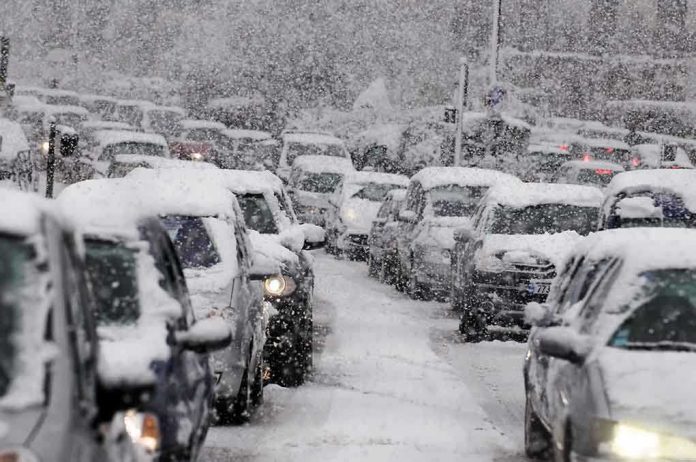
Winter storms can turn a simple drive into a survival challenge, how prepared is your vehicle?
Story Snapshot
- Mechanical systems need a thorough check before winter hits.
- Snow tires and correct tire pressure are vital for traction.
- Essential emergency supplies can make a difference in a crisis.
- Staying in your vehicle could be your safest option if stranded.
Mechanical Systems Maintenance
Preparing your vehicle for winter involves a few crucial mechanical checks. Testing the battery and charging system ensures reliability in cold weather. Inspect brakes to prevent malfunctions on icy roads. Verify antifreeze levels to prevent engine freezing. Ensure the heater and defroster systems operate on all settings to maintain visibility and comfort. Change the oil to the appropriate winter-grade viscosity, and inspect belts and hoses for wear and tear to avoid breakdowns.
Proper maintenance can prevent being stranded in harsh conditions, which is more than just inconvenient—it can be life-threatening. Ensure your vehicle is ready to face the worst of what winter has to offer.
Tires and Traction
Snow tires provide critical traction in snowy and icy conditions, especially in northern regions or mountainous areas. Regularly check and adjust tire pressure, as it can fluctuate with temperature changes. Winter wiper blades are designed to handle ice and snow buildup, while winter-formula windshield washer fluid prevents freezing, ensuring clear visibility. These adjustments are small but can drastically improve safety during winter driving.
Investing in the right tires and keeping them properly maintained is essential for safe winter driving. Proper traction can mean the difference between stopping safely and skidding into trouble.
Emergency Kit Necessities
A comprehensive emergency kit is a must-have for winter driving. Include jumper cables or a portable battery charger, a snow shovel, and an ice scraper with a brush. Abrasive materials like sand or kitty litter can help with traction if you’re stuck. Pack a flashlight with extra batteries, blankets, extra warm clothing, a first aid kit, non-perishable food, bottled water, a cell phone charger, and warning flares or triangles. These items can provide comfort and safety until help arrives.
Being prepared with the right tools and supplies can turn a potentially dangerous situation into a manageable inconvenience. Always check and replenish your emergency supplies before heading out in winter conditions.
If Stranded, Stay Safe
If you find yourself stranded in a snowstorm, remain in your vehicle. It’s your best shelter against the elements. Make yourself visible to rescuers by tying a bright marker to your antenna or window. Run the engine intermittently to preserve fuel while keeping warm, but check the tailpipe regularly to ensure it’s not blocked by snow, preventing dangerous carbon monoxide buildup.
Understanding these strategies and keeping calm can ensure your safety and increase the chances of a swift rescue. Winter driving demands respect for the elements and the foresight to prepare for the unexpected.
Sources:
Winter Car Preparation Guide – Constellation
Minnesota Winter Car Checklist – Nelson Ford
Connecticut Winter Car Checklist – Gates GMC