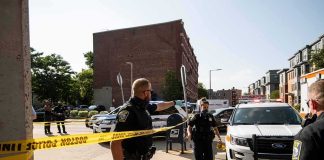
In the aftermath of the Houston ICE shooting that killed Lorenzo Salgado Araujo, the fight over whether the “white crystal-like substance” in his van was methamphetamine or crystallized salt shows, in miniature, how contested narratives and incomplete forensics can be used to shape the public story of a deadly use of force.
Key Points
- FBI agents visually identified bagged “white crystal-like” material in Araujo’s van and used it to establish probable cause for a federal drug search warrant, but no lab result has confirmed it as methamphetamine.
- The Harris County district attorney and the family’s attorney both say they believe the substance was a homemade electrolyte mix made from granulated salt, and that it has no bearing on whether the shooting was justified.
- The county medical examiner has ruled Araujo’s death a homicide, and local prosecutors have publicly questioned both the drug narrative and ICE’s self-defense account of the shooting.
- Forensic literature documents that inorganic salts can visually mimic methamphetamine crystals, underscoring the limits of “eyeball” identification in high-stakes criminal cases.
- This dispute sits inside a broader pattern: dozens of shootings by immigration agents over the past decade, recurring self-defense claims, and structural immunity that makes independent accountability difficult.
How the “Crystal-Like Substance” Entered the Story
The drug allegation did not surface at the scene but days later, through a federal search warrant affidavit. According to reporting on the warrant, FBI Special Agent David McNeilly arrived after Araujo had already been fatally shot and, from outside the vehicle, observed several small clear plastic bags containing a “white crystal-like substance” in plain view on the van’s dashboard and passenger-side floor. The agent wrote that, based on his training and experience, the packaging and appearance were “consistent with methamphetamine” and with how controlled substances are commonly packaged for distribution or possession, and that this observation created probable cause to search the vehicle for federal drug offenses.
Those assertions were enough for a magistrate judge to sign the warrant. The application explicitly cites potential crimes including manufacturing, distribution, and possession with intent to distribute a controlled substance. Images attached to the warrant show multiple bags clustered on the dashboard, visually echoing typical evidence photos in drug cases. Yet the same filing is careful on a crucial point: it “does not determine whether a crime occurred” and does not indicate that any laboratory testing had confirmed the substance was methamphetamine. In other words, the “drug” status rests entirely on appearance and packaging, not chemical analysis.
The Salt Narrative: Family, Witnesses, and the District Attorney
Within a day of the warrant becoming public, the counter-narrative arrived with equal specificity. Attorney Ruby Powers, representing Araujo’s brother Victor, issued an on-the-record statement that the material was granulated salt, part of a homemade electrolyte mix that outdoor laborers use in Texas heat by combining salt, lemon, and water. Local coverage amplified this explanation, describing the bags not as drug packets but as hydration supplies kept within reach in a work van.
Harris County District Attorney Sean Teare went further, grounding his skepticism in what his office had seen of the physical evidence. Speaking to CNN and in local interviews, Teare said that “just eyeballing the evidence as it was collected yesterday, we don’t believe that they are drugs,” and that based on what investigators had learned about the passengers, it was “inconsistent that drugs were in the van.” Teare also emphasized that, even if the substance turned out to be an illegal drug, that fact would have “no bearing whatsoever” on why Araujo and the three other men were targeted or whether the use of deadly force was justified.
That distinction matters. It separates the question of what was in the plastic bags from the question of why a man who was not the intended target of the operation was shot dead by a federal agent. Congresswoman Sylvia Garcia’s office confirmed that Araujo was not the person ICE was seeking, and that the Harris County medical examiner had ruled the death a homicide—a legal classification that indicates the killing resulted from another person’s action and is not inherently justified. For local officials, the core problem is the shooting itself; the drug allegation looks, at best, ancillary.
Forensic Limits of “Eyeball” Drug Identification
The dispute over salt versus methamphetamine is not merely rhetorical; it reflects real constraints in forensic practice. A recent study in the European Journal of Forensic Sciences documents how inorganic salts such as sodium thiosulfate can form crystalline structures that, to a non-specialist or in poor lighting, resemble illicit drug crystals. The authors show that visual similarity, especially when reinforced by contextual cues like small baggies, can lead to initial misidentification unless confirmatory testing—such as gas chromatography–mass spectrometry (GC–MS) or infrared spectroscopy—is performed.
In routine policing, officers often rely on field tests or experience to distinguish harmless substances from contraband. But those shortcuts become dangerous when used to support a narrative around a fatal shooting. Here, the FBI affidavit acknowledges that no lab work had yet confirmed the substance as methamphetamine at the time the warrant was filed, and subsequent public statements from the DA indicate that testing was still pending and viewed locally with skepticism. Until a formal lab report is released, the identity of the crystals remains an open empirical question, not a settled fact.
That uncertainty is precisely what makes the salt explanation plausible. Powers offers a specific recipe, a documented occupational use (hydration for outdoor workers), and a direct chain from family memory to physical evidence. The FBI offers a visual impression anchored in training but not in chemical analysis. When placed against a backdrop of known false positives in field drug identification—documented in both forensic literature and wrongful arrests—that imbalance should give any careful observer pause.
How Narrative and Timing Shape Public Perception
The chronology of the drug claim matters. The ICE operation that ended in Araujo’s death was initially framed by DHS as a self-defense shooting during an immigration enforcement action involving “weaponized” use of a van. Only later did the FBI’s warrant introduce the specter of methamphetamine distribution. Media coverage, especially headlines, tended to foreground the warrant’s reference to suspected drugs, with the salt explanation and DA’s doubts presented further down in the story or in separate segments.
That ordering has consequences. For many readers or viewers, the first impression is that the van “had drugs inside,” a phrase that implicitly biases the audience toward viewing the deceased as a criminal actor rather than a worker caught in a chaotic enforcement action. This is what defense attorneys and civil-rights advocates mean when they talk about a “smear campaign”: the introduction of unconfirmed, morally charged allegations after a killing that shift the frame from state violence to individual wrongdoing.
Teare’s insistence that the substance “has no bearing” on the justification for force is an attempt to push back on that reframing. So is Powers’ detailed description of the electrolyte mix, which situates the bags in the mundane context of workplace hydration rather than drug trade. Both interventions seek to keep the focus on the core questions: Why was an unarmed man, not the intended target, shot? Were agents identifiable? Where were they positioned relative to the van? And why is there no body or dash camera footage to substantiate ICE’s self-defense account?
The Shooting, the Homicide Ruling, and the Self-Defense Claim
Those questions become sharper when set alongside what is known about the shooting itself. DHS has stated that the ICE agent fired in self-defense after Araujo allegedly “weaponized” his work van, ramming a vehicle and attempting to run over an officer. Witnesses inside the van, through their attorneys, have countered that no agent was in front of the vehicle and that shots came from the side, not in response to an imminent threat of being run down.
Bystander photos cited by civil-rights groups reportedly show no obvious collision damage to the van, further complicating the claim that it was used as a battering ram. Garcia has said ICE lacked an arrest warrant and was operating only under a final removal order, and that Araujo and his brother were not the intended targets. The Harris County medical examiner’s homicide ruling reinforces that the death was caused by another person’s action and must be evaluated under standards of justification, not as an unavoidable accident.
The absence of body-camera or dash-camera footage is critical. Local law enforcement experts interviewed about the case have noted that without video, reconstructing agent positioning, timing, and perceived threat relies heavily on the accounts of federal officers themselves—accounts already under scrutiny in other ICE shootings. DHS has said cameras will be deployed to ICE field offices, but in this incident, none were present, depriving investigators and the public of a key tool for resolving disputed facts.
Pattern, Immunity, and Why This Case Resonates
The struggle over the “crystal-like substance” gains additional weight when viewed against ICE’s broader record on deadly force. Investigations by The Trace and other outlets have identified 59 shootings by ICE officers between 2015 and 2021, resulting in 23 deaths across 26 states. More recent compilations suggest at least eight people have been fatally shot by ICE or Border Patrol agents since the start of Trump’s second term, alongside dozens of serious incidents in which weapons were discharged during raids and traffic stops.
Across these cases, a recurrent pattern appears: agents assert self-defense, particularly in encounters involving vehicles; federal authorities retain control of the investigation; and structural doctrines of federal immunity limit the ability of local prosecutors to bring charges. In Minneapolis, for example, the ICE officer who killed Renee Good was publicly described by federal officials as protected by “absolute immunity,” effectively foreclosing state-level criminal prosecution and confining review to federal agencies themselves.
That is the environment in which the Houston case unfolds. When the FBI both investigates the shooting and advances an unconfirmed drug narrative about the victim’s vehicle, skeptics see not just a single evidentiary dispute but a systemic conflict of interest. The ACLU of Texas and other advocates argue that an agency with a vested interest in defending its officers cannot credibly investigate itself; they call for independent state or civilian oversight structures with real subpoena power.
What Will Ultimately Resolve the Substance Dispute—and What Will Not
On the narrow question of whether the bags in Araujo’s van contained methamphetamine or salt, the path to resolution is straightforward: laboratory analysis. GC–MS or IR spectroscopy can distinguish common inorganic salts from controlled substances with high reliability, and both the FBI and Harris County DA’s office have access to such testing. A public, written report would answer the chemical question definitively, either validating Powers’ electrolyte mix explanation or confirming the FBI’s suspicion.
Yet, as Teare has stressed, that answer will not resolve the core questions around the shooting. If the substance is salt, the drug narrative collapses and raises serious concerns about investigative bias and the willingness of federal agents to invoke criminal suspicion post hoc. If it is methamphetamine, that fact may shape public perception of Araujo’s character but still does not explain why a man not under arrest, driving a work van, ended up dead in a hail of bullets with no video record and conflicting witness accounts.
For readers trying to make sense of the case, the important discipline is to separate these layers. Visual identification of “white crystals” in baggies is a weak foundation for any strong claim in a homicide investigation—especially in light of known forensic lookalikes. The homicide ruling, the mismatch between ICE’s targeting and Araujo’s identity, the absence of cameras, and the broader pattern of deadly immigration enforcement are far more consequential. Whether the van held salt or meth, the central issue remains: how much lethal power we have delegated to immigration agents, under what standards of accountability, and how easily the story of a dead man can pivot on a handful of untested crystals.
Sources:
mediaite.com, click2houston.com, springnews.org, facebook.com, instagram.com, youtube.com, dea.gov, chemistry.mdma.ch, ojp.gov, factually.co, theweek.com, houstonchronicle.com, americanimmigrationcouncil.org, nytimes.com, congress.gov
Attorney for Witness to ICE Fatal Shooting Tells CNN Alleged Drugs in Vehicle Just ‘Crystalized Salt’ (by Stephanie Kaloi)
An unsealed search warrant revealed the FBI accused Lorenzo Salgado Araujo, the father of three shot to death by an ICE agent in Texas last week, of having…
— Tina M Long (@TinaMGLong) July 18, 2026