Two Saudi oil tankers just turned around in the Red Sea because of an email warning from a rebel group — without a single shot fired.
Story Snapshot
- Houthi rebels in Yemen declared a sudden maritime blockade on Saudi Arabia and warned ships by email.
- At least two tankers carrying Saudi crude to China and India made U-turns in the Red Sea after those threats.
- The episode shows how fear and geography alone can disrupt global energy flows, even before fighting starts.
- Saudi Arabia and its allies vow to protect shipping, raising the risk of a wider clash that could hit ordinary Americans’ wallets.
What Exactly Happened in the Red Sea
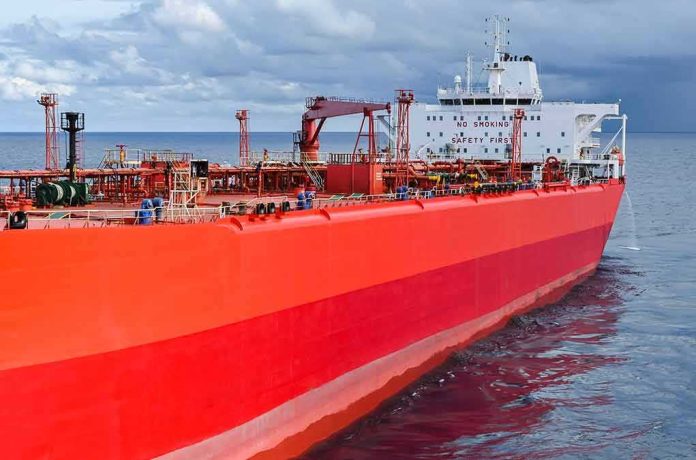
On July 20, Yemen’s Iran‑backed Houthi movement announced a maritime blockade on Saudi Arabia, saying ships must not load or unload at Saudi ports and could be targeted “in any location” within reach. Within about a day, two large tankers loaded with Saudi crude for China and India made U‑turns in the Red Sea and headed back toward the Suez Canal instead of sailing on toward the Bab el‑Mandeb Strait near Yemen. Maritime tracking firms say these ships together carried around 2.7 million barrels of oil, marking the first clear disruption to Saudi exports from the new blockade threat.
Reports from Reuters and regional outlets describe a Houthi email sent to multiple shipping companies, stating that vessels tied to Saudi ports were now banned. The message warned that loading or discharging cargo in Saudi Arabia could lead to attacks anywhere the rebels could reach. Soon after this notice took effect, the tankers Xin Long Yang and Rodos changed course in the Red Sea, avoiding waters closest to Houthi‑controlled coastlines. One maritime intelligence firm said a total of five Saudi‑linked tankers reversed course, suggesting a broader chill across the trade route, not just a single odd incident.
How Threats Alone Can Move Global Oil Markets
The Red Sea and Bab el‑Mandeb Strait form one of the world’s most important energy chokepoints, linking Gulf oil producers to Europe and Asia through the Suez Canal. Since late 2023, the Houthi movement has used missiles, drones, and occasional ship seizures to pressure countries it sees as backing Israel, forcing many major shipping companies to reroute vessels around Africa. Studies of this earlier campaign say the group’s actions turned from a “regional nuisance” into a major disruptor of maritime traffic, with over 130 attacks on ships by early 2025. In this new phase, the Houthis did not have to fire at the Saudi tankers; the mere promise of a blockade plus their past record was enough to make captains and owners think twice.
Analysts call this kind of behavior “asymmetric maritime coercion.” That means a smaller armed group, without a big navy, uses narrow waterways and fear to shape global decisions. Instead of fighting every ship, they make examples of a few and issue broad threats. Companies then reroute or pause traffic to avoid risk. In this case, the U.S. Maritime Administration warned American‑flagged ships that using automatic tracking systems in the Red Sea and nearby waters could increase the chance of being targeted, which shows official concern about how serious the threat is. When governments tell ships to hide their signals, it is a sign that no one really feels in control.
Saudi Resilience, But Real Vulnerability
Saudi Arabia is not sitting still. Earlier in 2026, after an Iranian attack on its East‑West pipeline, crude loadings at the Red Sea port of Yanbu continued, and trading sources said shipments were maintained despite the strike. Reports also show Yanbu reached near‑record throughput around mid‑July, briefly handling about 4.7 million barrels per day, above its normal effective ceiling. Saudi Aramco has shifted cargoes between ports and used spare production capacity and overseas storage to keep exports flowing when one route is threatened. This history supports the view that the kingdom can adapt and keep selling oil even under pressure.
Still, experts warn that no workaround can fully replace Red Sea routes if a blockade is enforced for long. Many Saudi exports to Europe and parts of Asia depend on moving crude through Bab el‑Mandeb and the Suez Canal. If more tankers turn back or if an actual attack on Saudi‑linked ships follows, insurance costs will jump, routes will lengthen, and oil prices could climb fast. In the past, confirmed Houthi attacks on tankers forced Saudi Arabia to briefly halt shipments through Bab el‑Mandeb until it believed navigation was safe again. That pattern shows that even a wealthy producer with backup plans must occasionally bow to security realities in narrow seas.
Why This Matters Back Home
This drama connects directly to worries many Americans already have. When a small rebel group can move millions of barrels of oil with a single email, it shows how fragile our energy and trade systems really are. Families who are tired of high gas prices and rising food costs know that every shock in global shipping tends to hit their daily bills, not the bank accounts of the “elites” running giant oil firms or distant wars. The Red Sea crisis layers on top of earlier harm from inflation, pandemic disruptions, and policy fights over energy.
At least one of the oil tankers that yesterday U-turned in the Red Sea has performed a 2nd U-turn, heading again toward the Bab el-Mandeb controlled by the Houthis.
The vessel, carrying Saudi oil, is signalling "CHINA CREW & OWNER." At current speed, she will cross the strait in…
— Javier Blas (@JavierBlas) July 22, 2026
There is also a deeper political concern. Many citizens on the right and the left feel the federal government talks tough overseas but rarely secures the basics at home. As the Houthis open what some experts call “another Hormuz”‑style chokepoint against a key U.S. partner, Washington’s answer so far is more warnings and naval posturing, not a clear plan that shields ordinary Americans from the fallout. That gap feeds the belief that distant conflicts and shadowy power struggles matter more to leaders than the American Dream of stable work, fair prices, and energy security. The tankers’ quiet U‑turns are a reminder that when global systems are this fragile, regular people pay first and most.
Sources:
19fortyfive.com, straitstimes.com, youtube.com, abcnews.com, thehill.com, en.wikipedia.org, marinelink.com, english.aawsat.com, theedgemalaysia.com, turkiyetoday.com, bloomberg.com, reuters.com, instagram.com, itf-oecd.org, nllp.jallc.nato.int, hornreview.org