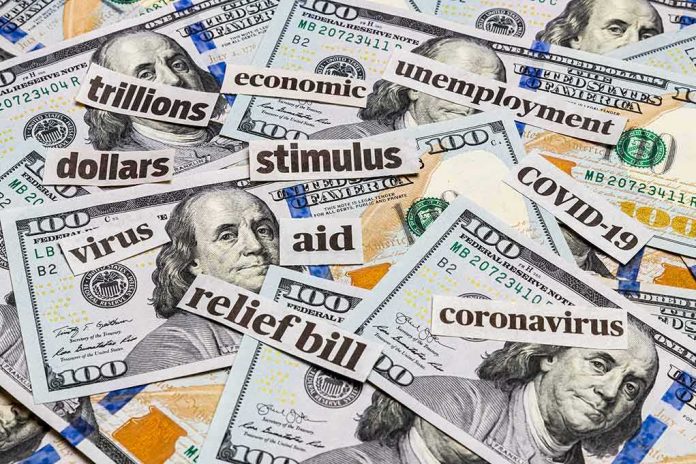
Fear-driven narratives about monetary “collapse” thrive because crises expose real constraints, but the durable truth is less cinematic: modern monetary systems bend under stress, adapt through new tools, and continue to operate so long as fiscal capacity, institutional legitimacy, and political cohesion hold.
The Short Version
- In 2008, the Federal Reserve hit the effective lower bound on interest rates and shifted to quantitative easing; that was a regime adaptation, not a system obituary.
- Large-scale asset purchases (QE) were designed to transmit stimulus through longer-term rates and market functioning after conventional tools were exhausted.
- History shows monetary breakdowns stem from political-fiscal failure more than from “money printing” alone; strong states with deep tax capacity rarely see currency collapse.
- Crypto and digital assets have grown as alternative rails, but broad consumer payments adoption remains mixed; they complement rather than supplant state money today.
What Actually Broke in 2008—and What Didn’t
In late 2008, the global financial system met a hard constraint: policy rates neared zero and conventional easing ran out of room. The Federal Reserve cut the federal funds target to a 0–0.25 percent range, the effective lower bound where further rate reductions deliver little additional punch. That boundary condition is significant; it marks the edge of the standard interest-rate transmission channel and forces central bankers to reach for other levers. But it is not evidence that the monetary order failed. It is evidence that one instrument—short-term rates—was fully deployed.
From there, the Fed pivoted to large-scale asset purchases (LSAPs), popularly called quantitative easing. The mechanics were straightforward: buy longer-dated Treasuries and agency mortgage-backed securities with newly created reserves to compress term premiums, reduce longer-term yields, improve market functioning, and stimulate credit creation where households and firms actually borrow. The public record is unambiguous that this shift followed the zero-lower-bound bind; officials framed it as unconventional policy within the existing framework, not an admission that money itself had stopped working.
How the Post-Crisis Playbook Works
When the policy rate hits the floor, central banks change the point of contact with the economy. Instead of nudging bank funding costs at the very short end, they move along the curve, target market dysfunction directly, and use their balance sheet as the policy instrument. The intended effects cascade through several channels: portfolio rebalancing as investors shift out of safe assets, signaling that policy will remain accommodative, and liquidity support to ease fire-sale dynamics. That architecture, used across the U.S., U.K., euro area, and Japan in varying forms, lives comfortably inside fiat, central-bank-managed monetary regimes. It does not require, nor did it produce, a replacement of the system; it extended it.
Reasonable observers still disagree about magnitudes and side effects—distributional consequences, asset-price inflation, market-dependence on policy—but the core claim that the monetary system “broke permanently” is not how practitioners and their documented actions describe the episode. In the record, 2008 was a severe shock that demanded new tools, not a terminal event.
Why Fear Narratives Persist
The appeal of “system failure” narratives is not just sensationalism; it lives on the real boundary conditions that 2008 revealed. When the only familiar knob—policy rates—stops turning, it feels like the machine itself has jammed. Add the unfamiliar optics of trillions in central bank purchases and a swollen balance sheet, and you have powerful images that, out of context, read as proof of unrecoverable damage. But the better model is a stress-tested architecture: standard channels first, then crisis facilities, then balance-sheet policy, all underwritten by the state’s fiscal capacity and legal authority to tax, regulate, and borrow. That scaffolding is what separates disruption from disintegration.
Historical perspective clarifies the line. Monetary collapses typically track political and fiscal breakdowns—weak tax bases, external-currency debts that cannot be rolled, and institutional delegitimization. By contrast, where fiscal capacity and political cohesion persist, currencies can weather long periods of unconventional policy without “breaking.” Japan’s decades of high debt and balance-sheet policy are a case in point; the system bent, it did not snap.
Crypto, Stablecoins, and the “Bottom-Up Replacement” Thesis
Digital assets have expanded with remarkable speed, especially as investment vehicles and alternative settlement rails. Their promise—permissionless access, programmable money, cross-border speed—addresses real frictions in legacy finance. Empirical work suggests adoption drivers include perceived efficiency, lower costs, privacy features, and merchant acceptance; curiosity and speculative upside have mattered as well. Those are legitimate user-centered advantages.
But replacement is a higher bar than relevance. Retail payments adoption has been uneven; outside niche corridors and stablecoin-based remittances, crypto’s day-to-day use remains limited relative to card networks and bank transfers. Network effects, regulatory clarity, volatility for non-stable tokens, and merchant integration all constrain swift displacement of state money. In practice, we see complementarity: stablecoins pegged to dollars riding public blockchains; banks experimenting with tokenized deposits; central banks researching CBDCs. This is accretive innovation on top of, and often inside, the existing system, not a wholesale swap-out.
Where the Real Disagreement Lives
The durable debate is not whether the Fed hit the lower bound in 2008 and turned to QE—that is established—but what that moment signifies. One camp reads it as proof the canonical interest-rate regime had reached its useful frontier; any further stability would require perpetual interventions with mounting side effects. The other camp sees it as an elastic extension: unconventional tools stabilize the cycle until conventional levers regain traction, all within a sovereign monetary framework. The public record—official speeches, histories, and policy documentation—aligns with the latter interpretation: adaptation, not abdication.
That does not let policy off the hook. Prolonged low rates and balance-sheet policies can reprice risk, concentrate wealth through asset channels, and entangle markets with policy expectations. Those are governance challenges for legislatures and central banks, not evidence that fiat regimes cannot function. The distinction matters because it determines the remedy: institutional reforms and macroprudential tools versus fatalistic “endgame” thinking.
How to Think About System Resilience Going Forward
If you want a practical diagnostic rather than fear slogans, watch four variables: fiscal capacity (the ability to tax and borrow in your own currency), debt composition (foreign-currency liabilities are the classic tripwire), institutional legitimacy (central bank independence, rule of law), and political cohesion (the willingness to sustain stabilization policies when they hurt). When those pillars are intact, inflationary episodes, market drawdowns, and even large central bank balance sheets are survivable policy choices, not preludes to collapse.
On innovation, expect continued convergence: tokenized money that settles faster and cheaper, regulated stablecoins interoperating with bank rails, and central banks keeping the unit-of-account anchor while private actors optimize user experience. That evolutionary path matches how robust systems actually change—by layering new infrastructure over the old, not by detonating it.
Near-zero rates didn't heal the economy; they built permanent debt dependence. Now, higher rates are breaking the assumption that debt can be refinanced forever. Protect your personal balance sheet before interest costs consume your cash flow. https://t.co/JdYYzp7mXY
— Jerry Staker (@JerryStakerX) September 19, 2026
Bottom Line
The 2008 crisis revealed the limits of one instrument and triggered a durable expansion of the central bank toolkit. That expansion is controversial, but controversy is not collapse. In the documented account, the system adapted and endured; in markets and payments today, it continues to do so, even as crypto and digital money press for faster, more open rails. Good analysis distinguishes boundary conditions from breaking points—and resists the profitable pull of fear.
Sources:
fraser.stlouisfed.org, federalreserve.gov