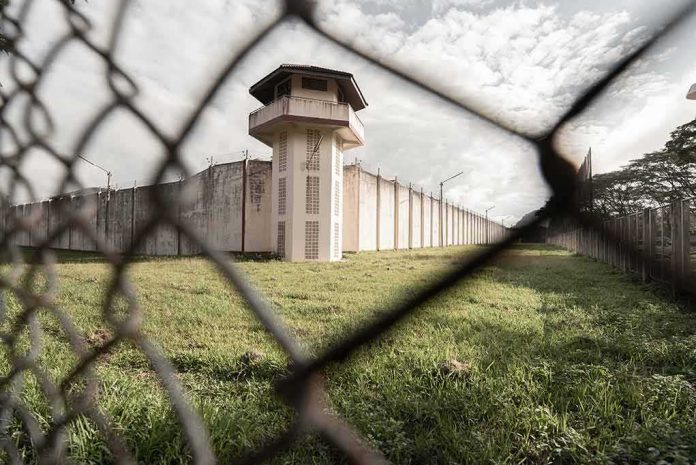
When a government starts redesigning its prisons around crocodile-filled moats, it is not simply tweaking perimeter security; it is weaponizing fear itself, and exposing the collision between hard-line security politics, animal welfare law, and the basic standards of human rights.
At a Glance
- Israel’s far-right National Security Minister Itamar Ben-Gvir has formally advanced a plan for high-security detention facilities surrounded by crocodile-filled moats to hold Palestinian prisoners.
- Environmental Protection Minister Idit Silman has reclassified Nile crocodiles as “managed” or “tended” wild animals, removing a central legal barrier to using them in prisons.
- The Israel Prison Service has begun feasibility work, including site visits to a crocodile farm at Hamat Gader and cost estimates for acquiring dozens of crocodiles.
- Israel’s Nature and Parks Authority, ministry legal advisers, environmental groups, and human rights advocates say the plan lacks professional justification, poses serious risks, and amounts to psychological intimidation of detainees.
- The proposal fits a rare but documented pattern of using predatory animals and attack dogs to terrorize detainees, a practice widely condemned as cruel and degrading.
From Security Architecture to Fear Architecture
Crocodile moats around prisons sound like satire because modern penal systems have, for the most part, abandoned the explicit use of wild animals as instruments of control. Yet in Israel, this proposal is not a joke or a rumor; it is a formally tabled concept sitting inside a broader project for new high-security facilities targeting Palestinian “security” prisoners.
Ben-Gvir first floated the idea in a meeting with Israel Prison Service (IPS) chief Kobi Yaakobi, suggesting a detention facility “surrounded by crocodiles” to prevent escape attempts. The envisioned prison would be built near Hamat Gader, a tourist and wildlife area close to the Jordanian border that already houses a large crocodile farm—some 250 animals of various species—creating an immediate logistical pathway for sourcing animals.
According to reporting based on Israeli television coverage, IPS has not dismissed the idea outright. Senior officers have been sent on a study visit to the Hamat Gader farm, where they were briefed on crocodile behavior, handling, and risk profiles, and where officials examined the practicality of surrounding a future high-security site—intended for “terrorist” or security prisoners—with approximately 60 crocodiles in water-filled moats.
That level of operational engagement marks the difference between a stunt and a genuine policy trajectory. The crocodile prison is being prepared as an option, even if no formal construction decision has yet been taken.
The Legal Engineering: Reclassifying Nile Crocodiles
The pivot that pushed this idea from the realm of fantasy into legal feasibility was not an internal prison memo but a regulatory stroke of the pen. Nile crocodiles in Israel were historically classified as protected wild animals, meaning they could be held only in licensed zoos and wildlife sanctuaries. That status made deploying them in a prison moat a legal impossibility.
In mid‑July, Environmental Protection Minister Idit Silman signed an order reclassifying Nile crocodiles as “managed” or “tended” wild animals—categories that explicitly allow state agencies, including IPS, to keep crocodiles under specified conditions outside the usual confines of zoos. This change removed the central legal obstacle; prisons can now, in principle, lawfully keep crocodiles if the Nature and Parks Authority director sets conditions to “prevent their interference with nature.”
Silman’s move did not occur on a blank slate. Legal advisers within her own ministry, including Neta Drori, had argued that there was “inadequate professional and factual evidence to support the plans” and that the use of crocodiles as security devices has no precedent in modern practice. The Israel Nature and Parks Authority (INPA), charged with wildlife protection, had likewise opposed the plan for months, warning that it “lacks professional justification” and may conflict with existing legislation designed to protect wild animals.
By reclassifying crocodiles over the documented objections of the professional and advisory bodies responsible for environmental law, Silman effectively sidestepped an expert consensus. The decree legalizes the possibility without answering the underlying question: can this be done responsibly, lawfully, or effectively?
Security Logic and the Economics of Intimidation
Ben-Gvir’s argument for crocodile moats rests on two pillars: deterrence and cost. Crocodiles, he contends, will make escape attempts psychologically and physically unthinkable, and at the same time allow IPS to cut personnel costs by replacing some human guards with predatory animals.
Media reports based on Israeli sources put the cost of a young crocodile at roughly $8,000 and a large adult at up to $20,000. The National Security Ministry appears to consider these prices competitive when compared with the cumulative salary and overhead costs of additional guards over years of prison operation. Feasibility work reportedly includes projections that such a system could save “millions of shekels annually” in personnel expenses.
Yet this economic frame is remarkably narrow. The plan’s proponents have not publicly released a serious cost-benefit analysis that includes moat construction, specialized veterinary care, environmental monitoring, liability, and the increased complexity of emergency responses in a facility surrounded by dangerous animals. Nor have they supplied empirical data showing that crocodile presence reduces escape attempts more effectively than conventional measures such as reinforced barriers, surveillance, and trained staff. There is, at present, no forensic security analysis supporting the idea beyond assertion.
In the absence of data, what remains is the logic of fear: the belief that a perimeter filled with large predators is so viscerally terrifying that it will reorder detainee behavior. That is not an unfamiliar logic. Human rights investigations into U.S. prisons, for example, have documented the use of attack-trained dogs during cell extractions, where the threat or reality of mauling is deployed specifically to terrorize and control inmates. Those practices have been condemned as cruel and degrading, in violation of international standards that require states to protect prisoners from inhumane treatment.
The crocodile moat is a variation on the same theme, scaled up and made permanent.
Institutional Opposition: Wildlife, Ethics, and Human Rights
Opposition to the crocodile plan within Israel has not focused on security efficacy so much as on legality, animal welfare, and human rights. INPA’s legal advisers have warned that introducing crocodiles into prison infrastructure poses “significant risks” both to the animals and to public safety, and they have questioned whether IPS can realistically provide appropriate care in a militarized detention setting.
Environmental organizations have issued joint statements “strongly objecting to the use of animals as a means of guarding and deterrence,” arguing that the proposal instrumentalizes wildlife as weapons, a role incompatible with the statutory mandates of conservation and humane treatment. They frame the plan as a form of animal cruelty dressed up as innovation.
Human rights advocates go further, focusing on the detainees rather than the crocodiles. They characterize the crocodile moat proposal as a method of “psychological intimidation” against Palestinian prisoners, many of whom are held in already overcrowded and abusive conditions. In this view, the plan is not about preventing escapes that rarely occur; it is about deepening a regime of terror over a captive population whose basic procedural rights and physical safety are already contested.
There is also a symbolic layer that matters in politics. Surrounding Palestinian detainees with crocodile moats evokes images of medieval fortresses and colonial spectacles of power, where rulers used exotic animals to dramatize their control over subject peoples. For far-right constituencies, such theatrics can signal toughness and resolve. For those concerned with rule of law, they are signs of a carceral system sliding further from accepted norms.
Precedent: Florida’s “Alligator Alcatraz” and the Perils of Animalized Detention
Supporters of Ben-Gvir’s concept point to a precedent: Florida’s Everglades immigration detention center, nicknamed “Alligator Alcatraz” because it was effectively isolated by alligator-inhabited wetlands. That facility, now shut down amid controversy, provides a useful cautionary case.
Investigations into Alligator Alcatraz have highlighted more than the presence of alligators. They exposed a detention system in which hundreds of detainees effectively disappeared from public databases, where jurisdictional complexity and lack of transparency produced what advocates called “administrative disappearances.” These problems were not caused by the animals per se, but the symbolism of the setting—detention in a swamp ringed by predators—became intertwined with a reality of diminished oversight and heightened vulnerability.
The Israeli proposal consciously models itself on that failed experiment. Media coverage explicitly describes Ben-Gvir’s plan as “similar to Florida’s now-defunct Alligator Alcatraz,” and notes that the American facility “was forced to close its doors” following sustained criticism and legal challenges. To cite a shutdown, controversial prison as precedent is an unusual form of justification; it is more accurately a warning.
Politics, Optics, and the Far-Right Security Agenda
Itamar Ben-Gvir is not a technocratic prison administrator. He is a far-right politician, leader of the Jewish Power party, who has built his career on hard-line nationalist positions and aggressive rhetoric about Palestinian security detainees. In that political context, the crocodile moat proposal functions as much as a message as a management tool.
Extreme security measures—execution bills, harsh detention regimes, militarized policing—play well with segments of his base that equate severity with safety. Proposing crocodile-surrounded prisons creates a vivid, media-ready image of impenetrable control. Whether the plan is ever fully implemented, the act of pushing it through legal channels signals a willingness to break taboos and rewrite environmental and penal rules in the name of national security.
That explains both the support and the ridicule. Mainstream and international media have framed the proposal as sounding “like something from a satirical publication,” even as they confirm its factual basis. Satire is a natural response to a plan that reads like parody, but it carries a risk: public laughter can obscure the serious institutional shift represented by the reclassification of crocodiles and the involvement of IPS in feasibility planning.
For human rights and environmental advocates, the danger is that the crocodile moat will be dismissed as mere theatrics while the underlying logic—using animalized fear as a routine instrument of detention—quietly consolidates.
ISRAEL RECLASSIFIES CROCODILES TO CLEAR THE WAY FOR BEN-GVIR'S CROCODILE-MOAT PRISON
The Prison Service has visited zoos to study crocodile handling and concluded the waterways could cut security costs while increasing deterrence, Israeli media report.https://t.co/hy5URcFGWp
— TALi (@TaliNewsWire) July 18, 2026
Where the Evidence Stops: Security Claims Without Data
On one side of this debate sit clear, named, institutional objections based on law, ethics, and risk: INPA, ministry legal advisers, environmental organizations, and rights groups. On the other side are security promises that remain, for now, unsubstantiated: claims of reduced escape attempts, large cost savings, and manageable logistics.
No publicly available data show that crocodile moats materially outperform conventional security systems in preventing escapes. No comparative study has been produced to demonstrate that the psychological impact on detainees improves safety rather than exacerbating trauma and resistance. Nor has any comprehensive financial audit been released that weighs animal acquisition and care against investment in staff training, infrastructure, or oversight.
There is also a conspicuous silence from the Israel Prison Service itself. While IPS officers have toured crocodile farms and examined feasibility, the service has issued no formal statement endorsing specific locations, timelines, or metrics for success. The project sits in a liminal zone: advanced enough to change wildlife law and occupy bureaucratic energy, not yet accountable to public benchmarks.
For a reader weighing the evidence, this asymmetry matters. The case against crocodile moats is grounded in identifiable legal standards, animal welfare science, and well-documented patterns of abuse when predatory animals are used in carceral settings. The case for them rests on speculative security benefits and political symbolism. Until rigorous, transparent analysis is produced, the plan stands as an illustration of how far a security agenda can bend institutions before data catch up.
Sources:
zerohedge.com, wset.com, turkiyetoday.com, youtube.com, echr-cpt.com, en.yenisafak.com, iol.co.za, aa.com.tr