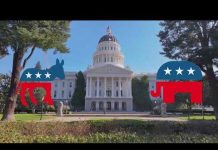
Seventy-six House Republicans joined Democrats to block a spending package amendment that would have eliminated federal funding for DEI programs, exposing a fracture within the GOP that undermines the Trump administration’s aggressive push to dismantle diversity initiatives across government agencies.
Story Snapshot
- An amendment to defund DEI programs in the FY2026 appropriations bill failed when 76 Republicans voted with Democrats to block it
- The vote occurred amid Trump’s sweeping executive orders eliminating federal DEI offices and pausing related grants effective January 2025
- Universities, states, and the private sector face mounting pressure as the State Department proposes suspending 38 universities and S&P 500 companies cut DEI-linked executive pay by 30 percent
- Legal challenges from Harvard, California, and other institutions have resulted in court injunctions against some funding pauses
- The GOP split highlights tension between fiscal conservatives seeking immediate cuts and moderates concerned about shutdown risks and constituent backlash
The Amendment That Split the Republican Caucus
The House vote on H.R. 7148, the Consolidated Appropriations Act for FY2026, became a flashpoint when an amendment targeting DEI funding came to the floor. While the exact vote date remains unspecified in congressional records, the amendment sought to strip federal dollars from diversity programs across agencies. Democrats countered with their own amendments, including one from Representative Scanlon of Pennsylvania specifically designed to protect funding against Trump’s Executive Order 14151. The resulting coalition of 76 Republicans voting alongside Democrats to defeat the defunding measure represents a significant rebellion within party ranks at a time when the Trump administration has made eliminating DEI a signature policy priority.
Trump’s Executive Order Blitz Against DEI
President Trump launched a coordinated assault on federal diversity programs beginning January 20, 2025, the day of his inauguration. Executive Order 14151 mandated the elimination of DEI offices, equity action plans, and related funding streams across all federal agencies. The offensive continued with EO 14173 on January 21, extending the crackdown to private-sector contractors doing business with the government. By January 27, the Office of Management and Budget issued Memorandum M-25-13, pausing grants and loans tied to DEI initiatives effective January 28. That same day, another executive order halted diversity programs within the military. The administration’s budget proposals for FY2026 reinforced this direction, targeting seventy million dollars in Teacher Quality Partnerships and similar programs.
Following the Money as Corporate America Retreats
The corporate sector moved swiftly to distance itself from diversity metrics once the political winds shifted. Financial Times reported in November 2025 that DEI-linked executive compensation among S&P 500 companies dropped thirty percent, signaling a broad retreat from equity-based performance measures. The State Department escalated pressure on higher education, proposing in a November 19 memo to suspend 38 universities from federal programs over their DEI policies. Universities like Harvard found themselves entangled in litigation, securing a temporary injunction on September 3, 2025, against funding freezes. The National Science Foundation deferred DEI-aligned grant rules to FY2026, creating uncertainty for researchers dependent on federal dollars. This cascade of actions demonstrates how executive orders translated into tangible economic consequences within months.
Universities and States Fight Back in Federal Courts
Legal challenges erupted immediately as universities and state governments contested the administration’s authority to unilaterally cut off funding. California filed suit against the Department of Education in 2025, arguing that grant terminations violated the Administrative Procedure Act and First Amendment protections. Federal courts in Massachusetts issued injunctions blocking some funding pauses, finding merit in claims that agencies failed to follow proper rulemaking procedures. Gibson Dunn’s December 30, 2025, legal update noted the administration achieved mixed results in court, with Title VI interpretations narrowing to require proof of intentional discrimination rather than disparate impact. K-12 school systems faced what education analysts termed a “sea change,” losing access to equity and desegregation funds that had supported minority student programs for decades. The administration conceded defeat in some school-related DEI removal efforts, acknowledging the complexity of dismantling programs embedded in grant agreements and consent decrees.
The Political Calculation Behind Republican Defections
The 76 Republicans who broke ranks face competing pressures that illuminate the party’s internal tensions. Moderate members represent districts where universities serve as major employers or where constituents benefit from federal education grants now at risk. Voting to defund DEI wholesale could trigger government shutdowns if appropriations bills stall, a politically toxic outcome heading into election cycles. Conservative factions view the defectors as betraying core principles, particularly given Trump’s explicit mandate to eliminate what they characterize as wasteful and discriminatory programs. The House Appropriations Committee and leadership must navigate these factions while maintaining enough votes to pass spending bills. Democrats seized the opportunity presented by Republican divisions, submitting amendments to explicitly protect funding against Executive Order 14151 and framing the debate around civil rights rather than fiscal responsibility.
What Meritocracy Means When the Funding Dries Up
The administration’s rhetoric centers on replacing equity frameworks with merit-based systems, but the practical implications reveal thorny questions about who defines merit and how it gets measured. Educators and minority advocacy groups argue that eliminating DEI programs removes support systems that level playing fields rather than creating unfair advantages. The pause in grant disbursements halted projects mid-stream, leaving researchers without funding to complete studies and schools without resources for programs serving disadvantaged students. Private-sector employers face threats under EO 14173 if their hiring or promotion practices appear to prioritize diversity over qualifications, yet legal experts note the line between permissible outreach and impermissible preferences remains unclear. S&P 500 companies responded by scrapping diversity metrics from compensation formulas, but whether this represents genuine commitment to meritocracy or mere risk aversion stays open to interpretation.
Sources:
Trump Anti-DEI Executive Orders – Pillsbury Law
DEI Task Force Update December 30, 2025 – Gibson Dunn
PIH-FY2026-Consolidated-Appropriations – House Rules Committee
New DEI Executive Order Seeks to Eliminate Disparate Impact Theory – BIPC
Trump 2.0: A Sea Change for K-12 – K-12 Dive
Administration Concedes Defeat in Removing DEI from Schools – Baptist News