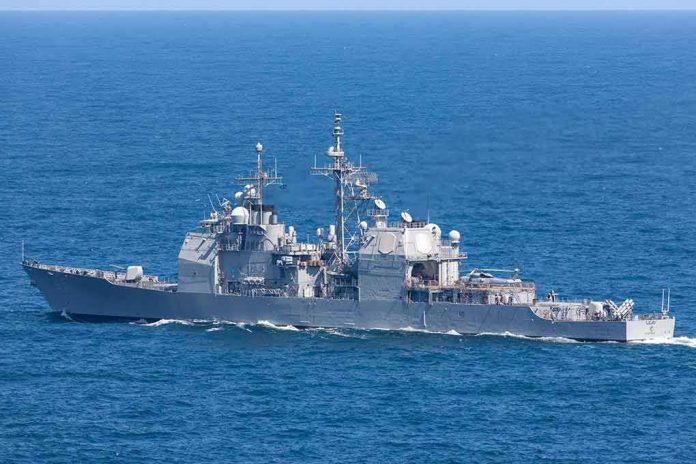
A front-line U.S. Navy destroyer lost all power for four days in the South China Sea, exposing hard limits in fleet readiness even as tensions run high.
Story Highlights
- The USS Benfold suffered a generator-related power loss on July 24 and drifted four days.
- Crew endured no toilets, no galley services, and no air conditioning during the outage.
- Tugs towed the ship to Subic Bay on July 28; power was restored July 30, with repairs done Aug. 7.
- Analysts have warned for years that destroyer maintenance delays sap fleet readiness.
Confirmed Power Loss And Crew Impact
United States Seventh Fleet officials said the guided-missile destroyer USS Benfold lost power on July 24 due to a generator-related engineering casualty while operating in the Indo-Pacific. The outage cut essential services on board, including toilets, galley operations, and air conditioning, in intense summer heat. No injuries were reported, and leaders praised the crew’s discipline and response. The Navy’s description matches a total ship power loss and the hardships that follow when core systems go dark.
Seventh Fleet said the ship was operating with the USS George Washington Carrier Strike Group at the time of the casualty. The timing matters because destroyers serve as escorts and air-defense nodes for carriers. When a destroyer loses power, it cannot maneuver, defend the group, or support flight operations as designed. The incident did not involve combat damage, according to the Navy’s account, but it still temporarily removed a key asset from the strike group’s tool kit.
Towing, Repairs, And Return To Sea
After four days without power, the Benfold was towed on July 28 to Subic Bay in the Philippines for repair support. Power was restored on July 30, and repairs were completed on August 7. The ship departed Subic Bay on August 8 and later returned to duty. Reporting identifies the Ship Repair Facility, Japan Regional Maintenance Center, as part of the support chain working at Subic Bay during the fix, which aligned multiple units to get the destroyer moving again.
The Navy’s dated timeline shows a fast sequence once the tow began. Moving a disabled warship, securing pier space, diagnosing generator faults, and testing restored systems in under two weeks suggests focused effort. The Navy did not release a root-cause report. Officials have not detailed whether the issue stemmed from fuel, cooling, electrical distribution, or a specific component failure within the generators. That gap limits public insight into whether this was a one-off part failure or a warning sign for the class.
Why A Four-Day Blackout Matters
The South China Sea is crowded with military and coast guard ships. A four-day drift without propulsion is not only uncomfortable for sailors; it can be unsafe. Without power, a destroyer loses propulsion, key sensors, and many communications paths. The crew must manage heat, sanitation, and water with workarounds, which strains morale and readiness. In this case, the Navy said there were no injuries, but the lack of toilets, galley services, and air conditioning layered stress on daily life at sea.
Events like this quickly become symbols for a larger debate about fleet health. A single failure does not prove a trend. Yet the Benfold incident landed in a long-running conversation about how often U.S. surface ships break down or return late from maintenance. That is why the public reaction went beyond one destroyer’s bad day. People on both the right and left see it as another sign that the system is not taking care of basic duties for those on the front line.
Documented Readiness Pressures On Destroyers
Independent watchdogs have warned for years that maintenance delays are chronic and costly. The Congressional Budget Office reported that large conventional ships, including Arleigh Burke-class destroyers, face persistent maintenance overruns and delays that reduce the time these ships are available to operate. It projected that DDG-51 destroyers could spend about nine years of their planned service lives in maintenance rather than on mission, a large bite out of readiness.
U.S. Destroyer USS Benfold Stranded in South China Sea for 4 Days Due to Power Outage — The U.S. Seventh Fleet confirmed the incident. pic.twitter.com/r49gaHOTSa
— Far East Post (@FarEastPos3t) August 18, 2026
The Government Accountability Office also found that major ship classes saw worsening sustainment from 2011 to 2021, with more depot delays, more cannibalized parts, more casualty reports, and fewer steaming hours. That pattern means crews face more workarounds and fewer training days at sea, raising risk when emergencies hit. In that frame, a generator casualty that sidelines a destroyer for days looks less like a fluke and more like the kind of failure a strained system is bound to produce at some point.
What Comes Next
The Navy has not yet released a technical root-cause report for the Benfold’s failure. The documented timeline shows the basics: the outage on July 24, the tow on July 28, power restored on July 30, repairs completed on August 7, and departure on August 8. The ship’s return to duty is good news. But the core question remains policy-level: do maintenance plans and resources match the pace and stress of operations in contested seas? The answer will shape risk for crews and missions.
Sources:
reddit.com, cbo.gov, gao.gov, stripes.com