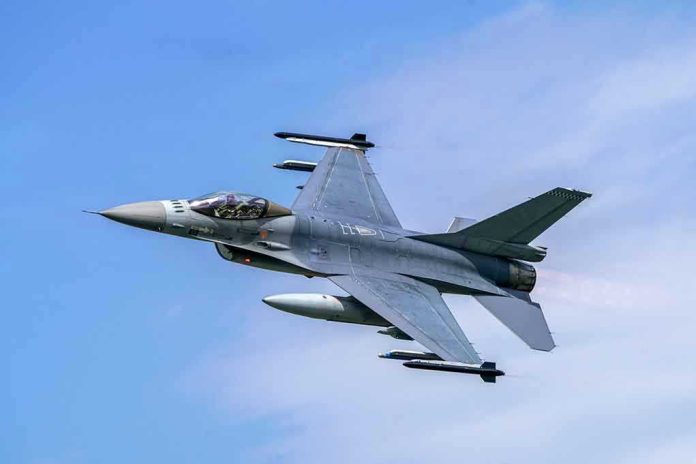
U.S. Navy F/A-18 Super Hornet precisely disables Iranian tanker defying blockade, showcasing American military resolve against Tehran aggression.
Story Highlights
- Centcom F/A-18 from USS Abraham Lincoln fires 20mm cannon at M/T Hasna’s rudder in Gulf of Oman on May 6, 2026, halting its breach attempt.
- Vessel ignored multiple U.S. warnings; no sinking, casualties, or boarding reported, emphasizing non-lethal enforcement.
- Blockade of Iranian ports remains fully operational, countering Iran’s oil exports and proxy threats.
- Rare carrier jet cannon use sets precedent for precise interdiction amid Strait of Hormuz tensions.
- Action reinforces U.S. dominance, protecting global shipping lanes vital to energy security.
Precise Strike Enforces Blockade
On May 6, 2026, around 9:00 AM ET, U.S. Central Command forces spotted the Iranian-flagged oil tanker M/T Hasna transiting international waters in the Gulf of Oman toward an Iranian port. The very large crude carrier ignored repeated warnings to halt. An F/A-18 Super Hornet from the USS Abraham Lincoln launched several 20mm Vulcan cannon rounds, targeting the rudder. The vessel stopped transiting, confirming blockade enforcement without casualties.
Context of U.S.-Iran Tensions
The incident stems from a U.S. naval blockade imposed on Iranian ports earlier in 2026 to curb oil exports and arms imports. Iran has escalated threats, including vows to control the Strait of Hormuz, through which 20% of global oil flows. Past actions include Iranian seizures of commercial ships in 2019 and backing Houthi attacks on Red Sea shipping from 2023-2025. U.S. forces now deter these disruptions, echoing 1980s Tanker War protections.
Stakeholders and Execution
Centcom authorized the strike after non-compliance, with the USS Abraham Lincoln Carrier Strike Group providing the F/A-18. Iranian operators sought to evade sanctions via the unladen VLCC. No crew details emerged, but the precision avoided sinking, aligning with rules of engagement. Gulf allies support the blockade, while international shippers face rising insurance amid risks. Centcom affirmed forces act deliberately and professionally.
Experts highlight the rarity of carrier-based cannon use against ships. AeroTime praised the rudder-targeted strike for immobilizing without escalation, though it questions long-term risks. Military analysts note alignment with non-lethal interdiction standards.
Impacts and Broader Significance
The disablement hits Iran’s economy by stranding the tanker for towing and repair, potentially spiking oil prices 5-10% if prolonged. Short-term, tensions rise with possible proxy retaliation, but it deters breaches and reinforces U.S. naval superiority. Both conservatives valuing America First strength and frustrated citizens across aisles see this as government finally prioritizing security over elite inaction. Global markets watch Hormuz volatility closely.
Navy F/A-18 disables ship in Gulf of Oman with 20mm cannon — via @NSlayton https://t.co/5GVTuHC0ev
— Jeff_Schogol (@JSchogol73030) May 6, 2026
Sources:
Stars and Stripes: U.S. forces disable Iranian tanker
CENTCOM: U.S. forces disable vessel in Gulf of Oman attempting to violate blockade
AeroTime: US Navy F/A-18 disables Iranian tanker with 20mm cannon fire
Washington Times: Navy jet fighter disabled Iran-flagged oil tanker trying to breach U.S. blockade
Seatrade Maritime: US Navy jet disables Iranian VLCC Hasna