As Utah’s Cottonwood Fire explodes past 92,000 acres with zero containment, many residents see yet another example of a system that can warn and restrict but still cannot protect their communities.
Story Snapshot
- The Cottonwood Fire in southern Utah is now over 92,000 acres and officially labeled human-caused, yet the exact spark is still unknown.[11]
- Governor Spencer Cox calls it the most destructive wildfire in Utah history for property loss, with a ski resort and many homes destroyed but no deaths reported so far.[12][2]
- State leaders have declared emergencies, banned fireworks, and ordered evacuations as strong winds drive “unprecedented” fire behavior.[9][10]
- Confusing media reports, workforce cuts, and red flag warnings across the West deepen public fear that the government and firefighting system are stretched past their limits.[10]
How the Cottonwood Fire Became Utah’s Most Destructive Blaze
Utah officials say the Cottonwood Fire started in the Tushar Mountains of southern Utah and then raced through timber, cabins, and the Eagle Point ski resort area.[2] Governor Spencer Cox has called it the state’s most destructive wildfire ever in terms of property damage, after a ski lodge, about 130 condos and cabins, and many homes were burned.[12][2] Fire size estimates now top **92,000 acres**, making it the largest active wildfire in the United States at this time.[6]
Despite the huge damage, authorities report no fatalities linked directly to the Cottonwood Fire so far, crediting fast evacuations and constant alerts to local residents.[9] This stands in sharp contrast to a separate deadly fire incident on the Utah–Colorado border, which some social posts have wrongly tied to Cottonwood, adding to confusion and public worry.[4] For families who lost homes and businesses at Eagle Point, survival without injuries is a relief, but it does not erase the deep financial and emotional hit.[2]
Human-Caused, But Still Not Fully Explained
State fire officials have formally classified the Cottonwood Fire as **human-caused**, which means they believe people, not lightning or another natural event, started it.[11] However, those same officials openly say the exact cause is still under investigation, and they have not confirmed whether it was target shooting, machinery, fireworks, or some other spark.[11] A social media comment claiming “target shooting” was involved has circulated widely, but it remains unverified and is not part of any official finding.[6]
This pattern fits a broader trend in Utah and the West, where most fires are labeled human-caused early to push prevention and justify emergency steps.[17][18] Utah leaders have noted in the past that more than three quarters of the state’s wildfires come from people, not nature.[18] National research also shows human activity now drives much of modern fire behavior, while human-caused climate change is making “fire weather” — hot, dry, windy days — more common in the American West.[19] For many citizens, the message is clear: everyday people get blamed, but the deeper system problems go on.[3][19]
Fire Behavior, Zero Containment, and Emergency Controls
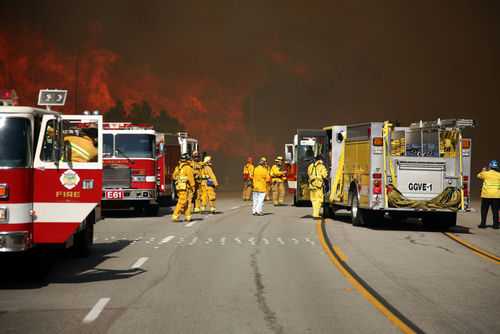
Fire crews on scene describe the Cottonwood Fire’s behavior as extreme, with wind-driven runs that jump ridges and tear through communities faster than equipment can be moved.[8] Governor Cox said the fire “did not act like other fires” and that it was almost impossible to protect certain assets, even with experienced crews on the line.[13] As of the latest reports, containment still sits at **0%**, with strong, changing winds pushing the fire toward new areas like Marysvale and keeping neighborhoods on edge day and night.[8]
To try to slow new ignitions, Cox has declared a state of emergency and ordered a **July 4 fireworks ban** across high-risk parts of Utah.[10] Power company Rocky Mountain Power has also shut off electricity in some areas, like North Creek, to prevent sparks from lines, while leaving most of Beaver County energized, which creates uneven impacts on households and local business.[8] Residents in communities such as Eureka and North Creek have faced repeated evacuation orders, sometimes being told to leave more than once as shifting flames and smoke change the danger zone.[8][10]
Confusing Numbers, Stretched Systems, and Shared Public Frustration
Media and official reports have listed the Cottonwood Fire’s size anywhere between about 70,000 acres and nearly 100,000 acres, reflecting fast spread and changing measurement rather than a single clear number.[9][6][10] At the same time, national data show tens of thousands of wildfires burn millions of acres across the United States every year, despite billions spent on suppression.[6] Federal agencies such as the United States Forest Service have recently cut thousands of positions, weakening complex incident management teams that handle large, multi-day fires.[10]
I’m back home after a weekend in California. The news of the fires spreading in Utah stayed with me and I even caught a glimpse of the Cottonwood Fire as I flew south Thursday. pic.twitter.com/pJEwlqDq3d
— Kristen McPeek KUTV (@KristenMcPeekTV) June 29, 2026
For people on both the right and the left, this story hits familiar nerves. Many conservatives see another human-caused disaster made worse by what they view as poor forest management, workforce cuts, and leaders who talk prevention but never fix underlying problems. Many liberals see climate-fueled fire weather colliding with underfunded emergency systems and an economy where regular families, not the “deep state” elites, lose homes, jobs, and savings.[3][19] Both sides watch red flag warnings, dry thunderstorms, and choking smoke spread across the West and wonder whether any level of government is truly in control.[10][19]
Sources:
[2] Web – Human-Caused Fire | Investigation Ongoing Utah The Cottonwood …
[3] Web – Cottonwood and Morrill Fires Update – March 22, 2026
[4] Web – CottonwoodFire MIDDAY UPDATE, June 24,2026 The fire is …
[6] Web – Investigations | Cottonwood, AZ
[8] Web – The Cottonwood Fire burned through structures as it exploded in …
[9] Web – Human-Caused Fire | Investigation Ongoing Utah The Cottonwood …
[10] YouTube – Cottonwood Fire expands to over 27,000 acres, determined as …
[11] Web – Cottonwood Fire might set cost records after destroying southern …
[12] Web – Uncontained Cottonwood Fire burns 92,000 acres in Southern Utah
[13] Web – ‘It’s End-of-Days-Type Stuff’: Wildfires Rage in Utah’s Mountains
[17] Web – Long-term perspective on wildfires in the western USA – PNAS
[18] Web – [PDF] All About Wildfires – Natural History Museum of Utah
[19] Web – More than 75% of Utah’s wildfires are human-caused, which means …