Body cameras went from “guardrails” to “mass surveillance” in a matter of days once Washington realized the footage might cut against the loudest narratives.
Quick Take
- Democratic leaders demanded ICE body cameras during a DHS funding standoff, then pivoted toward strict limits after privacy activists warned about surveillance.
- A Minneapolis shooting involving a legal observer fueled calls for accountability, while video evidence complicated public claims about what happened.
- House lawmakers advanced DHS funding that included $20 million for ICE body cameras, turning cameras into a bargaining chip rather than a settled reform.
- DHS said it is expanding body cameras, but fights over who can access footage may matter more than who wears the camera.
The Minneapolis flashpoint that made cameras politically useful
Minneapolis became the accelerant after two January shootings tied to immigration enforcement drew protests and demands for reforms. A legal observer, Renee Nicole Good, died in a January 7 encounter with an ICE agent, and a Border Patrol shooting followed on January 24. Those incidents changed the political math: leaders needed a credibility signal fast, and body cameras remain the most legible “accountability” symbol in American policing debates.
Check Out the Hilarious Whiplash As Dems Flip-Flop on Bodycams When They Realize There's a Problemhttps://t.co/qJNnPQIoja
— RedState Updates (@RedStateUpdates) February 9, 2026
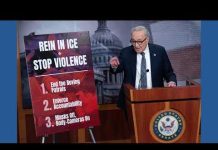
Democratic leaders Chuck Schumer and Hakeem Jeffries then pushed body cameras as part of a broader set of DHS funding “guardrails” ahead of a February funding deadline. That demand landed because it sounded like a straightforward trade: fund the department, but require transparency. Republicans, meanwhile, had their own reason to like cameras: they can protect agents from false accusations and clarify chaotic street encounters.
The whiplash: from “wear cameras” to “don’t let cameras be used”
The pivot came after left-leaning privacy advocates warned that cameras could amplify surveillance, especially if agencies pair footage with facial recognition or other identification tools. Democrats moved from pushing universal wear policies to proposing tighter restrictions on how the government can store, search, and use the footage. The rhetorical shift mattered: the fight stopped being about whether cameras prevent abuse and became about whether video becomes a data stream.
Common sense says both concerns can be true at once: Americans want law enforcement held to professional standards, and they also don’t want the government building dossiers on lawful protesters. The credibility problem is timing. When officials treat cameras as essential in one news cycle and then dangerous in the next, voters infer the principle isn’t privacy or accountability. The principle looks like “whatever helps our side survive the headline.”
Funding politics turned body cams into a bargaining chip
The House advanced a homeland security funding package that included $20 million for ICE body cameras, and that detail became the hinge of the debate. Cameras stopped being a reform goal and started functioning like a coupon attached to a spending bill: enough to claim oversight, not enough to settle how oversight works. That’s the unglamorous truth of Washington—policy becomes a symbol first, then a line item, then a fight over implementation.
Behind the scenes, the procurement side matters as much as the politics. ICE had already taken steps toward body cameras through prior policy decisions and contracts, but wide deployment depends on sustained funding and logistics. Vendors like Axon sit in the background of these debates because they sell the hardware, storage, and sometimes the ecosystem around it. That reality makes skeptics on both left and right suspicious for different reasons.
What the camera sees versus what activists and officials claim
Body camera debates always collide with an uncomfortable fact: footage doesn’t reliably help the “right” or the “left.” It helps the truth when policies force consistent recording and when rules prevent selective editing. Video from the Minneapolis incident reportedly changed how people interpreted the confrontation, and that’s precisely why cameras create political fear. The camera can disprove abuse claims—and it can also corroborate them.
From a conservative values perspective, the strongest argument for body cameras is simple: equal rules for citizens and the state. When government agents use force, the public deserves an objective record, and good agents deserve protection from manufactured narratives. The strongest argument for limits is also conservative: the state should not accumulate tools that can be repurposed to track citizens who are doing nothing illegal. Limiting retention, access, and search functions aligns with that.
The real fight: control of footage, not the lens on a uniform
The next battle will likely focus on policy knobs that determine whether cameras build trust or build databases. Who can request footage? How quickly must agencies release it? Can the government run analytics across it? Can footage be used for intelligence purposes unrelated to the incident that triggered recording? DHS officials have denied certain uses, but public distrust grows when rules remain vague and enforcement depends on internal promises.
If lawmakers want cameras to work, they need clear, enforceable guardrails that don’t shift with the next protest. Require universal activation during enforcement actions, require auditable logs so footage doesn’t “disappear,” and create strict limits on biometric analysis without a warrant. That formula protects lawful civil liberties while keeping accountability real, not theatrical. Without that balance, body cams become just another prop in a partisan loop.
Sources:
Democrats Flip-Flop On ICE Agents And Body Cameras
Democrats, ICE Reform, Body Cameras
Senate Dems demand immigration agents unmask, wear body cameras and carry IDs as shutdown looms
DHS Secretary Noem stands by body camera requirement for federal agents following Trump comments
House GOP offer to Dems: Explicit funding for ICE body cameras following Minneapolis shooting