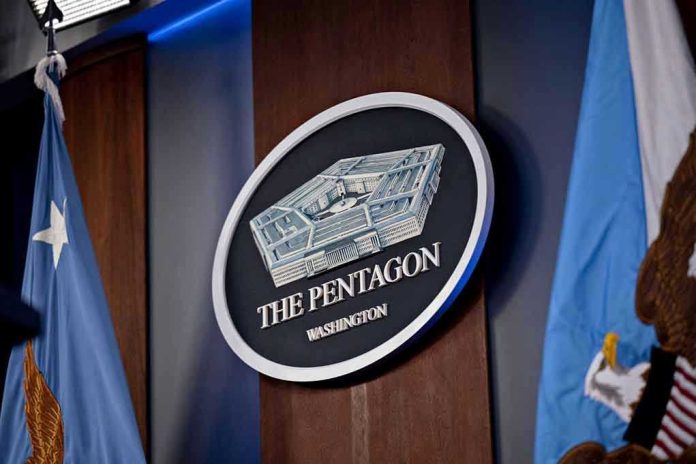
Trump just declared war on defense contractors while simultaneously handing them the largest military budget in American history, a paradox that reveals everything about his strategy to reshape America’s military-industrial complex.
Story Highlights
- Trump proposes unprecedented $1.5 trillion defense budget for 2027, a 50% increase from current spending
- Defense Secretary Hegseth warns contractors to prioritize warfighters over Wall Street profits
- Executive order targets Raytheon and other firms with restrictions on stock buybacks and executive pay caps
- Budget funded through tariff revenues as part of “Dream Military” modernization against China
The Carrot and Stick Approach to Military Spending
President Trump’s announcement of a $1.5 trillion defense budget represents more than just increased military spending, it’s a fundamental restructuring of how America’s defense industry operates. The proposal, delivered via Truth Social posts in early January, pairs massive financial investment with aggressive accountability measures targeting contractor performance and executive compensation practices.
Defense Secretary Pete Hegseth reinforced this message, demanding contractors “step up” their performance while warning that the massive budget increase serves as “a message to the world” about American military resolve. Pentagon spokesperson Sean Parnell emphasized that contractors must prioritize warfighters over Wall Street interests or face serious restrictions on their business practices.
Targeting Industry Giants for Performance Failures
Trump specifically called out Raytheon as the “least responsive” contractor, criticizing the company for prioritizing shareholder dividends and stock buybacks over production timelines. This public rebuke signals a dramatic shift from previous administrations that typically handled contractor relationships behind closed doors. The criticism extends beyond Raytheon to encompass an entire industry culture that Trump argues has failed American servicemembers.
The executive order accompanying the budget proposal establishes concrete penalties for underperforming contractors, including restrictions on stock buybacks and caps on executive compensation exceeding $5 million. These measures represent an unprecedented intervention in private sector compensation practices, justified by the administration as necessary to redirect corporate priorities toward national security objectives rather than shareholder profits.
Funding Strategy Through Tariff Revenues
The administration plans to fund this historic military expansion through tariff revenues, marking a significant departure from traditional defense financing approaches. Congressional Budget Office projections suggest tariffs could reduce national debt by $3 trillion through 2035, though critics warn the overall spending increase could add $5.8 trillion to federal debt over the same period.
Republican lawmakers, including House Armed Services Committee leadership, have endorsed the proposal as necessary investment for modernization against peer competitors like China. Representatives Mike Rogers and Don Bacon argue the increased spending brings defense expenditures closer to the 4-5% of GDP that national security experts recommend for great power competition.
Strategic Implications for Global Security
The budget increase aims to fund Trump’s signature military programs, including the Golden Dome missile defense system, Golden Fleet naval expansion, and development of the F-47 fighter aircraft. These investments target specific capability gaps identified in potential conflicts with China and other adversaries, representing a shift from counterterrorism-focused spending toward conventional warfare preparation.
Industry observers note that while the criticism of contractor practices appears harsh, the underlying message emphasizes production capacity and technological innovation over financial engineering. The administration’s approach suggests that massive defense spending, properly directed, can simultaneously strengthen national security and reform an industry that has struggled with delays and cost overruns on critical weapons systems.
Sources:
Air & Space Forces – $1.5T Defense Budget Air Force Space Force
Military.com – Trump’s $1.5T Defense Budget Protects Warfighters Not Wall Street
Politico – Trump Calls Record Defense Budget
Council on Foreign Relations – Trump’s $1.5 Trillion Defense Budget Should Not Come as Surprise
House Armed Services Committee – Official Statement