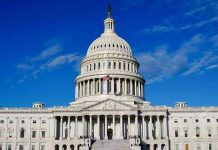
The real fight for Congress in 2026 may happen before voters ever see a general-election ballot.
Quick Take
- Outsider Democratic candidates and progressive activists accuse the DCCC of trying to shape 2026 primaries in battleground districts.
- DCCC Chair Suzan DelBene declined to rule out interventions, pointing to prior involvement in races such as Oregon.
- House leadership signaled any involvement would focus on competitive seats, not safe Democratic districts.
- Separate litigation over California’s Prop 50 redistricting spotlights how party power can operate through maps as well as money.
DCCC power isn’t subtle: money, messaging, and the primary “lane”
Outsider Democrats aren’t imagining the leverage: the Democratic Congressional Campaign Committee exists to win House seats, and it uses endorsements, spending decisions, and strategic “signals” to steer donor attention. When candidates claim “rigging,” they usually mean something more modern than ballot-box fraud: a national committee nudging the field so one candidate looks inevitable. Suzan DelBene’s refusal to promise noninterference made that fear concrete for 2026.
The committee’s defense sounds practical: battleground seats decide control, and weak nominees can cost the party. Common sense says parties try to win. The conservative critique lands elsewhere: Democrats sell “democracy” as a brand, then centralize power when it threatens their preferred outcomes. If a party believes its voters can’t be trusted with a competitive primary, the party is really arguing for managed politics—an argument that tends to boomerang on turnout and trust.
DelBene and Jeffries draw a line: intervene only where it counts
DelBene’s public posture matters because it sets expectations early: the DCCC may engage in a limited number of primaries, with an emphasis on seats that actually determine the House. House Minority Leader Hakeem Jeffries reinforced that boundary by pointing away from safe seats. That sounds tidy until you translate it into incentives. “Competitive” becomes a label the committee controls, and “electable” becomes shorthand for “aligned with leadership.”
Oregon’s example, where the committee backed Rep. Janelle Bynum over a progressive challenger, functions like a warning shot to insurgents. The committee doesn’t need to win every argument publicly; it just needs donors and allied groups to fall in line. That’s how modern political management works: make the path for a challenger expensive, exhausting, and lonely. The result can look like unity from the outside and like coercion from the inside.
California’s Prop 50 shows the other tool: redraw the battlefield
Primary meddling grabs headlines, but redistricting shapes outcomes even more quietly. California’s Prop 50, approved by voters with a reported 64%, became a legal and political showcase because it tied mapmaking to explicit partisan objectives. Legal filings described maps drafted with an eye toward flipping multiple Republican seats, including a district Democrats had won by only 184 votes in 2024. When margins are that thin, lines on a map can matter more than any speech.
A federal court later denied a preliminary injunction against the Prop 50 map, describing the situation as a political gerrymander but finding insufficient evidence of a racial gerrymander. That distinction matters: courts often treat partisan gerrymandering as largely nonjusticiable, while racial gerrymandering triggers stricter scrutiny. Plaintiffs appealed, pushing the dispute toward the Supreme Court. Even without a final ruling, the episode underlines a blunt reality: power brokers don’t just pick candidates; they pick terrain.
Why “rigging” claims resonate: voters sense a curated choice
Outsiders use the word “rigging” because it captures the emotional experience of a closed system: national money arrives, local volunteers get drowned out, and the “serious” candidate gets crowned. That frustration predates 2026. The DCCC’s 2018 vendor blacklist controversy left a long memory in progressive circles about punishment for helping challengers. From a conservative lens, the larger issue is institutional arrogance: party professionals act as if voters exist to ratify strategy.
Democrats face a practical tension they rarely explain honestly. They want ideological energy from the base but risk losing swing voters if nominees sound too radical for the district. The DCCC’s solution is managerial: pick “winners,” then sell the result as democracy. That sales pitch fails when activists can point to committee involvement, press comments, or coordinated outside spending. If you must choreograph primaries to protect the brand, the brand isn’t as popular as advertised.
What to watch next: lawsuits, funding patterns, and late “surprise” support
The 2026 primaries hadn’t happened when these disputes escalated, so the most useful indicators will be behavioral, not rhetorical. Watch for early bundling, quiet warnings to consultants, and the sudden appearance of “independent” expenditures that magically align with committee priorities. On the map side, watch whether courts treat Prop 50 as politics-as-usual or as a boundary-crossing experiment that invites a sharper response from the Supreme Court.
[GOP pay attention. We want primaries not coronations.] Democrats Eat Their Own: Outsider Candidates Blast DCCC for Rigging 2026 Primaries, 'Narrowing Democracy' https://t.co/Wh3P6qWgr1
— TenPoundTabby 🐊 (@TenPoundTabby) February 27, 2026
Republicans don’t need to take a side in the Democrats’ family feud to benefit from it. Every dollar Democrats spend to suppress their own outsider candidates is a dollar not spent persuading independents. Every activist who stays home because the primary felt pre-decided becomes a quiet gift to the opposition. The lasting lesson for voters, regardless of party, stays simple: when insiders claim they’re “protecting democracy,” ask whether they’re protecting your vote—or protecting their control.
Sources:
https://www.axios.com/2025/11/05/democrats-primaries-meddling-dccc-house-congress