A president just pardoned someone he has no power over, and that stunt may tell you more about the future of American federalism than any law school textbook.
Story Snapshot
- Donald Trump issued a dramatic “full pardon” to Colorado election clerk Tina Peters for a crime the Constitution says he cannot touch.
- The move exposes a hard limit on presidential power and a live stress test of states’ rights in the post-2020 election era.
- Legal experts across the spectrum agree the pardon is legally worthless but politically potent.
- The clash previews how future presidents might use symbolic power plays to challenge state authority and reshape election trust.
The impossible pardon that still shook the system
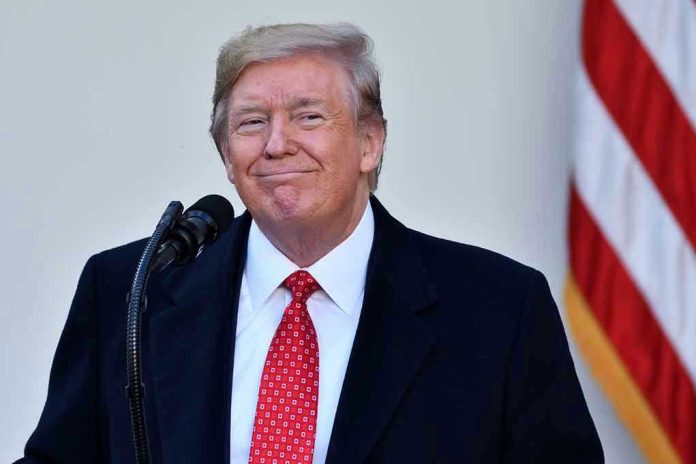
On December 12, 2025, Donald Trump blasted out a now-viral declaration on Truth Social: a “full Pardon” for Tina Peters, the former Mesa County, Colorado clerk convicted in state court for tampering with election systems while chasing proof of 2020 voter fraud. He praised her as a truth-teller, framed her conviction as political persecution, and told supporters she was forgiven. The problem: the Constitution says he has no such power over a state conviction.
Article II, Section 2 of the U.S. Constitution limits presidential pardons to “offenses against the United States”, that is, federal crimes. State offenses remain under the control of governors and state pardon boards. Colorado tried and convicted Peters under state law, not federal law, so the only official with clemency authority over her sits in Denver, not Washington. Trump did not file paperwork with Colorado. He simply posted online and let the political theater do the rest.
How Tina Peters became a test case for federalism
Tina Peters did not emerge from nowhere. As Mesa County clerk, she let outsiders access secure voting equipment in the name of exposing alleged fraud in the 2020 election, then saw data leak online. Colorado prosecutors charged her with state election interference and related offenses. A jury convicted her, and she began serving a state sentence while appealing and also suing in federal court, claiming constitutional violations and political targeting.
A federal judge in Denver denied her request for release on December 8, 2025, even as the U.S. Justice Department signaled interest in whether her prosecution had crossed any lines. Four days later, Trump stepped in publicly with his announcement, positioning himself as her defender and, by extension, the defender of every supporter who still believes the 2020 election was rigged. The move kept the “election integrity” narrative alive, even though it did not unlock a single prison door.
What the Constitution actually allows a president to do
Conservative constitutionalists often warn against presidents acting like kings, and the pardon clause is one place the Framers drew a clear fence. Legal scholars from left and right point to the same seventeen words: no president may erase state convictions, civil cases, or future crimes; only federal offenses qualify. Courts and historical practice have consistently backed that reading, preserving state sovereignty as a core feature of American federalism.
Trump’s own record underscores that limit. His earlier clemency waves from allies tied to January 6 to business figures convicted of tax and securities fraud – all involved federal charges listed on Justice Department logs. Even controversial grants stayed within that jurisdictional line. The Tina Peters pardon breaks with that pattern not by being more aggressive, but by being structurally impossible. As former deputy district attorney Eric Faddis put it, the president “just [does not have] the legal authority” here; Colorado’s governor does.
Symbolism, states’ rights, and conservative common sense
Colorado officials wasted no time calling the bluff. Attorney General Phil Weiser labeled the move “an outrageous departure from what our constitution requires,” while Secretary of State Jena Griswold called it an “assault on our democracy” and states’ rights. From a legal standpoint, their position is straightforward: nothing changes for Peters. She remains a state inmate, her appeal continues, and her federal claims grind through normal channels.
From a conservative, common-sense vantage point, the clash raises two uncomfortable questions at once. First, if states lose control of their criminal judgments whenever a friendly president dislikes the politics, what remains of federalism? Second, if presidents can casually announce legally void pardons to reward loyalty, how long before pardon power itself becomes just another campaign stunt rather than a sober act of mercy or justice? The Tina Peters case forces both issues to the surface.
Supporters argue Trump merely used his platform to spotlight a potential miscarriage of justice and send a message to election-fraud whistleblowers that they will not be forgotten. Critics counter that honoring process and state autonomy is exactly what separates a constitutional republic from strongman politics. Both sides, though, now operate in a world where a president has demonstrated that even the limits of his own office can be turned into political content.
What this showdown signals about the next chapter of presidential power
No court will need to strike down this pardon; it was born invalid. Yet its long-term impact could be significant. Legal analysts already discuss whether Congress or the states should tighten or clarify clemency rules, not to weaken the presidency, but to prevent future executives from blurring the line between federal and state authority. Any such reform debate will feature the Peters episode as Exhibit A in how far rhetoric can drift from constitutional reality.
The broader system test lies with voters. A president can gesture at rescuing someone the law puts outside his reach, but citizens must decide whether they reward that symbolism or insist on leaders who respect the basic allocation of powers. For all the sound and fury around Trump’s gesture, the real story is quieter and more reassuring: a state conviction stands untouched, the constitutional fence around pardons holds, and the American experiment in divided power proves harder to overrule than a single social media post.
Sources:
Trump’s Pardon for Tina Peters Sparks Legal Showdown
Trump Pardons Violate Longstanding Standards
Clemency Grants by President Donald J. Trump, 2025–Present
American Institutions Under Trump: Presidential Pardons