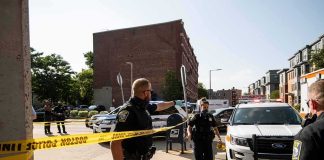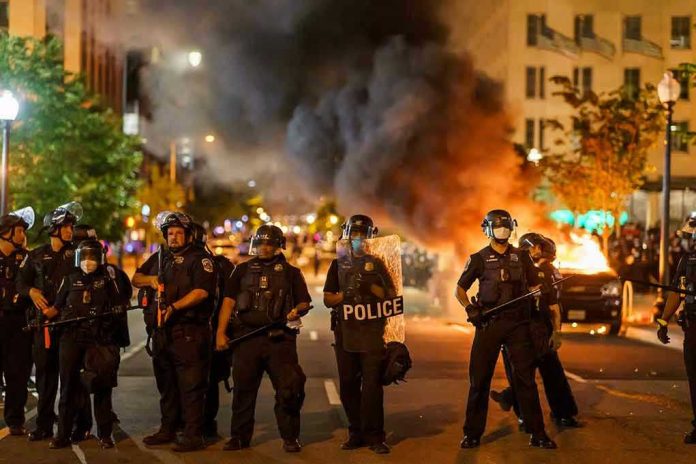
Amidst the swirling chaos of anti-ICE protests, the truth behind the events in Minneapolis challenges sensationalized narratives.
Story Snapshot
- Protests followed the fatal shooting of Renee Good by an ICE agent.
- Allegations of rifles being looted and agents being doxxed remain unconfirmed.
- Demonstrations involved property damage and clashes with ICE agents.
- Federal response included increased agent deployment amid rising tensions.
Protests Erupt After Shooting
The protests in Minneapolis were sparked by the shooting of Renee Nicole Good, a 37-year-old mother, during an ICE operation on January 7, 2026. This incident ignited a series of demonstrations against ICE, with roads blocked and property damaged. Protesters clashed with federal agents, leading to the use of tear gas and multiple arrests.
Renee Good’s death became a symbol of the broader anti-ICE movement, catalyzing nationwide protests calling for accountability and reform. The demonstrations quickly escalated into confrontations with law enforcement, reflecting deep-seated tensions between federal immigration enforcement and local communities. Despite the chaos, media reports emphasize that the majority of the protesters remained peaceful, with only a small fraction engaging in violent actions.
Federal and Local Responses
In response to the protests, the Department of Homeland Security (DHS) surged additional federal agents to Minneapolis, citing increased assaults on ICE personnel as justification. Kristi Noem, a key figure in the DHS, described the protesters’ actions as criminal, while Minneapolis officials, including Mayor Jacob Frey, condemned the violence but supported the peaceful majority. The local government, alongside Minnesota Attorney General Keith Ellison, criticized the federal presence, labeling it an “invasion” that disrupted community peace.
The protests and federal response highlight a significant power struggle between national immigration policies and local governance. With over 60 arrests for impeding or assaulting agents, the situation underscores the challenges of enforcing immigration laws in a politically divided climate. The ongoing protests also emphasize the national discourse on immigration reform and the growing calls for ICE’s abolition.
https://t.co/a1eATbLPZJ
Anti-ICE leftists wreck ICE vehicles, loot rifles, dox federal agents on livestream in Minneapolis
“This was paperwork taken out of an ICE vehicle that was left behind from the first shooting tonight.”— trumpetfortheLord (@sheliadianehug1) January 15, 2026
Impact on Community and Policy
The unrest in Minneapolis has had immediate repercussions on the community, with schools on lockdown and businesses temporarily closing due to safety concerns. The economic impact is palpable as local businesses experience revenue drops amidst the tensions. The protests have further strained the relationship between federal immigration authorities and the communities they operate within.
In the long term, the events in Minneapolis may set a precedent for how immigration enforcement is perceived and challenged across the United States. The legal battles between local governments and federal authorities could reshape immigration policies and enforcement strategies. The protests serve as a reminder of the ongoing national debate over the role and reach of ICE in American society.
Analyzing the Narrative
The protests in Minneapolis have been characterized by a blend of peaceful advocacy and isolated violence, reflecting the complexities of social movements that challenge federal authority with reports of looting.
As stakeholders, including ICE agents, local officials, and protesters, navigate the fallout from these events, the dialogue around immigration enforcement continues to evolve. The situation in Minneapolis is a microcosm of the broader national tensions that arise from conflicting perspectives on immigration policy and civil liberties.