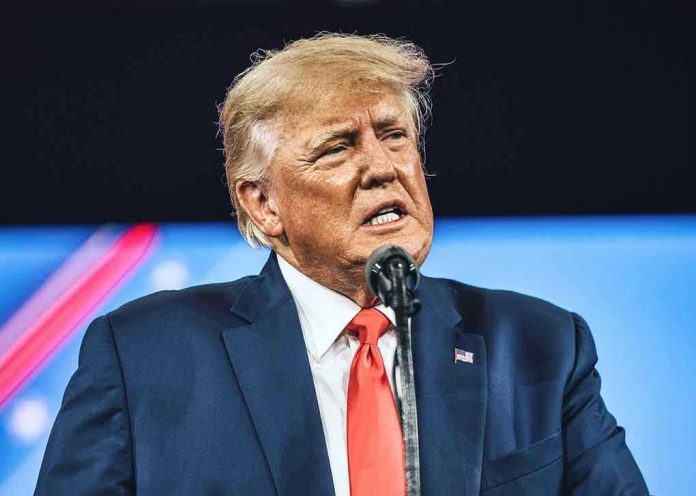
A moment of hesitation from President Trump may have averted a military confrontation with Iran, shifting global perceptions and regional power dynamics.
Story Overview
- Trump decided against a military strike on Iran following reports of halted executions.
- Protests in Iran, sparked by economic hardship, have been the bloodiest since the 1979 revolution.
- Iran’s regime paused over 800 scheduled executions, impacting Trump’s decision.
- Regional stability remains precarious as U.S. allies seek détente with Iran.
Trump’s Decision-Making Process
President Donald Trump chose to hold off on a military attack against Iran after reports indicated that the Iranian regime halted planned executions of protesters. The decision followed nearly three weeks of deadly crackdowns, where several thousand demonstrators were killed. Trump stated he “convinced myself” not to attack, influenced heavily by the cancellation of over 800 scheduled hangings. This internal decision highlights a shift in Trump’s approach, contrasting with his previous hardline stance against Iran.
Despite his decision, Trump emphasized that the military option remains on the table should the situation in Iran worsen. Trump’s actions reflect a complex interplay of geopolitical strategy and humanitarian concern, as the administration navigates the volatile situation in the Middle East. His deliberations also involved discussions with Israeli Prime Minister Benjamin Netanyahu, who urged caution to avoid destabilizing the region further.
The Historical Context of U.S.-Iran Relations
The hostility between the U.S. and Iran has deep roots, tracing back to the 1978-79 Islamic Revolution. Tensions escalated significantly after Trump’s 2018 withdrawal from the JCPOA nuclear deal, which led to the reimposition of sanctions that severely impacted Iran’s economy. These sanctions are linked to the protests erupting in Iran, which have been described as the bloodiest since the revolution. The economic crisis, compounded by internal mismanagement and corruption, fueled public dissent and placed the regime under immense pressure.
Trump’s presidency has seen a series of escalations, including the 2025 U.S./Israeli strikes on Iran’s nuclear infrastructure. These actions have significantly damaged Iran’s nuclear program, yet have not fully subdued its regional influence. The current protests are a testament to the ongoing struggle within Iran, as citizens demand change amid economic despair.
Key Stakeholders and Their Roles
The decision to hold off on a strike involved several key players. President Trump, as the primary decision-maker, was influenced by reports of halted executions and internal discussions. Ayatollah Ali Khamenei, Iran’s Supreme Leader, oversees the regime’s crackdown through the Islamic Revolutionary Guard Corps (IRGC), a potential U.S. target. Netanyahu’s involvement stems from Israel’s security concerns, as a military strike could have unpredictable consequences for the region.
U.S. Arab allies, seeking regional stability, have advocated for de-escalation. Meanwhile, Reza Pahlavi, an Iranian prince in exile, continues to push for a non-violent regime collapse, positioning himself as a future leader in a post-regime Iran. These stakeholders represent the diverse interests and complexities surrounding the issue, each with their own motivations and strategies.
The Path Forward
The immediate impact of Trump’s decision is a temporary de-escalation, averting a potential military conflict. However, the underlying tensions between the U.S. and Iran remain unresolved. The protests, fueled by economic hardship and regime repression, continue to simmer beneath the surface. The potential for future confrontations persists, as both nations navigate a delicate geopolitical landscape.
In the long term, the situation may lead to diplomatic engagements aimed at addressing the core issues, such as Iran’s nuclear ambitions and regional proxy activities. The international community, particularly U.S. allies, will play a crucial role in mediating and supporting a peaceful resolution. Trump’s decision underscores the importance of strategic patience and diplomacy, even amidst volatile circumstances.