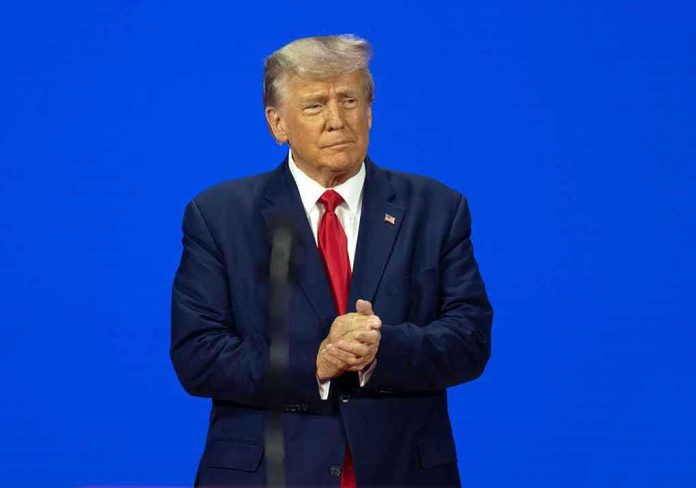
The Trump administration’s recent freeze on federal childcare funding has ignited a storm of controversy, particularly for its implications on blue states like Minnesota.
Story Overview
- Trump administration halts federal childcare funds for all states, citing fraud concerns.
- Minnesota faces heightened scrutiny due to alleged fraud in Somali-run daycare centers.
- State officials criticize the move as politically motivated.
- Potential for legal challenges and broader implications on federal-state relations.
Federal Funding Freeze Explained
The Trump administration has temporarily halted federal childcare funding across all 50 states, pending further verification of program data. This move primarily targets Minnesota, where allegations of fraud in Somali-operated daycare centers have surfaced. The administration demands comprehensive documentation from these centers, including attendance records and inspection reports, to ensure compliance and integrity within the Child Care and Development Fund (CCDF) program.
This decision follows an investigation by U.S. Homeland Security in Minneapolis, where workers at several businesses were questioned. Deputy Secretary of Health and Human Services Jim O’Neill announced the freeze, pointing to “blatant fraud” not just in Minnesota but nationwide. This action has sparked immediate backlash from Minnesota’s state officials, who argue that the freeze is a politically charged attack on a Democratic-led state.
Political Reactions and Implications
Minnesota’s Attorney General Keith Ellison and Governor Tim Walz have both voiced strong opposition to the funding freeze. They view it as a politically motivated maneuver by the Trump administration, intended to undermine Democratic states. Gov. Walz and Senate Majority Leader Erin Murphy have criticized the freeze as a part of Trump’s broader strategy to exert pressure on states with Democratic leadership, particularly those with significant immigrant communities like Minnesota’s Somali diaspora.
The freeze’s impact extends beyond immediate political tensions. It disrupts childcare services across the nation, posing significant challenges for providers and low-income families who rely on these subsidies. In Minnesota, the additional audits and scrutiny could lead to deportations and denaturalizations, further exacerbating tensions between state and federal authorities.
Long-Term Consequences
The implications of this federal funding freeze are profound. In the short term, it threatens to destabilize childcare services, creating uncertainty for providers and families. Long-term, it sets a precedent for tying federal funding to compliance with fraud prevention and immigration enforcement measures. This could lead to similar actions affecting other welfare programs, such as SNAP, especially in states that resist federal mandates.
State officials and advocacy groups are exploring legal avenues to contest the freeze, drawing parallels to previous federal funding cuts that were halted by judicial intervention. The situation underscores the ongoing friction between the Trump administration and Democratic states, particularly regarding issues of immigration and welfare reform.
Broader Impact on Childcare Sector
The childcare sector, already strained by funding uncertainties, faces heightened challenges due to the freeze. The Child Care Providers United union has expressed concern over the potential fallout, emphasizing the risks to service providers and families. This situation is reminiscent of past executive actions where funding freezes were used as leverage, highlighting the volatile nature of federal-state relations under the current administration.
As the situation unfolds, the focus remains on how states will respond to the federal demands for enhanced verification processes and what this means for the future of federal funding programs. The outcome could redefine the dynamics of federal oversight and state autonomy in welfare administration.