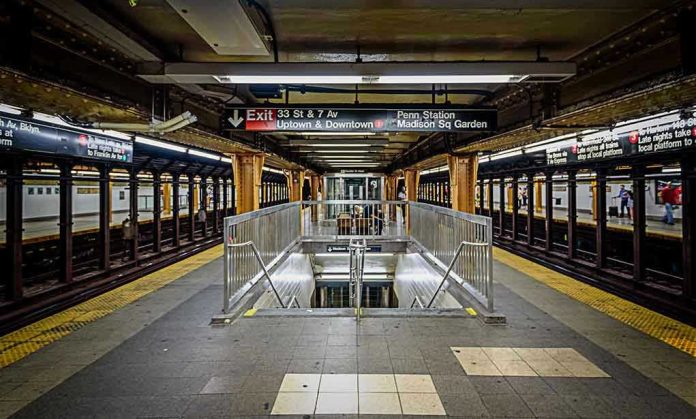
A knife fight erupts in the confined chaos of a London Tube station, sending one man to the hospital and exposing the raw underbelly of urban violence that commuters dread daily.
Story Snapshot
- British Transport Police respond swiftly to a brawl involving blades at a busy Underground station, hospitalizing one fighter with serious injuries.
- Stations close amid cordons, disrupting thousands of passengers on key lines during peak hours.
- Knife crime patterns reveal young males clashing in public transport hubs, fueled by gang tensions and social media escalations.
- Authorities appeal for CCTV footage and witnesses as enforcement ramps up with stop-and-search operations.
- Repeated incidents demand balanced policing—tough deterrence paired with youth prevention to restore commuter confidence.
Incident Unfolds in Tube Station Chaos
British Transport Police arrive at the station around 8:30pm after emergency calls report males fighting with knives. The altercation starts on the platform, escalators turn slick with tension, and passengers scatter as blades flash. One man sustains stab wounds, medics from London Ambulance Service stabilize him on-site before rushing to hospital. The station cordons off immediately, trains bypass non-stop.
Staff follow protocols, alerting authorities and suspending services to prevent panic. Crowded ticket halls amplify risks, bystanders dodge stray swings near live rails. Police secure CCTV footage capturing the rapid escalation from shouts to slashes. This mirrors dozens of prior Tube clashes where confined spaces turn disputes deadly.
Knife fight at Tube station leaves man in hospital https://t.co/EwFdHZ6M1y pic.twitter.com/gfBm0PCFZ5
— The Independent (@Independent) December 17, 2025
Knife Crime’s Grip on London’s Transport Network
Knife offences surge in London over the past decade, with Tube stations as flashpoints for youth violence. Office for National Statistics data shows higher rates here than elsewhere in England, driven by robberies and assaults. Stations like Victoria or Stratford draw rival groups via school routes and nightlife, sparking fights.
British Transport Police lead responses, supported by Metropolitan Police for street spillovers. Transport for London deploys knife arches and patrols post-incidents, yet disruptions cost commuters hours. Social media fuels beefs that explode publicly—research links online taunts to real blades on platforms.
Stakeholders Mobilize After the Blade Clash
The victim, typically a young male, faces recovery from non-life-threatening wounds but grapples with trauma. Suspects flee initially, but CCTV often yields arrests within days. British Transport Police prioritize forensics, while Crown Prosecution Service weighs charges like wounding with intent.
Commuters demand safety; locals near hubs voice fears of avoidance. Mayor’s Office for Policing pushes strategies, balancing enforcement with youth services. TfL manages fallout, enhancing lighting and staff training to deter repeats. Courts set precedents—harsh sentences signal zero tolerance for public knife carries.
Immediate and Lasting Ripples of Station Violence
Station closures halt lines, stranding riders and stressing crews. Passengers report unease, some rerouting to dodge perceived hotspots. Short-term, police ramp stop-and-search, catching blades but sparking profiling debates in minority areas.
Long-term, incidents feed knife crime stats, prompting hotspot policing and hospital violence programs. Public health experts urge early interventions over punishment alone, targeting at-risk youth via schools and mentoring. Yet common sense demands visible deterrence, soft approaches fail when blades proliferate unchecked.
Politicians leverage cases for policy fights: conservatives advocate more officers and sentences aligning with accountability, rejecting excuses rooted in deprivation. Enforcement restores order; neglect breeds chaos. Communities suffer most from inaction, eroding trust in systems meant to protect.
Sources:
Knife fight at Tube station leaves man in hospital