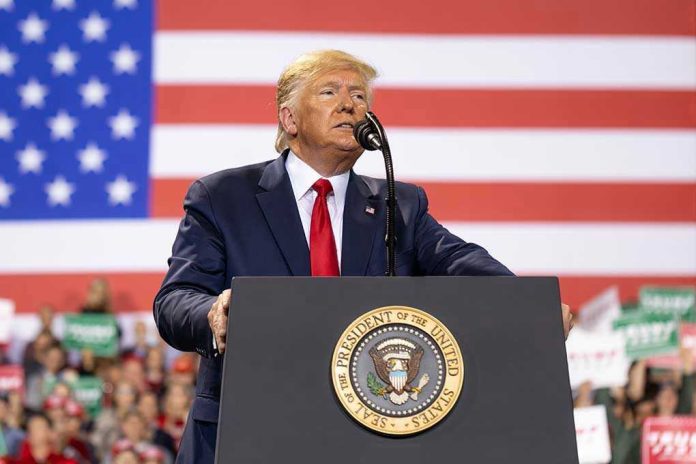
For the first time in G20 history, a sitting U.S. president has attempted to exclude a member nation from the organization’s summit, igniting a diplomatic crisis that could fundamentally reshape international economic cooperation.
Story Highlights
- Trump announced South Africa’s exclusion from the 2026 G20 summit in Miami and suspended all U.S. payments to the country
- The exclusion is based on disputed claims about persecution of white farmers that contradict South African crime statistics
- South Africa remains defiant with international support from Germany, India, and other G20 members
- The unprecedented move threatens G20 legitimacy and sets dangerous precedent for politicizing multilateral institutions
Unprecedented Diplomatic Escalation
Trump’s November 26 announcement via Truth Social declared South Africa “not worthy of membership anywhere” while simultaneously cutting all American financial support. The decision represents the culmination of mounting tensions between Washington and Pretoria, rooted in Trump’s conviction that white South African farmers face systematic persecution. However, South African crime data reveals that murders of white farmers constitute less than one percent of the country’s approximately 27,000 annual homicides.
The announcement caught international observers off guard, particularly given South Africa’s current role in the G20 troika alongside the United States and India. This triumvirate traditionally guides the organization’s strategic direction, making the exclusion attempt even more diplomatically explosive. President Cyril Ramaphosa had previously challenged Trump’s genocide claims during an Oval Office meeting, asking the American president to specify where such atrocities were occurring.
White Farmer Narrative Drives Policy Decision
The exclusion centers on allegations promoted by Trump and South African-born adviser Elon Musk regarding the treatment of white farmers. During their May 2025 meeting, Trump presented Ramaphosa with videos he claimed demonstrated genocide against this population. Ramaphosa directly contested these claims, stating he had “never seen” evidence of the alleged systematic persecution. The Trump administration had already granted refugee status to dozens of white South Africans while simultaneously reducing refugee admissions from other countries.
This narrative has gained traction in certain American conservative circles despite lacking empirical support. The focus on white farmer persecution ignores broader crime statistics that show murders affecting all South African populations. Trump’s decision appears driven more by ideological conviction than diplomatic evidence, creating a dangerous precedent for using unsubstantiated claims to exclude sovereign nations from international forums.
International Backlash Emerges
South Africa’s response has been swift and uncompromising. Ramaphosa described Trump’s decision as “regrettable” and stemming from misinformation rather than diplomacy. The country maintains its position as a full G20 member and cannot be unilaterally excluded by the host nation’s preferences alone. Multiple international actors have rallied to South Africa’s defense, including Germany’s ambassador and the FW de Klerk Foundation, who publicly defended the country’s participation rights.
India’s opposition Congress Party has urged Prime Minister Modi to defend South Africa, characterizing the exclusion as “new imperialism” against the Global South and an insult to the entire African continent. This international support strengthens South Africa’s position and highlights growing concerns about American commitment to multilateral principles. The G7 members who attended the recent Johannesburg summit are expected to collectively oppose the exclusion at future meetings.
G20 Charter Challenges Trump’s Authority
International relations experts question whether Trump possesses the legal authority to exclude a sovereign G20 member. While the president could potentially deny visas to South African delegates or refuse diplomatic recognition, the G20 charter may not permit exclusion based solely on the host nation’s political preferences. Dr. Oscar van Heerden notes that South Africa could potentially participate virtually, circumventing any visa restrictions Trump might impose.
The G20’s founding principles emphasize inclusive representation of major economies, representing approximately 85 percent of global GDP. Trump’s exclusion attempt violates these foundational concepts and threatens the organization’s effectiveness in addressing global economic challenges. If successful, this precedent would fundamentally undermine the G20’s legitimacy as a consensus-building forum, potentially encouraging other nations to weaponize hosting privileges for political purposes.
Sources:
Politico – Trump disinvites South Africa from 2026 G20 summit
Business Insider Africa – India’s Opposition to South Africa Exclusion